Environment · 6 min read
Assisted Migration for Forests: Evidence, Risks, and Open Questions
What transfer trials establish, where ecological risks grow, and why acceptable error remains contested.
A moving climate confronts rooted organisms
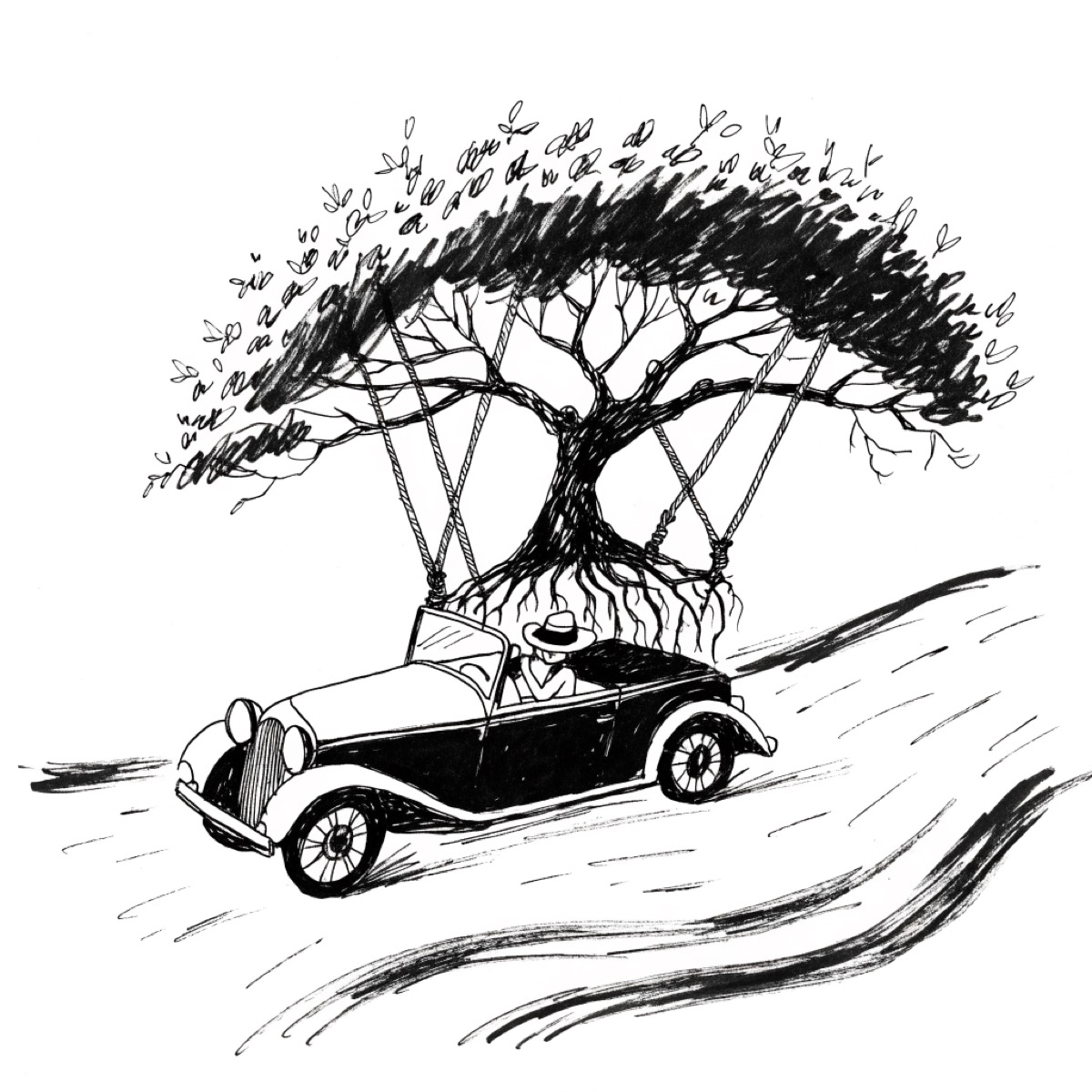
Foresters choose today which seedlings may occupy a site for decades or centuries. Climate conditions during a seedling's establishment can differ from those it encounters at maturity. “Assisted migration” responds by deliberately moving seeds, populations, or species toward places expected to suit them under future climate. The approach is increasingly tested, but disagreement persists because its benefits and risks change sharply with the distance and kind of movement.
The premise is established in broad terms: anthropogenic warming is shifting temperature and moisture conditions faster than many tree populations can disperse naturally, while drought, fire, insects, and disease interact with those changes. The disputed question is not whether forests face climate pressure. It is when human-directed movement improves resilience more than it increases ecological and social risk.
The US Forest Service review “Preparing for climate change: Forestry and assisted migration” describes transfer guidelines as a core implementation problem. Traditional seed zones were designed to prevent maladaptation to current local conditions. Climate-informed forestry asks whether “local” seed remains the safest choice for the climate a tree will experience later.
One label covers three different risk profiles
Assisted population migration moves genetic material within a species' current range—for example, planting seed from a warmer, drier portion of a Douglas-fir range at a cooler site farther north. Assisted range expansion moves a species just beyond its current boundary into adjacent areas expected to become suitable. Assisted species migration, sometimes called assisted colonization, moves a species well outside its historical range.
These are not interchangeable interventions. Population movement can preserve existing species relationships while adjusting genetic composition. Range expansion accelerates a process that might occur through natural dispersal, though the destination may contain communities the species has not previously encountered. Long-distance species movement creates the largest possibility of escape, invasion, novel disease interactions, or replacement of native functions.
Terminology varies among agencies and papers. Some writers use “assisted gene flow” for within-range movement and reserve “assisted migration” for shifts beyond a range. Others use the umbrella term for all three. Any policy claim should therefore specify origin, destination, taxon, objective, and time horizon rather than relying on the label.
The categories also sit on a continuum. A political border has no necessary ecological meaning, and a species' mapped “historical range” depends on observation period and data resolution. Elevation changes over a few kilometres can produce a larger climate shift than hundreds of kilometres across flat terrain.
Trials provide evidence without reproducing the future
Forestry has a long empirical foundation for moving seed: provenance trials plant populations from different origins in common sites and compare survival, growth, phenology, and damage. Reciprocal transplant experiments can reveal local adaptation and trade-offs. Climate-envelope models project where combinations of temperature and precipitation may occur. Process models add physiology, soils, and disturbance.
This evidence supports a cautious finding: seed source affects performance, and populations from somewhat warmer climates can outperform local sources under some warming or drought conditions. It does not support a universal instruction to move everything north. A 2024 review, “Can assisted migration mitigate climate-change impacts on forests?”, found potential benefits alongside risks of maladaptation, invasion, and value conflicts. Outcomes depend on species, life stage, site, climate trajectory, and the trait being measured.
Growth is not the only endpoint. A transferred population may grow faster yet flush leaves early and suffer frost. Drought tolerance may trade off with cold tolerance. Seedlings that survive experimental plots for ten years have not demonstrated reproductive success or ecosystem compatibility over a century. Rare extreme events, not average climate, can determine failure.
Models add uncertainty from emissions, regional climate, soils, pests, and genetic response. Agreement among models can identify robust candidate directions, but a precise map color should not be mistaken for a known future boundary. Trials are strongest when they span many origins, sites, and years and measure survival and reproduction as well as growth.
Ecological risks are asymmetric and sometimes irreversible
Moving organisms can introduce pathogens or parasites along with planting material. The moved species can hybridize with resident populations, altering locally adapted gene complexes. It can become invasive or change fire behavior, hydrology, shade, soil chemistry, and food resources. Even if the tree itself remains controlled, associated fungi and insects may not move with it, so anticipated performance or ecosystem function may fail.
Doing nothing also carries risk. A locally adapted population can become stranded in a climate outside its tolerance. Mortality may remove canopy, carbon storage, habitat, and cultural resources before natural migration replenishes the site. The decision is therefore not movement versus a stable baseline; it is one intervention compared with uncertain change under alternative actions.
The 2011 review “Taking Stock of the Assisted Migration Debate” separated direct risks and benefits to species, ecosystems, and society from disputes about feasibility and evidence. Its conclusion—that choices are context-dependent—remains important because debates often compare the worst case of one option with the best case of another.
Governance adds further questions. Who has authority to move a species across Indigenous territories or national borders? Which values define success: timber yield, species persistence, watershed protection, carbon, or relationships to culturally significant plants? A technically successful plantation may still be an illegitimate project if affected communities had no decision-making role.
A bounded experiment is not a continental prescription
Risk management commonly favors gradual steps. Managers can mix local and climate-adjusted seed rather than select one source, plant multiple provenances in monitored trials, retain genetic diversity, and set stopping rules. They can prioritize within-range gene flow before long-distance species movement, use quarantine controls, and document source material so later outcomes remain interpretable.
This “portfolio” logic spreads risk but does not eliminate it. Mixed sources can still fail together under a novel disturbance. Monitoring must last beyond a grant cycle, and a trial should be large enough to learn without being so large that an adverse outcome is difficult to contain. Adaptive management is only meaningful if institutions have resources and authority to change course.
Some cases make intervention more compelling: a narrowly endemic tree with no dispersal route, high confidence that future habitat will vanish, a suitable recipient site, and low invasion risk. Other cases counsel restraint: poorly studied species, destinations with vulnerable endemics, high pathogen risk, or a move motivated mainly by optimistic timber projections. The IUCN-linked call for policy on assisted colonization emphasizes structured decision-making rather than an unrestricted license to relocate.
The disagreement is about acceptable error
Evidence has established that tree populations differ genetically, that climate conditions are moving, and that transfer can improve selected outcomes in some trials. It has not established future performance for every provenance or the ecosystem consequences of large-scale movement over a forest rotation. Long-lived organisms make randomized, replicated, century-scale evidence inherently slow.
Supporters of assisted migration emphasize the cost of delay and the mismatch between natural dispersal and rapid warming. Critics emphasize ecological surprise, institutional overconfidence, and the irreversibility of spreading organisms. Both positions can be evidence-based because they assign different weights to false negatives—failing to move a population that later collapses—and false positives—moving one that later causes harm.
The strongest current practice is therefore specific rather than doctrinal: define the movement, compare it with plausible no-action outcomes, use multiple evidence sources, involve rights-holders, begin at a scale proportionate to uncertainty, and monitor. Assisted migration is neither a single proven solution nor a uniformly reckless interference. It is a family of choices whose evidence becomes weaker as claims move farther from tested species, sites, and distances.