Technology · 6 min read
How the Internet's Root Zone File Is Governed
Every time you type a web address, your request is resolved by a single plain-text file roughly the size of a college term paper — and the humans responsible for maintaining it are reachable by email. This is the story of the most consequential, least scrutinized single point of failure in modern civilization.
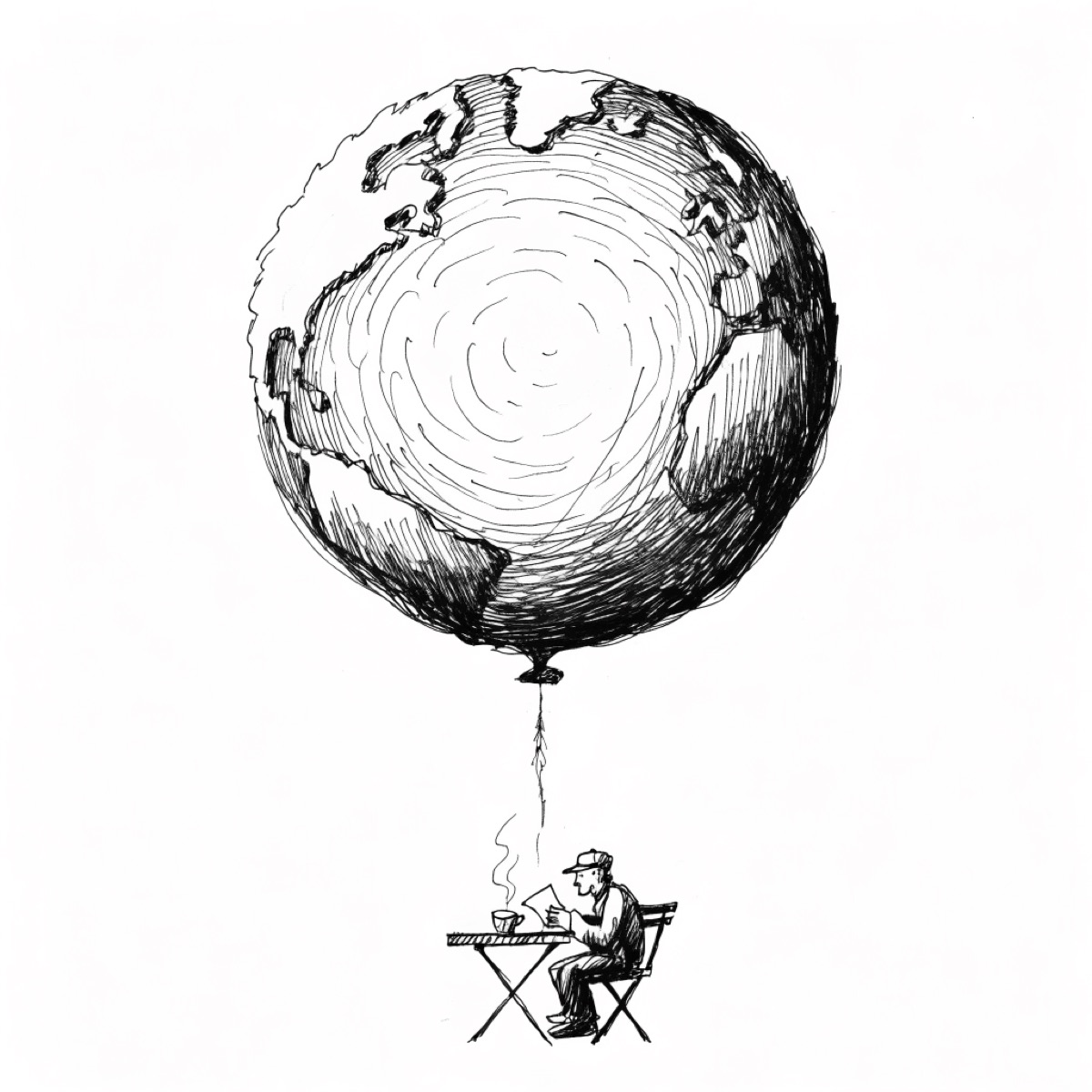
Every time anyone on Earth types a web address — whether it's a teenager in São Paulo loading TikTok or a surgeon in Tokyo accessing a hospital database — a quiet chain of authority resolves that request in milliseconds. That chain, invisible and almost universally unexamined, traces back to a plain-text file roughly 2 megabytes in size, maintained by a nonprofit in Los Angeles staffed partly by volunteers. The file has no flashy interface, no redundant oversight board, no geopolitical immunity. It just sits there, holding the architecture of the modern world together.
Here's the uncomfortable framing: if a sophisticated adversary wanted to fracture the global internet, they probably wouldn't write malware. They'd make a phone call to the right unprepared bureaucrat at the right moment. The root zone file — and the human processes surrounding it — represents one of the most consequential, least scrutinized single points of failure in modern civilization. And nation-states have already noticed.
What the Root Zone File Actually Is (And Why You've Never Heard of It)
The Domain Name System, or DNS, is often described as the internet's phone book. That metaphor is useful but incomplete. A phone book just stores numbers — DNS actually routes you. When you type nytimes.com, your computer doesn't inherently know where that is. It asks a DNS resolver, which consults a hierarchy of servers, which ultimately traces authority back to a single master index: the root zone file.
That file lists every top-level domain on Earth — .com, .uk, .io, .museum, all of them — and tells the internet where to find authoritative information about each one. Without it, your browser is navigationally blind. It's not an exaggeration to say that if the root zone file were corrupted, withheld, or maliciously altered, the global internet as a navigable space would effectively cease to function.
The file is maintained by IANA — the Internet Assigned Numbers Authority — a function operated by ICANN, the Internet Corporation for Assigned Names and Numbers, a California-based nonprofit. Changes to the file are cryptographically signed using DNSSEC (Domain Name System Security Extensions), which sounds reassuringly robust. But the human authorization process upstream of that cryptography has historically been astonishingly thin: a small number of named individuals, reachable by email, holding extraordinary implicit trust with no formal sovereign mandate behind them.
To understand how we got here, you need to understand Jon Postel. For decades, this USC researcher managed internet address assignments informally — sometimes from a university office, his authority derived almost entirely from the trust of a small technical community rather than any legal framework. In 1998, Postel sent an email asking eight of the internet's twelve root server operators to redirect their authority to a server he controlled — as an experiment. They complied. For several days, Postel was the internet's root authority, by virtue of nothing more than reputation and an email. The Clinton administration, alarmed, quietly asked him to reverse it. He did. Postel died later that year, and the vacancy his death created forced the formalization of ICANN. But the informality he embodied never fully left the system's DNA.
The Bureaucratic Chain Is Shorter Than You Think
The actual operational chain governing the root zone file is worth mapping explicitly, because its brevity is startling. IANA staff process change requests. Those changes move through ICANN's approval processes. Registry operators for each top-level domain — companies like Verisign for .com — implement the delegations. And securing the whole system cryptographically is the DNSSEC root key signing ceremony, a ritual that manages to be simultaneously theatrical and genuinely important.
That ceremony involves a handful of globally distributed individuals called Trusted Community Representatives. They hold physical smart cards. Some hold keys to safety deposit boxes stored in two secure facilities in the United States. The ceremony is conducted with cameras rolling, witnesses present, and a script followed almost liturgically. It is, by design, the hardest part of the system to compromise quietly. But it is not impossible to compromise — and more critically, it's not the only lever.
A successful social engineering attack on an IANA staff member, a compromised insider at a TLD registry, or a legal compulsion order served on the right individual at the right moment could — in theory — introduce a fraudulent delegation or revoke a country's top-level domain entirely, effectively amputating that nation from the global internet. This isn't paranoid speculation; it is the explicit, acknowledged threat model that DNSSEC was designed to mitigate. The existence of the solution confirms the existence of the problem.
Then there's the jurisdiction issue. ICANN is a California nonprofit, subject to U.S. law. The root zone file is, in a very real legal sense, an American document. Non-Western governments have understood this for decades, and their discomfort has steadily curdled into something more actionable than diplomatic protests.
Nation-States Have Already Mapped This Vulnerability
Russia and China have not been subtle about their conclusions. Both countries have invested heavily in domestic DNS infrastructure designed to function if severed from the ICANN root. Russia's "sovereign internet" law — enacted in 2019 and commonly called the RuNet legislation — legally mandated the technical capability to route Russian internet traffic domestically without relying on the global root zone. Regulators have conducted live drills simulating disconnection. China's Great Firewall, meanwhile, already operates a parallel DNS layer that intercepts and selectively resolves queries before they ever reach the global hierarchy.
It's tempting to frame these as censorship tools, and they are. But that framing misses something important: they are also continuity-of-operations plans. Both governments have concluded that dependency on an American-controlled document is a strategic liability — not just for controlling their own populations, but for surviving a future conflict in which infrastructure becomes a battlefield.
The more subtle threat, though, isn't technical disconnection. It's institutional capture. For years, China and Russia have prosecuted a careful diplomatic campaign at the International Telecommunication Union — the ITU, a United Nations agency — to shift internet governance away from ICANN's multi-stakeholder model toward an intergovernmental treaty framework. Under such a framework, nation-states would hold formal veto power over the root's administration. The multi-stakeholder model, for all its informality and American-adjacent positioning, keeps governments as one voice among many. An intergovernmental model would make them the only voices that matter.
Those ITU votes have so far failed to achieve the restructuring Russia and China sought. But the campaigns have grown more sophisticated, the coalitions larger, and the underlying frustration more acute after years of revelations — Edward Snowden's among them — about U.S. signals intelligence operations that exploited the very infrastructure ICANN nominally stewards.
The Deeper Problem No One Wants to Say Out Loud
What makes this situation genuinely vertiginous is not that the root zone file is poorly secured — by technical standards, DNSSEC is a serious and thoughtfully implemented system. The problem is that technical security and institutional legitimacy are different things, and the latter is eroding.
The internet's foundational governance was built on a kind of secular faith: that a small community of technically competent, largely American, largely academic people would steward shared infrastructure in everyone's interest. That faith was never universal, but it was functional. It held the system together through the 1990s and into the 2000s. Today, roughly half the world's governments have concluded — not without reason — that this arrangement reflects American hegemony dressed in the neutral language of technical administration.
The root zone file will not be the thing that breaks the internet. But it is the clearest symbol of a deeper tension: that the infrastructure undergirding a genuinely global system of communication was built on trust relationships scaled for a much smaller world. The file is still just a text document. The humans responsible for it are still reachable by email. And the nations most motivated to exploit that fragility have spent a decade quietly building the tools to do exactly that.
The most fragile things in the world are rarely the ones with the most dramatic names. Sometimes they're a 2-megabyte plain-text file and the assumption that everyone with access to it will keep acting in good faith.