Politics · 9 min read
How the Stasi Relied on Ordinary Citizens as Informants
When the Berlin Wall fell and the Stasi archives cracked open, researchers expected to find a fearsome machine of professional spies — instead, they found your neighbor, your doctor, and your spouse. The most effective surveillance state in history was built not from the top down, but from the inside out.
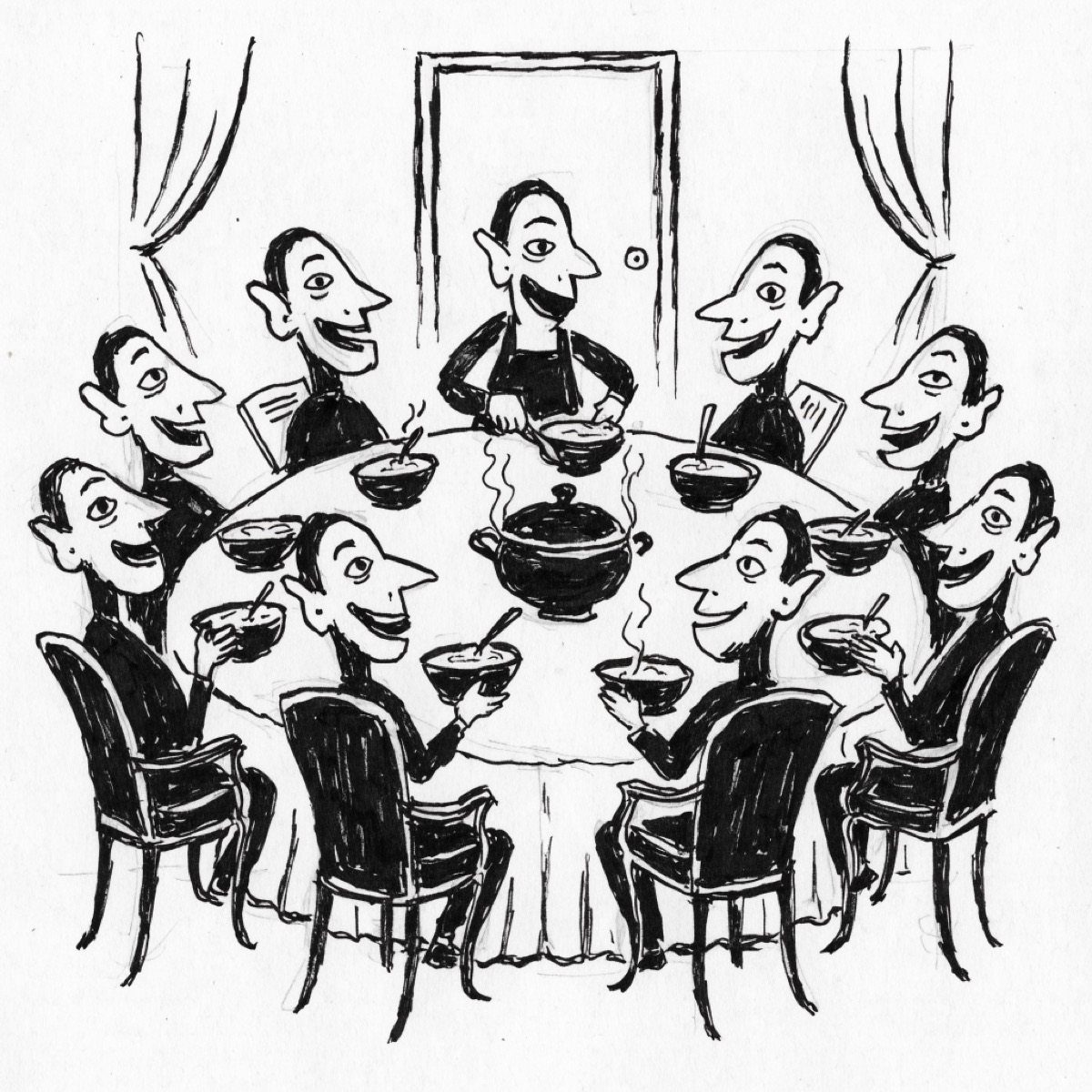
When archivists began cataloguing the records of East Germany's Ministry for State Security after reunification, they faced a problem of almost comic proportions. The files, if pulled from their shelves and laid end to end, would stretch 111 kilometers — roughly the distance from Berlin to the Polish border. What stunned researchers was not the volume alone, but the authorship. Roughly one-third of those documents were written not by professional intelligence officers but by ordinary citizens: the schoolteacher down the hall, the cardiologist who took your pulse, the colleague who shared your office thermos.
This is the fact that rewrites everything we think we know about authoritarian surveillance. The most effective secret police apparatus in the 20th century was not, at its core, a machine of professional watchers. It was a social contract, signed quietly, by millions of ordinary people. And newly declassified archives from East Germany, Romania, communist Poland, and Cold War-era Latin America are forcing historians — and the rest of us — to confront an uncomfortable conclusion: authoritarian surveillance was less a top-down imposition than a participatory culture, one with echoes that reach well beyond the regimes that invented it.
The Informant Next Door
The Stasi's Inoffizieller Mitarbeiter — unofficial collaborators, or IMs — numbered somewhere between 170,000 and 200,000 at the network's peak in the 1980s. That works out to roughly one informant for every 63 East German citizens. Adjusted for children, the elderly, and others deemed ineligible, the ratio tightens further. By some estimates, one in every 30 adults capable of filing a coherent written report was doing so.
Their occupations read like a census of everyday life. Teachers submitted reports on students' families. Pastors filed on their congregations. Olympic athletes wrote assessments of their teammates' political reliability before international trips. Doctors noted which patients asked questions about emigration. The Hollywood image of the trench-coated operative lurking in doorways captures almost none of this reality.
Historian Hubertus Knabe, who spent years combing the Berlin-Hohenschönhausen memorial archive, made a point that still unsettles readers: most Stasi surveillance was performed by people who went home each evening, cooked dinner, helped with homework, and never thought of themselves as instruments of repression. The professional officers were the scaffolding. The building was made of neighbors.
This was not a German peculiarity. Romania's Securitate and Poland's Służba Bezpieczeństwa ran comparable networks at strikingly similar ratios and with similarly diverse social composition. When you find the same architecture in Warsaw, Bucharest, and East Berlin, you stop looking for local cultural explanations and start looking for structural ones.
Why They Did It: The Surprisingly Mundane Motivations
The question that the archives answer most mercilessly is why. The answer, almost universally, is: for reasons you would recognize.
Petty score-settling turns out to account for a remarkable share of the reports. Historian Timothy Garton Ash, conducting research for his memoir The File, made the painful discovery that several of his closest friends in East Germany had informed on him during his graduate research visits in the 1970s. When he eventually met them and read the files in their presence, the motivations were rarely ideological. One had been nursing a quiet professional jealousy. Another had reported a perceived romantic slight. Several files in the broader archive describe neighbors denouncing each other over disputed parking spaces, noise complaints, or inheritance quarrels that had calcified into years-long feuds. The state offered a powerful instrument for private warfare, and private warfare made use of it.
Material incentives formed a second and less dramatic but equally important pillar. Informants received access to a currency more valuable than East German marks: priority placement on housing waiting lists that otherwise stretched for a decade, travel permits to the West that most citizens could never obtain, university admissions for their children, and promotions in workplaces where advancement required political reliability scores. The surveillance state did not merely coerce people with fear. It embedded itself in the ordinary machinery of ambition — which, historically, has proven a far more reliable engine than terror.
Then there is the motivation that researchers find hardest to communicate to modern audiences: genuine belief. A non-trivial portion of informants thought they were doing something useful, even righteous. Sociologist Zygmunt Bauman described this phenomenon — applicable well beyond the East German case — as "moral sleeping": the suspension of ethical judgment that occurs when harmful behavior is successfully reframed as bureaucratic duty or civic responsibility. If you were not betraying a friend but submitting a routine report to support social stability, the act carried a different psychological weight. The paperwork helped. So did the ideology. So did the fact that everyone around you seemed to be doing it too.
The Architecture of Complicity: How Regimes Made Informing Easy
The Stasi did not, in most cases, recruit informants by marching into their homes and issuing threats. That approach was reserved for special cases and was, in any event, inefficient. The standard method was subtler and, in retrospect, far more instructive.
Recruitment officers began with small asks. Could you simply let us know if your colleague mentions listening to Western radio? That was all. No commitment, no oath, no real danger. The first request was calibrated to fall below the threshold of what any reasonable person would define as a moral line. Then, gradually, the requests escalated — each new ask presented as a natural continuation of what had already been agreed to, never as a fresh moral choice. Psychologists call this the foot-in-the-door technique. The Stasi called it Zersetzung operations management. By the time an informant was filing detailed reports on a close friend's private conversations, they had already climbed so many small steps that the summit seemed unremarkable.
The bureaucratic language performed essential work throughout this process. Informants wrote Berichte — reports — not denunciations. They collaborated rather than betrayed. The regime provided a vocabulary that laundered moral weight from every transaction. Hannah Arendt wrote about this dynamic in her coverage of the Eichmann trial, coining the phrase "banality of evil" to describe how ordinary institutional structures produce extraordinary harm when they successfully divorce action from ethical reflection. Historian Christopher Browning reached similar conclusions studying the men of Reserve Police Battalion 101, who murdered thousands of Jewish civilians in occupied Poland — not because they were monsters, but because the institutional frame made each step feel routine.
What sealed the system was the network effect. Once a critical mass of people were informants, the social logic quietly inverted. Not informing became the conspicuous behavior — the one that required explanation, that attracted attention, that might itself be reported. Silence required courage. Speech, or at least a certain managed version of it, had become the path of least resistance.
When the Files Opened: What Societies Learned About Themselves
The post-1989 reckoning in Germany was unlike anything a modern democracy had previously attempted. The Gauck Authority — named for Joachim Gauck, the pastor and civil rights activist who oversaw the archive before later becoming German president — processed over three million requests from citizens who wanted to see their own files. What they found split families.
A woman in Leipzig learned that her husband of twenty-two years had filed quarterly reports on her contact with a West German cousin. A man in Dresden discovered that the friend who had stood at his wedding had provided the report that cost him his factory management position. A pastor in Rostock found that his most trusted deacon had catalogued his sermons for a decade. These were not dramatic spy-thriller betrayals. They were the quiet, ordinary dismantlings of trust — and they proved, in many cases, unrecoverable.
The reckoning elsewhere was patchier and, arguably, more politically damaging for being incomplete. Romania's lustration — the legal process of barring former informants from public office — was partial and contested, leaving the Securitate's social legacy to fester in democratic politics. Poland's repeated battles over archive access became a proxy war between political factions, with the files weaponized rather than processed. Researchers studying transitional justice have noted a consistent pattern: societies that cannot look clearly at participatory surveillance cannot fully escape the political culture it created. The poison stays in the water table.
What united all these national reckonings was a shared epistemological shock. Scholars who entered the archives expecting to find ideological fanatics and professional villains emerged having met something far more disturbing: recognizable people, with ordinary motivations, making incremental choices that accumulated into catastrophe. It forced a revision of how we model the psychology of complicity — and who we assume we would be, under different circumstances.
The Democratic Mirror
It would be reassuring to treat all of this as a story about a specific kind of regime — communist, totalitarian, safely historical. The archives resist that comfort.
The structural parallels emerging in democratic societies are not moral equivalencies, but they are worth examining precisely because they are structural. Social media platforms have built reporting features that are, technically and behaviorally, systems of distributed citizen surveillance. Corporate whistleblower cultures, designed with legitimate purposes, have been documented in multiple industries as tools for internal score-settling — the professional jealousy motivation that Garton Ash found in the Stasi files reappearing in Silicon Valley performance review processes. Neighborhood apps like Nextdoor have generated extensive research on racialized surveillance reports filed by residents against neighbors for the offense of existing in a space where the reporter had decided they did not belong. The ease of lodging a complaint that leaves a permanent digital record — against a colleague, a stranger, a public figure — has created an ambient infrastructure for social monitoring that requires no central authority to administer.
The "chilling effect" research is particularly instructive here. Studies consistently show that awareness of potential monitoring — even when no actual monitoring is occurring — alters behavior, self-censorship, and social trust in ways that persist long after the surveillance itself ends. A 2015 study by Jon Penney published in the Michigan Telecommunications and Technology Law Review found measurable drops in Wikipedia searches for terrorism-related topics following the Snowden revelations, suggesting that the knowledge of possible surveillance reshaped information-seeking behavior across a population that was, in the overwhelming majority of cases, doing nothing remotely surveilled. The chilling effect does not require a Stasi. It requires only the widespread belief that someone might be watching — and the knowledge, absorbed from daily experience, that ordinary people are often the ones doing it.
The truly unsettling lesson of the Stasi archive is not that East Germany built a surveillance state. It is that the surveillance state required so little building — that it grew so readily from materials already present in ordinary human life: ambition, grievance, conformity, the comfort of bureaucratic euphemism, and the social pressure of knowing that everyone around you seems to be participating. The professional agents were almost incidental. What the regime needed, and found in abundance, was the much older and more portable human technology of the neighbor who notices, the colleague who reports, and the institutional form that makes both feel like something other than what they are.
The question the archives leave open is not whether this could happen again. It is whether we would recognize it if it already had.