Science · 6 min read
What a Brainless Slime Mold Shows About Intelligence
A brainless, single-celled organism solved one of engineering's hardest optimization problems overnight—and matched a billion-dollar rail network that took humans decades to build. What slime mold can do without a single neuron is forcing scientists to completely rethink what intelligence actually requires.
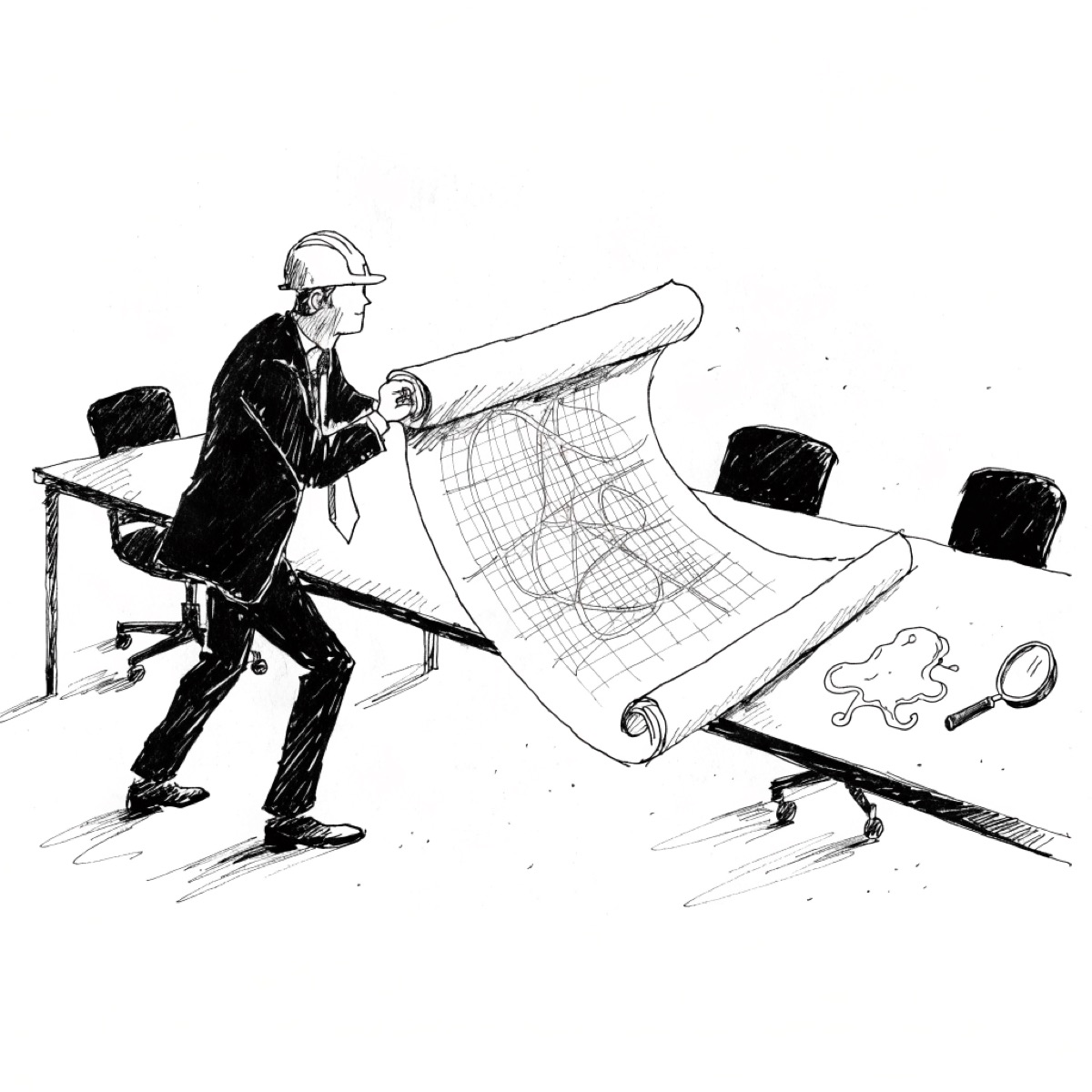
In 2010, a team of Japanese researchers placed 36 oat flakes on a petri dish, arranged to match the positions of cities surrounding Tokyo. Then they introduced Physarum polycephalum—a slime mold the color and texture of scrambled eggs—and went home for the night. Twenty-six hours later, they returned to something that made several computer scientists quietly question their careers.
The mold had built a network connecting every food source. That network matched the Tokyo metropolitan rail system with near-perfect fidelity—not just in efficiency, but in construction cost and fault tolerance simultaneously. A single-celled organism, with no brain, no neurons, and no understanding of Tokyo, had reverse-engineered one of the most complex transit systems on Earth.
This isn't a charming footnote in biology. It is a direct challenge to everything we assume about intelligence, computation, and what a "mind" actually needs in order to solve hard problems.
What Even Is Physarum polycephalum?
First, a correction embedded in the headline: Physarum polycephalum isn't technically a fungus. It's a plasmodial slime mold—a classification so strange it sits outside the kingdoms of plants, animals, and fungi entirely. Biologically, it is a single cell. One cell that can grow to the size of a dinner plate, containing millions of nuclei suspended in a single continuous cytoplasmic body, pulsing and flowing like a living river system.
Its survival logic is elegantly brutal. The mold forages by extending a web of tubular veins in every direction. Tubes that reach food sources grow wider, reinforcing themselves with increased flow. Tubes that find nothing are starved of resources and quietly reabsorbed. The entire organism is, at any given moment, running a parallel trial-and-error optimization across its whole body simultaneously.
For decades, scientists classified it as biological trivia—interesting to cell biologists, irrelevant to everyone else. Nobody thought to ask whether the act of staying alive was itself a form of computation. Then, in 2000, Toshiyuki Nakagaki at Hokkaido University placed Physarum inside a physical maze with food at two exits and watched it find the shortest connecting path in four hours. The paper he published in Nature announced the finding with the unassuming title "Maze-solving by an amoeboid organism."
The Mechanism: How a Cell "Thinks" Without a Brain
The mold's computational trick runs on cytoplasmic streaming—the rhythmic, oscillating flow of fluid through its tubular network. Nutrients and chemical signals ride these flows like messages through a pipe system. Here's the feedback loop that makes it work: tubes carrying higher flow volumes experience a physical widening of their walls, which increases flow further, which widens the tube more. Successful routes reinforce themselves in real time, carved into the organism's own body.
There is no command center issuing instructions. No neuron fires. No decision is made "at the top." Every node in the network simultaneously senses its local chemical and mechanical environment and adjusts its behavior accordingly. The solution—the optimized network—emerges from the aggregate of millions of these micro-decisions, a process researchers now call physical computation.
This turns out to be a decisive advantage in messy environments. Classical shortest-path algorithms like Dijkstra's or A* are extraordinary tools, but they assume something the real world rarely provides: a clean, static, fully-mapped graph. Physarum operates in a wet, chemically chaotic environment and self-corrects continuously. Its answer isn't a single optimal path—it's a resilient network that degrades gracefully when individual nodes are blocked or destroyed. It doesn't calculate the best route; it grows into one.
The Tokyo Rail Study—and What the Mold Got Right That Engineers Almost Missed
The 2010 study, published in Science by Nakagaki and colleagues, was methodical in its setup. Food sources were placed at positions corresponding to 36 cities in the greater Tokyo area. Physarum was introduced at the position representing central Tokyo. The team photographed its growth every 30 minutes across a 26-hour window, watching the network take shape in near-real time.
The researchers evaluated the final mold network against three metrics: transport efficiency (how quickly could the network move resources between nodes), construction cost (total tube length, analogous to track-laying expense), and fault tolerance (how well the network held up when individual connections were severed). The mold performed competitively on all three—a multi-objective optimization problem that human engineers had refined through iterative decades of planning, political compromise, and enormous capital expenditure.
The uncomfortable detail sits in that third metric. Under simulated disruptions—the equivalent of a rail line going down—the mold's network outperformed the actual Tokyo rail grid. The real system, it turned out, had been somewhat under-optimized for resilience. The mold had found a Pareto-optimal solution—a balance point where you cannot improve one variable without degrading another—that the engineers, burdened by budgets and bureaucracy and the weight of human decision-making, had left sitting on the table.
Why This Is Forcing Computer Scientists to Rethink Intelligence
The dominant architecture of modern computing descends from a 1945 design by John von Neumann: a central processor that fetches instructions, decodes them, and executes them in sequence. It is a hierarchical, clock-driven, top-down system. It is also, in a fundamental sense, the opposite of how Physarum operates. The mold demonstrates that optimization at scale—real optimization, in noisy environments, across multiple competing objectives—can emerge from purely local rules with no hierarchy, no clock, and no instruction set whatsoever.
This observation has escaped the petri dish. Researchers at institutions in Germany, the UK, and Japan are actively building Physarum-inspired routing algorithms for internet traffic management, logistics networks, and autonomous vehicle path planning. Early benchmarks are notable: in dynamic network environments where conditions change frequently, biomimetic algorithms modeled on slime mold behavior have shown efficiency gains in the range of 15–20% over classical approaches, according to a 2022 review in IEEE Transactions on Network Science and Engineering. The advantage grows precisely in the conditions where traditional algorithms struggle most—when the map keeps changing.
The deeper implication is harder to sit with. We have spent the better part of a century building intelligence from the top down—designing processors, writing algorithms, imposing structure on chaos. Physarum inverts this entirely. It builds structure from chaos, through nothing more sophisticated than physical feedback. And it frequently arrives at answers we missed.
The Part That Should Keep You Up at Night
There is a version of this story that is simply inspiring: nature is clever, biomimicry is useful, we should study organisms more carefully. That version is comfortable. It keeps intelligence safely in the category of "thing brains do."
The more unsettling version asks a different question. If a single cell with no nervous system can solve problems that challenged our best engineers for decades, what exactly have we been measuring when we measure intelligence? The Tokyo rail study doesn't suggest that Physarum is smart in any way we'd recognize. It suggests something stranger—that some of the hardest problems we face aren't thinking problems at all. They're network problems. And networks don't need to think. They just need the right feedback.
The mold doesn't know it solved anything. It was just trying to eat. That might be the most terrifying sentence in this entire article—because it implies that the gap between "optimizing for survival" and "solving problems we consider hallmarks of intelligence" may be considerably narrower than we'd like to believe.