Psychology · 7 min read
What Eyewitness Experiments Show About Suggestion and Memory
Controlled studies show when suggestion can alter eyewitness reports and why careful identification procedures matter.
Memory is reconstruction, not a recording
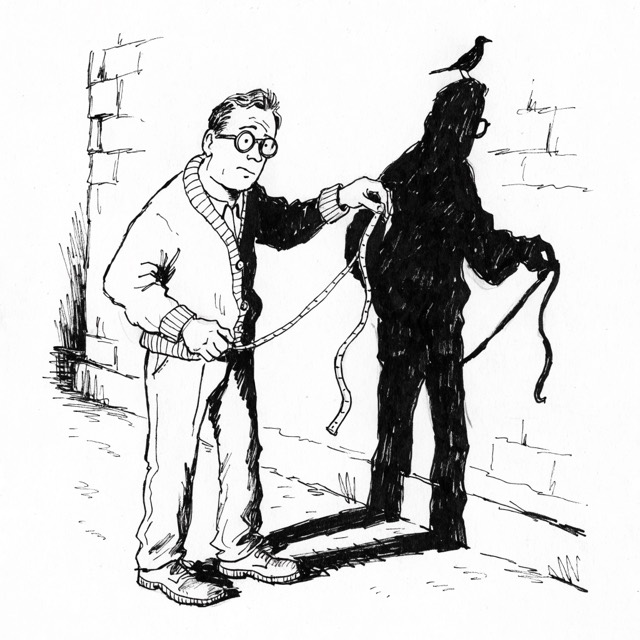
Eyewitness memory is often described in two incompatible ways. In ordinary speech, a witness may be said to have “stored” a scene and later “retrieved” it, as if recall replayed a recording. In experimental psychology, memory is better understood as a reconstruction: information from the original event is combined with attention, prior knowledge, later conversation, questions, and the conditions of retrieval. That does not mean that memory is generally false. It means that confidence and detail are not direct readouts of historical accuracy.
The distinction matters because legal decisions can turn on a face selected from a lineup or a detail reported during an interview. The 2014 National Research Council report Identifying the Culprit, which reviewed laboratory and field research on eyewitness identification, concluded that memory is susceptible to contamination and that identification procedures can either reduce or amplify error. The report did not conclude that eyewitnesses are useless. It treated eyewitness evidence as evidence with measurable vulnerabilities.
One durable myth is therefore too strong: that a sincere, vivid recollection must faithfully preserve the event. A second claim is also too strong: that suggestion can freely manufacture any memory in any person. Research supports neither certainty. It supports a more bounded finding—post-event information can alter some reports, under some conditions, and investigators can change those conditions.
What the classic experiments found
Elizabeth Loftus and John Palmer’s 1974 experiment remains a clear demonstration because its intervention was small. Participants watched films of traffic accidents and answered a question about vehicle speed. The verb varied: cars had “hit,” “collided,” or “smashed” into one another. Average speed estimates shifted with the wording. In a second experiment, participants asked about cars that “smashed” were more likely a week later to report broken glass, although the film contained none.
The study established that question wording can influence a later report in a controlled setting. It did not establish that every participant’s underlying memory had been permanently rewritten. Researchers have debated whether some misinformation effects reflect changes in memory, confusion about which source supplied a detail, or a decision to answer in the way a participant thinks the questioner expects. Those mechanisms can produce the same wrong answer. Later experiments have tried to separate them by varying delays, warnings, confidence measures, and the similarity between original and suggested details.
In a 1978 study, Loftus, David Miller, and Helen Burns showed participants a traffic scene containing either a stop sign or a yield sign. A later question could refer to the other sign. When choosing between images afterward, participants exposed to the misleading question were less accurate, especially when misinformation came close to the final test. This “misinformation effect” has since been reproduced with many materials and procedures. Its size is not fixed: distinctive original details, prompt testing, explicit warnings, and careful source monitoring can reduce it.
Laboratory studies trade realism for control. A participant who watches a short film knows that no one has actually been harmed and does not face the stress, divided attention, or personal stakes of a crime. Yet control answers a load-bearing question: when the event is held constant and only post-event wording changes, the wording can change reports. Field relevance then depends on whether real investigative procedures contain comparable sources of suggestion. Many do.
How suggestion enters an investigation
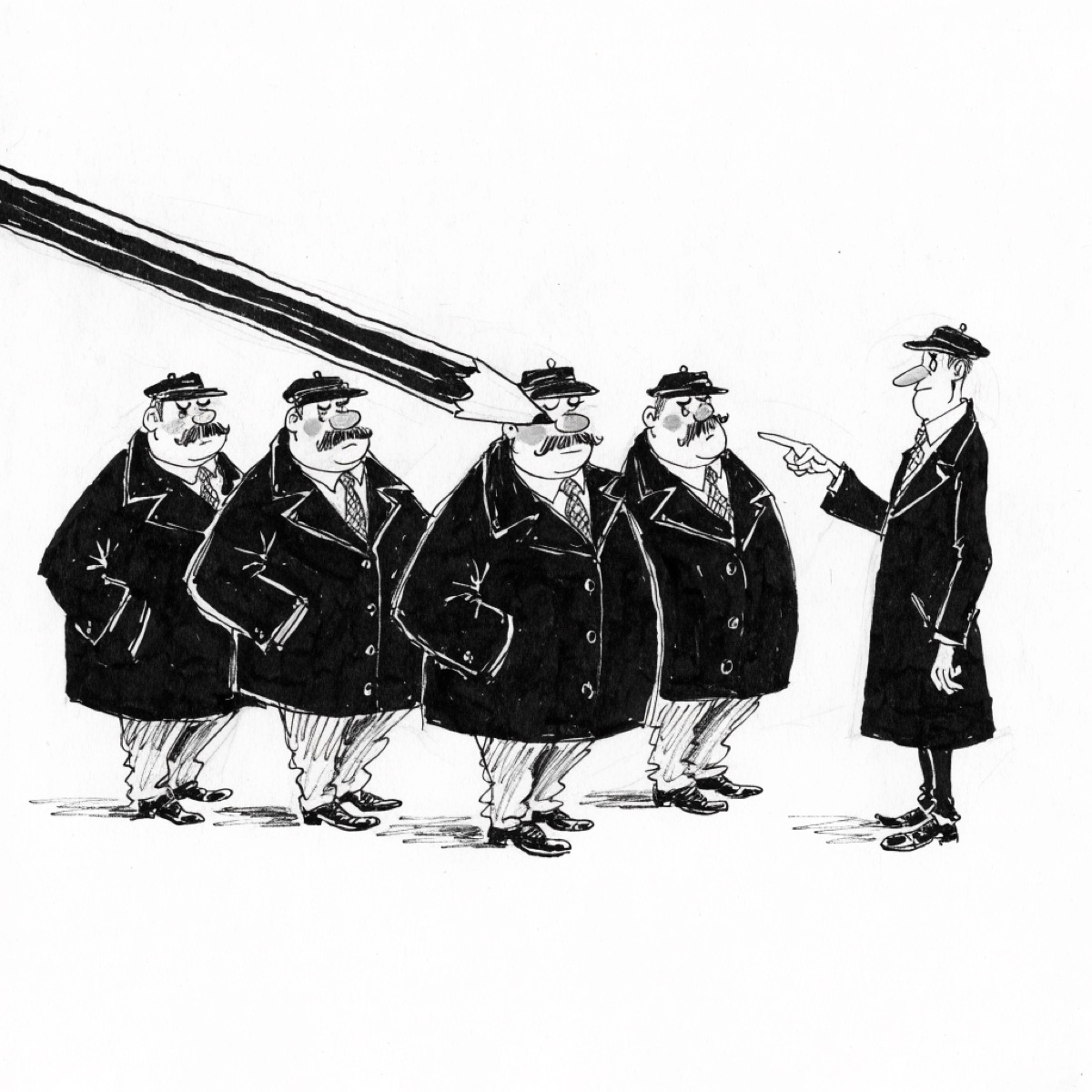
Suggestion need not be an overtly leading question. It can arrive through feedback after a lineup, repeated interviews, exposure to another witness’s account, news coverage, or a lineup in which one person stands out. The National Research Council distinguished variables the justice system can control—such as instructions and lineup administration—from variables it cannot undo, such as viewing distance, lighting, exposure time, stress, or whether a weapon drew attention.
A lineup is not a simple test of recognition if the witness assumes the perpetrator must be present. An instruction that the perpetrator “may or may not be” in the lineup gives the witness permission to reject the array. A double-blind procedure, in which the administrator does not know who the suspect is, prevents intentional or inadvertent cues. Recording the witness’s confidence immediately, in the witness’s own words, preserves a measure before confirming feedback can inflate it. These recommendations follow from a general principle: preserve the first uncontaminated response and document the conditions under which it was made.
Confidence requires particular care. Confidence expressed at trial may come after months of rehearsal, feedback, and repeated exposure to the selected face. That later confidence is not equivalent to confidence at the initial identification. Research synthesized in a 2020 Psychological Science in the Public Interest review led by Gary Wells found that, under fair lineup conditions and when measured immediately, high initial confidence can be informative about accuracy. This is material counterevidence to the loose claim that confidence tells us nothing. The conditions and timing determine what the confidence measure can support.
Error does not imply a dishonest witness
Memory errors are sometimes treated as signs of lying. Experiments show why that inference is unsafe. A person can report an altered detail sincerely, with no intention to deceive. Recognition also involves a decision: a familiar face may be familiar because it appeared in a mugshot, at the scene as a bystander, or in another context. The witness may remember the face but misattribute its source.
At the same time, not every inconsistency is produced by suggestion. Perception may have been poor at the outset; a witness may infer rather than remember; social pressure can affect what is said; and some reports are deliberately false. Psychological evidence cannot diagnose the cause of a particular discrepancy from the discrepancy alone. It can identify plausible mechanisms and procedures that make some mechanisms less likely.
The Innocence Project’s case records helped bring attention to mistaken identification in DNA exonerations, but such cases are a selected subset: they concentrate on prosecutions where biological evidence existed and could later be tested. They demonstrate that confident misidentification can contribute to grave error. They do not supply a population-wide error rate for all eyewitness identifications.
Safeguards change probabilities, not history
The best-supported reforms are procedural. Interviewers can begin with open prompts, avoid introducing unreported details, separate witnesses, document exact questions and answers, and record the full interaction. Lineups can use plausible fillers, neutral instructions, blind administration, and an immediate confidence statement. Courts can receive information about viewing conditions and contamination risks rather than relying on intuition about how memory “should” work.
These safeguards do not recover information that was never encoded. Nor can they certify that a remembered detail is true. Their value is prospective: they reduce avoidable suggestion, preserve a cleaner record, and make later evaluation less dependent on recollection of the identification process itself.
There are also genuine disputes about implementation. Sequential lineups, which show people one at a time, can reduce some mistaken choices but may also reduce correct identifications compared with simultaneous lineups; results depend on instructions, stopping rules, and how performance is measured. No single procedure maximizes every desirable outcome. Policymakers must weigh correct identifications against false identifications rather than celebrate one rate in isolation.
The boundary of the finding
Established evidence shows that memory reports can be changed by post-event information and that investigative design affects identification accuracy. It also shows that an early, highly confident identification made under fair conditions carries more information than confidence acquired later. What remains uncertain in an individual case is whether a particular detail was altered, forgotten, inferred, or accurately retained.
The appropriate conclusion is narrower than either popular extreme. Memory is not a literal recording, but it is not arbitrary. Suggestion is a demonstrated source of error, but not a universal explanation. A careful system cannot look inside a witness’s memory. It can control the questions it asks, preserve the first answer it receives, and state how much uncertainty remains.
Sources and further reading
4 sources, 1 of them with a link you can follow.
- Elizabeth Loftus and John Palmer, “Reconstruction of Automobile Destruction,” Journal of Verbal Learning and Verbal Behavior (1974).
- Elizabeth Loftus, David Miller, and Helen Burns, “Semantic Integration of Verbal Information into a Visual Memory,” Journal of Experimental Psychology: Human Learning and Memory (1978).
- National Research Council, Identifying the Culprit: Assessing Eyewitness Identification (2014).
- Gary Wells and colleagues, “Policy and Procedure Recommendations for the Collection and Preservation of Eyewitness Identification Evidence,” Law and Human Behavior (2020), alongside the related Psychological Science in the Public Interest review.