Technology · 7 min read
What Happens When Transistors Reach the Limits of Physics
A transistor gate at 2nm is now smaller than a DNA double helix — and electrons are starting to behave in ways that make the concept of an "off switch" almost meaningless. Here's what happens to computing when the laws of physics stop being negotiable.
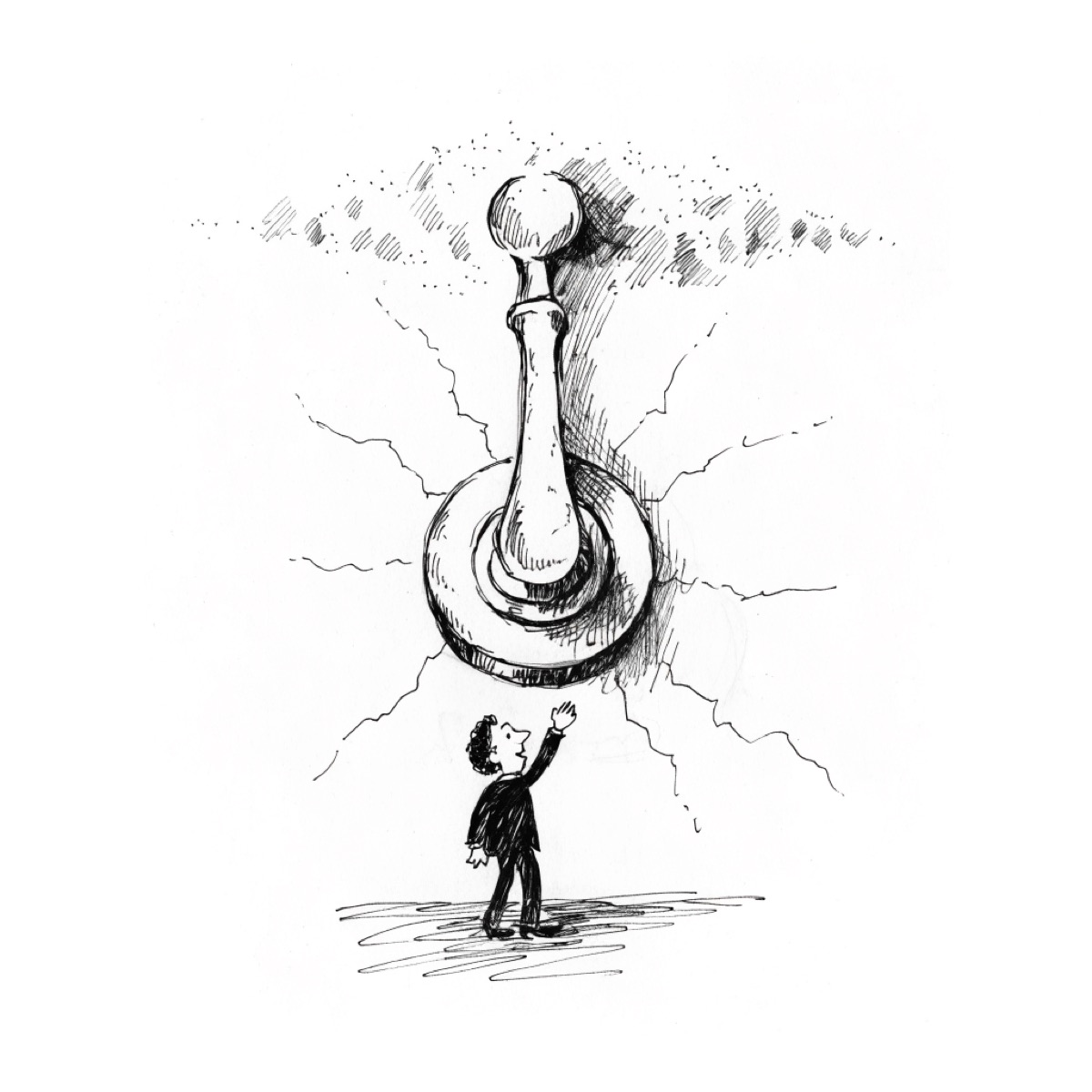
Picture a transistor gate so small that only ten silicon atoms span its width. Not ten rows of atoms — ten atoms, side by side. That is where the semiconductor industry is right now, racing toward 2-nanometer production nodes that Intel, TSMC, and Samsung all plan to reach by 2025 or 2026. At that scale, you are no longer engineering with matter the way a watchmaker engineers with gears. You are bargaining with quantum mechanics, and quantum mechanics is not a great negotiating partner.
The physics literature flagged this problem in the 1990s. The engineers kept building anyway — and brilliantly so. But the wall they are now approaching is not made of technical difficulty. It is made of reality itself.
Moore's Law Was Never a Law — It Was a Bet Against Physics
Gordon Moore's famous 1965 observation was not discovered in a laboratory. It was noticed in a boardroom. Moore, then at Fairchild Semiconductor, looked at the trajectory of transistor counts and made a business forecast: they would roughly double every two years. It turned out to be one of the most consequential predictions in industrial history, not because physics guaranteed it, but because engineers refused to let it fail.
For decades, the workarounds were elegant. Dennard Scaling — the companion principle that predicted power consumption would stay flat even as transistors shrank — meant you could pack more chips without cooking them. It held beautifully until around 2005 to 2007, when it quietly collapsed. Chips were getting so dense that heat became unavoidable, and the industry's answer was to stop making individual cores faster and start multiplying them. Multi-core processors were not a triumph of miniaturization. They were an admission that the original game was getting harder.
Each subsequent fix followed the same pattern. FinFET transistors wrapped the gate around a fin-shaped channel to improve electrical control. Extreme ultraviolet lithography used light with wavelengths shorter than visible light to etch finer features. 3D chip stacking layered dies vertically to maintain density gains without requiring further shrinkage. Each solution was genuinely remarkable engineering. Each one bought time. None of them changed what is coming next, because what is coming next is not an engineering problem.
The Quantum Tunneling Problem, Explained Without a Physics Degree
Here is the thing about electrons at very small scales: they do not behave like marbles. In classical physics, if you put a marble behind a wall, it stays there unless something pushes it over. In quantum mechanics, a particle like an electron is described by a probability wave — a mathematical smear of possible locations — and that wave does not stop at a barrier. It decays through it. Given a thin enough barrier, the electron has a non-trivial probability of simply appearing on the other side, not by crossing it, but by quantum tunneling through it, the way a ghost might pass through a wall rather than opening a door.
This is catastrophic for binary logic in a very specific way. A transistor is, at its most fundamental, a switch. Current flows and you have a 1. Current stops and you have a 0. The entire architecture of modern computing — every spreadsheet, every video game, every language model — is built on the assumption that these states are reliable and discrete. Tunneling punches a hole in that assumption. Below about 5 nanometers, electrons leak through the "off" state anyway, creating a current where there should be none. The switch is no longer fully off. The 0 is contaminated by a probabilistic whisper of 1.
Think of it this way. Imagine you are building a combination lock, and you discover that the tumblers occasionally click into the open position on their own — not because someone turned the dial, but because the laws of probability briefly allowed it. You could make the lock heavier, redesign the tumblers, use better materials. But if the random clicking is a feature of reality at that scale, you eventually run out of redesigns. That is the transistor's predicament. The lock is becoming unreliable not because of bad manufacturing but because of good physics.
The Industry's Current Toolkit — And Why It's Running Out of Road
The semiconductor industry's best current answer to tunneling is the Gate-All-Around transistor, or GAA. Instead of wrapping a gate around three sides of a channel, as FinFET does, GAA nanosheet designs wrap it around all four. The result is tighter electrostatic control — the gate can more aggressively pinch off the channel and suppress leakage current. Samsung deployed GAA architecture in its 3-nanometer node in 2022. Intel's forthcoming 20A and 18A nodes use a variant called RibbonFET. The physics of the approach is sound and the engineering is extraordinary.
The honest assessment, though, is that GAA suppresses tunneling leakage rather than eliminating it. It is a better tourniquet, not a cure. Materials scientists are pursuing a parallel track, exploring what happens if you replace silicon channels with so-called III-V semiconductors — compounds like gallium arsenide or indium gallium arsenide — or with two-dimensional materials like molybdenum disulfide, which is exactly one molecule thick. An atomically thin channel can maintain much better gate control at extreme scales because there is almost no channel left to lose control of. In the lab, some of these materials are genuinely thrilling. In a factory producing billions of chips per year, getting a monolayer of molybdenum disulfide to deposit uniformly across a 300-millimeter wafer remains, to put it gently, fiendishly difficult.
TSMC's published roadmaps effectively pause at the sub-1-nanometer threshold. Below roughly 0.5 nanometers, you are not patterning a material — you are arranging individual atoms. At that point, the word "transistor" starts to feel less like an engineering specification and more like a philosophical aspiration. The runway is real, and engineers will extract every meter of it. But for the first time in the history of the industry, that runway is now measurable in years, not decades.
The Architectural Rupture — Computing With Uncertainty
If the substrate is probabilistic, perhaps the architecture should be too. This is not a concession of defeat — it may be the most important conceptual shift in computing since John von Neumann sketched the architecture that still underlies most modern processors. The question being asked in a growing number of research labs is not how do we force probabilistic hardware to behave deterministically? It is what can we build if we stop fighting the probability?
One answer is probabilistic computing. Researchers at Purdue University and IBM have demonstrated devices built around so-called p-bits — probabilistic bits that fluctuate randomly between 0 and 1 rather than holding a fixed state. Counterintuitively, networks of p-bits can be engineered to solve certain classes of optimization problems — scheduling, drug discovery, logistics — far more efficiently than deterministic chips, because those problems are themselves probabilistic in nature. You are not asking the chip to guess randomly. You are asking it to sample a probability distribution intelligently, which is exactly what a network of stochastic switches naturally does.
A second direction is neuromorphic computing — chips modeled not on binary switches but on biological neurons, which fire in temporal patterns rather than discrete on/off states. Intel's Loihi 2 processor and IBM's NorthPole chip both exemplify this approach: they are inherently tolerant of the kind of soft, analog-ish behavior that quantum leakage produces, because their operating principles never demanded perfect binary discipline to begin with. Early results on tasks like edge detection, sensory processing, and sparse pattern recognition have been striking — Loihi 2 achieving certain inference tasks at a fraction of the energy cost of conventional chips.
Then there is quantum computing itself, which does not try to avoid tunneling or superposition but weaponizes them. Google's Sycamore processor completed a specific sampling problem in 200 seconds that Google claimed would take a classical supercomputer 10,000 years — though that claim remains contested. IBM has mapped out a roadmap to 100,000-qubit processors by the end of the decade. Quantum computing will not replace classical computing for most tasks, but for chemistry simulation, cryptography, and certain optimization problems, it represents a genuinely new computational substrate rather than an improvement to an old one.
What Comes After the Transistor
None of these alternatives are ready to replace the silicon chip on your laptop. Probabilistic computing requires new programming paradigms that most developers do not yet speak. Neuromorphic chips excel at narrow tasks and remain difficult to program for general use. Quantum computers require temperatures near absolute zero and error rates that still humble their architects. The transition, if and when it comes, will be messy, uneven, and probably invisible to most people until it suddenly is not.
But the deeper point is worth sitting with. The transistor's dominance was never ordained. It won because it was the best physical implementation of a binary logical idea, and binary logic turned out to be a staggeringly powerful way to represent and manipulate information. If the physical implementation has finally hit its ceiling, the question is not whether computing ends. The question is whether the binary idea itself — the entire conceptual edifice of ones and zeros — was always just one way of thinking about computation, rather than the only way.
Ten atoms wide. That is where we are. And just beyond that edge, the electrons stop asking our permission.