Science · 6 min read
What the Slowdown of Antarctic Bottom Water Circulation Means
A parcel of water sinking off Antarctica today won't resurface until around the year 3000 — and the circulation driving that journey is already collapsing. Almost nobody is talking about it.
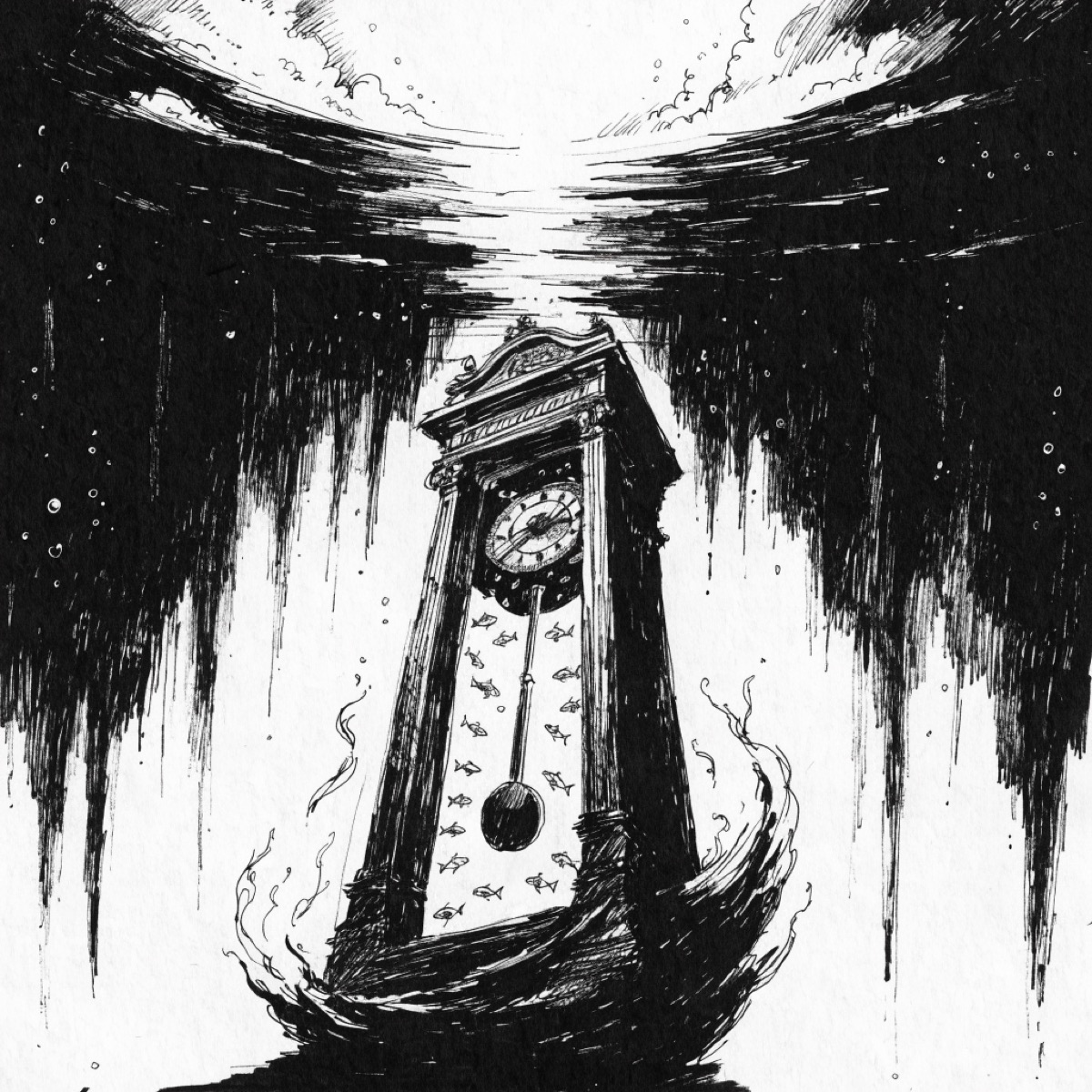
A parcel of water slipping off the Antarctic shelf right now will not see sunlight again until roughly the year 3000. That is longer than the entire span of recorded Western history — longer than the Roman Empire, the Renaissance, and every century since Columbus combined. While climate scientists and journalists have spent years worrying about the Atlantic's famous 'conveyor belt' switching off, a deeper, older, and colder system has been quietly losing power beneath all of it. The question worth asking: what happens to the planet when the circulation that controls the chemistry of the ocean floor slowly stalls?
Two Conveyor Belts, Not One
Most educated people have at least a passing acquaintance with thermohaline circulation — specifically the Atlantic Meridional Overturning Circulation, or AMOC. It is the system that carries warm tropical water northward, releases heat over Europe, cools and sinks near Greenland, and returns south as a deep cold current. It has a starring role in climate journalism, a cameo in The Day After Tomorrow, and a legitimate claim on our anxiety.
But AMOC is only half the story. Beneath it — and beneath virtually every corner of the world's ocean — flows a second system called Antarctic Bottom Water (AABW) circulation. The densest, coldest seawater on Earth forms along the Antarctic continental shelf, plunges to the seafloor, and spreads outward in a slow, dark river across all three ocean basins. It is the ocean's true foundation, and it almost never makes the news.
The reason for the neglect is understandable. AABW operates two to four kilometers below the surface. It moves on timescales of 500 to 1,500 years. And throughout the entire span of human civilization, it has been almost preternaturally stable — a geologic given, as reliable as the tides. That stability is now ending.
How Antarctic Bottom Water Is Born
To understand what is being lost, it helps to picture the factory that makes it. Along the Antarctic coast, fierce katabatic winds scour openings in the sea ice called polynyas — dark, steaming patches of exposed ocean in the middle of a frozen landscape. When seawater freezes in these openings, it expels salt into the water below. That remaining brine becomes so cold and so salty — so extraordinarily dense — that it has only one direction to travel: straight down.
The descent is not gentle. This water cascades down the continental slope at speeds that can locally rival a fast-moving river, plunging toward the abyssal plains four kilometers below. As it spreads outward across the ocean floor, it carries a chemical fingerprint — high oxygen, low temperature, distinctive isotope ratios — that oceanographers can track like a dye trace thousands of miles from its origin.
The scale of the pump is staggering. At peak output, the Antarctic system moves roughly 20 to 30 sverdrups — one sverdrup being one million cubic meters per second, or approximately 25 times the combined flow of every river on Earth. In terms of sheer volume, it is a match for AMOC. The difference is that it operates in total darkness, at crushing pressure, in a part of the ocean most humans will never interact with in any direct way. Out of sight has meant out of mind.
The Measurements That Should Be Front-Page News
In 2023, a team of Australian and European researchers published findings in Nature Climate Change that reframed the stakes. Combining data from Argo floats — autonomous sensors that drift through the ocean interior — with decades of historical ship surveys, they concluded that AABW formation has slowed by approximately 30% since the 1990s. To put that in perspective: the AMOC weakening that regularly generates alarming headlines represents a decline of perhaps 15% over a similar period. The forgotten circulation is losing power faster, and it is barely registering in public discourse.
The culprit is freshwater. As the West Antarctic Ice Sheet and glacial systems like Thwaites and Pine Island accelerate their melt, they pour enormous volumes of fresh, relatively light water onto the ocean surface around Antarctica. That freshwater lid prevents the cold, salty brine from achieving the density it needs to sink. The pump, in effect, is being switched off from above.
What follows is a feedback loop with uncomfortable implications. Slower sinking means less oxygen reaches the deep ocean. Altered oxygen levels change the microbial communities responsible for decomposing organic matter on the seafloor. Less efficient decomposition can shift the balance between carbon being buried in sediment — removed from the atmosphere — and carbon being remineralized back into the water column, where it can eventually make its way back into the air. The ocean's deepest carbon sink begins to leak.
What the Abyss Does for the Rest of Us
It is tempting to treat events four kilometers underwater as somebody else's problem. They are not.
The deep ocean is habitable — teeming with chemosynthetic ecosystems, cold-water coral gardens, and the strange, slow-metabolizing creatures of the abyss — largely because AABW continuously refreshes it with oxygen. A prolonged slowdown creates expanding dead zones at depth. Those dead zones don't stay contained: they alter the upwelling patterns that deliver cold, nutrient-rich water to the surface, affecting fisheries from the Southern Ocean to the Pacific coast of the Americas.
Then there is the carbon accounting. The biological pump — the process by which organisms at the surface fix carbon, die, and sink — removes CO₂ from the atmosphere on million-year timescales. AABW circulation governs the seafloor chemistry that determines whether that carbon stays locked in sediment or gets cycled back. Weaken the circulation, and you potentially weaken one of Earth's most ancient and reliable mechanisms for keeping atmospheric carbon in check.
Finally, the deep circulation redistributes heat across the planet in ways that climate models are only beginning to capture at full resolution. The abyssal layer acts as a thermal buffer, absorbing heat on century-long timescales. Disrupting its flow doesn't just affect the deep — it eventually changes what the surface ocean does with the heat it receives.
The Millennium Problem
There is a particular kind of danger in systems that move slowly. AMOC, if it collapses, will produce changes visible within years or decades — European winters turning brutal, monsoons shifting, sea levels rising along the American Atlantic coast. Those consequences are terrible, but they are at least legible within a human lifetime. The AABW slowdown operates on a different clock entirely.
The water being denied its descent today would have spent the next several centuries oxygenating the abyss, locking away carbon, and moderating the thermal budget of the deep ocean. The consequences of its absence won't fully materialize for generations. By the time the effects are unambiguous — dead zones spreading, deep-sea ecosystems collapsing, the carbon sink measurably weakening — reversing course will be a problem for people living in centuries we haven't named yet.
There is something almost philosophical about that lag. We are accustomed to thinking of environmental damage in terms of things we can see and measure within our own lifetimes. The AABW story asks us to hold a longer horizon: to care about an ocean that breathes once a millennium, and to recognize that we may be suffocating it before most of us even knew it was breathing.