Technology · 8 min read
Why Perfect Clock Synchronization Would Break the Internet
Your devices are running on deliberately falsified clocks—and the engineers who built the internet did it on purpose. The story of why perfect time synchronization would break everything we depend on is one of the strangest paradoxes in modern technology.
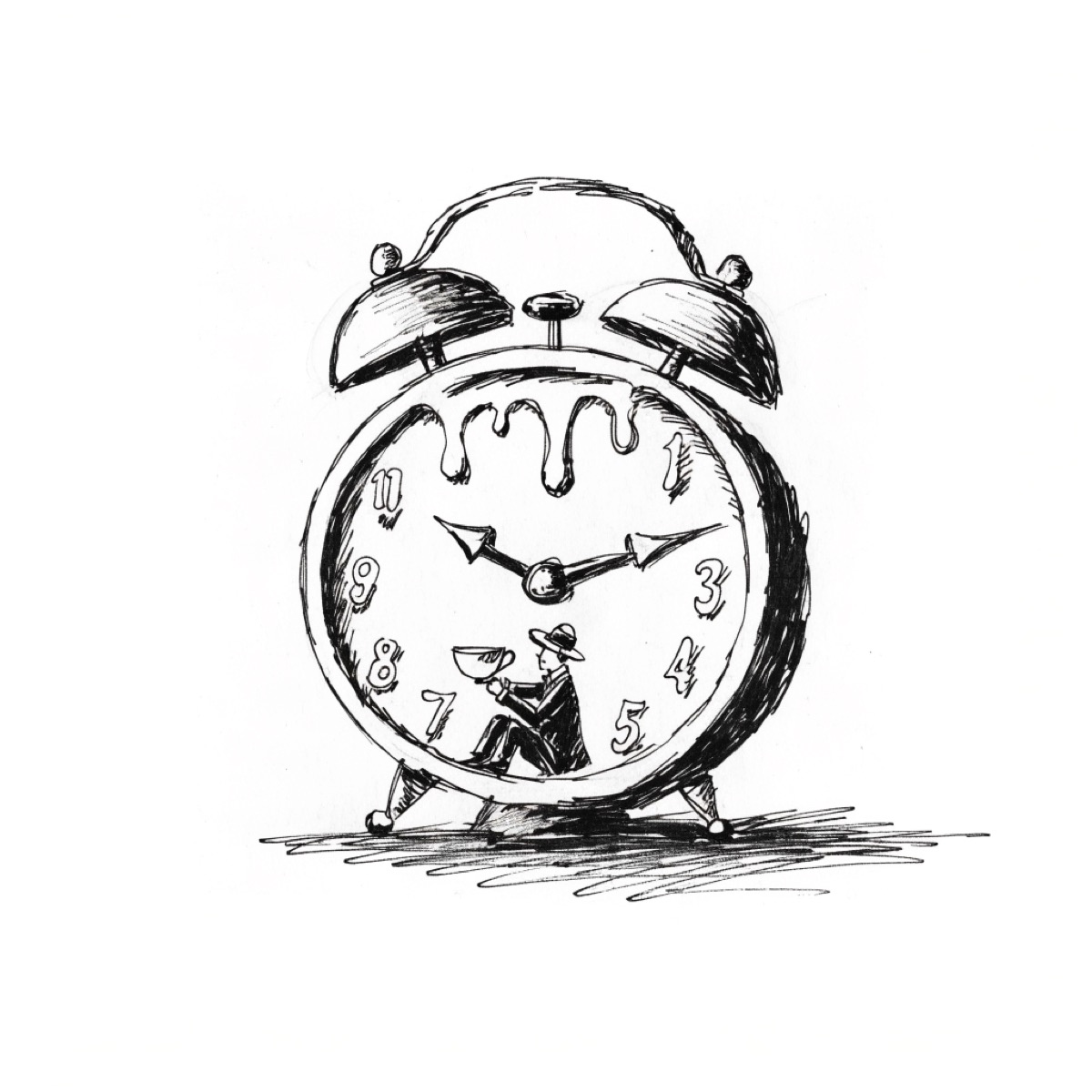
On May 6, 2010, nearly a trillion dollars vanished from American stock markets in under forty-five minutes—then reappeared, ghostlike, before the closing bell. Investigators spent months untangling the cause, and buried in the technical post-mortems was an unsettling detail: high-frequency trading algorithms on different servers had each believed they were acting in precise lockstep, responding to the same market signal simultaneously. The collision of those competing certainties sent cascading sell orders ricocheting through the system faster than any human could intervene.
The uncomfortable truth behind that chaos? We live in an age of atomic clocks accurate to one second in 300 million years, of GPS satellites pinging signals across 20,000 kilometers of vacuum—and yet the timestamps your laptop, your phone, and every server on the internet generate are, in a meaningful and deliberate sense, lies. Not errors. Not failures. Lies by design.
This is the story of why perfect clock synchronization across networked machines doesn't just fail—it causes catastrophic collisions—and how engineers built a global timekeeping system that embraces dishonesty as one of its core features.
What Your Clock Actually Measures (Hint: Not Time)
Inside your computer sits a small quartz crystal that flexes at a predictable frequency when electricity passes through it. Your system clock is simply counting those vibrations. The problem is that "predictable" is doing an enormous amount of work in that sentence—temperature changes, manufacturing variation, and plain old physical wear mean these crystals drift by anywhere from 0.5 to 5 milliseconds per day.
That sounds trivial until you multiply it across millions of machines that need to agree on when things happened. A server that has been running for three months without synchronization might believe it's living in a completely different minute than its neighbor in the same rack.
The obvious solution—regularly syncing to a master atomic clock over the internet—runs straight into a second problem. By the time a synchronization signal travels from the U.S. Naval Observatory's atomic clock to your laptop, the "correct" time it was carrying is already stale. Even at the speed of light, network hops introduce latency measured in milliseconds. You are, always and inescapably, syncing to a snapshot of the past.
This is why the Network Time Protocol (NTP), the backbone of internet timekeeping since 1985, uses something called slew adjustment. Rather than snapping your clock forward or backward to the correct time in one jump, NTP gently bends your clock—speeding it up or slowing it down by tiny increments over minutes—until it converges on consensus. An abrupt clock correction, it turns out, can corrupt running database transactions, break cryptographic certificates, or cause log files to record events happening "before" the processes that triggered them. So NTP deliberately distorts your experience of time to keep your software from noticing.
The Synchronization Paradox—Why Perfect Is Catastrophic
Here is where the story gets genuinely strange. If imperfect synchronization causes drift and confusion, surely better synchronization is the answer? Engineers at large-scale systems learned, often painfully, that the opposite is true.
When thousands of distributed servers synchronize their clocks with high precision, they also synchronize their behaviors. Cache expiration timers fire at the same instant. Database health checks all wake up together. Retry algorithms, triggered by the same failure, attempt to reconnect in perfect unison. The result is what systems engineers call the "thundering herd"—a wave of simultaneous resource demands that overwhelms the very infrastructure it was trying to coordinate.
The timestamp tie problem is even more insidious. In distributed databases, two transactions recorded at the exact same millisecond create an unresolvable conflict. The database needs to pick a winner—to decide which write happened "first"—but the timestamps give it no basis for that decision. Without a tiebreaker, you get either data corruption or deadlock, the database equivalent of two people reaching for a doorknob at precisely the same moment and neither being able to turn it.
This isn't theoretical. The 2012 Amazon Web Services outage that knocked major websites offline for hours has been traced in part to cascading effects triggered when synchronized machines made conflicting assumptions simultaneously. Apache Cassandra, a distributed database used by Netflix, Instagram, and hundreds of enterprises, has documented failure modes specifically caused by what engineers call "clock skew events"—moments when clocks agree too well, then disagree catastrophically on consequences.
The Elegant Hack—Probabilistic Drift as a Design Philosophy
The engineering response to this paradox is, once you see it, almost beautiful: if synchronization causes collision, deliberately desynchronize.
The technique is called jitter—the intentional injection of random delay variance into synchronized processes. Instead of ten thousand servers all refreshing their caches at T+60 seconds, they each wait T+60 seconds plus a random value between 0 and 5 seconds. The actions spread across a window rather than clustering at a point. Controlled randomness becomes a stability mechanism. The lie of imprecise timing is promoted from bug to feature.
Google's approach to this problem, built into its Spanner database, is perhaps the most philosophically sophisticated implementation in commercial engineering. Spanner uses a system called TrueTime, which doesn't report a single timestamp—it reports a range. A TrueTime call might return "the current time is somewhere between T−7ms and T+7ms." When a transaction wants to commit, it must wait out that uncertainty interval before doing so, guaranteeing that any other transaction in the world, even on a machine with a slightly different clock, will see events in the correct order.
Google is essentially encoding epistemic humility into its database engine—admitting what it doesn't know, then using that admission as the foundation for correctness. This is a live, real-time negotiation with the CAP theorem, the fundamental principle of distributed systems stating that you cannot simultaneously guarantee consistency, availability, and partition tolerance when machines can't perfectly communicate. The clock "lie" is how engineers buy their way toward the best available compromise.
GPS, Relativity, and the Clocks That Must Lie to Stay True
The strangeness deepens when you look at the infrastructure underlying all of this: GPS satellites, which serve as the ultimate reference for precision timekeeping across the internet.
Each GPS satellite carries atomic clocks of extraordinary precision—but those clocks are running at the wrong speed. Special relativity predicts that clocks in motion run slightly slower than stationary ones; general relativity predicts that clocks in weaker gravitational fields (like orbit) run faster. These effects nearly cancel, but not quite. Without deliberate relativistic correction, GPS clocks would drift by about 38 microseconds per day—small enough to sound trivial, large enough to introduce positioning errors of roughly 10 kilometers every 24 hours.
Your phone's GPS "timestamp" is therefore not a measurement of physical reality. It is a reconciliation—a weighted consensus synthesized from signals originating on four or more satellites, each running at a slightly different relativistic rate, corrected by ground stations, filtered through atmospheric delay models, and finally handed to your device as a single confident number labeled "now." What you receive is a negotiated fiction. A very useful, carefully constructed one.
This same structure of disclosed approximation runs through the most demanding scientific timekeeping in the world. The gravitational wave detectors at LIGO, which must time the arrival of spacetime ripples at facilities in Louisiana and Washington state to within microseconds, use GPS-disciplined clocks and explicitly model their uncertainty. Particle collision experiments at CERN timestamp millions of events per second using systems whose error budgets are published alongside the data. Climate sensor networks spanning ocean buoys and mountain weather stations synchronize via NTP and document the drift characteristics of each node.
Science's most precise measurements are not built on perfect clocks. They are built on honest clocks—instruments that report not just a value but a known margin of doubt.
The Legal and Epistemic Fallout—When Timestamps Go to Court
The gap between how timestamps are generated and how they are interpreted has begun appearing in courtrooms, with uncomfortable results.
Digital forensics experts now routinely demonstrate to juries that file creation timestamps can be off by hours due to timezone misconfiguration, system clock drift, or deliberate manipulation requiring nothing more sophisticated than the Windows Control Panel. Transaction logs—the canonical record of what happened when in a financial dispute or a breach investigation—inherit all the approximation and negotiated uncertainty described above, then get submitted as evidence of precision.
Financial regulators have tried to address this directly. The SEC and FINRA's CAT (Consolidated Audit Trail) system mandates microsecond-accurate timestamps on all U.S. equity trades—an attempt to reconstruct market events with enough resolution to identify manipulation and error. The mandate is real. The compliance is genuinely impressive. But the machines generating those timestamps are still crystal oscillators, still synced via NTP, still subject to the same physics of light-speed latency and probabilistic drift. Microsecond accuracy is achievable within a single data center. Across the national market system, it is an aspiration, carefully and professionally managed, but an aspiration nonetheless.
None of this means the system is broken or untrustworthy. It means the system is engineering—the art of building reliable structures from unreliable components, of extracting useful certainty from irreducible uncertainty.
The deepest insight buried in all of this isn't technical. It's epistemological. We built civilization's most critical infrastructure—financial markets, scientific instruments, the legal record—on a foundation that its own architects know to be approximate. And it works, not despite that acknowledgment but because of it. The engineers who added jitter, who invented uncertainty intervals, who published their drift coefficients, understood something that pure precision-seekers missed: a system that knows what it doesn't know is more trustworthy than one that pretends otherwise. Your clock is lying to you. The honesty of that lie is holding everything together.