Health · 8 min read
How Humans Slept Before the Industrial Revolution
For centuries, humans slept in two distinct shifts — and the quiet hour in between was considered sacred, not catastrophic. The Industrial Revolution didn't just change how we work; it fundamentally rewired how we rest, and millions of people are still paying the price for a problem that may not exist.
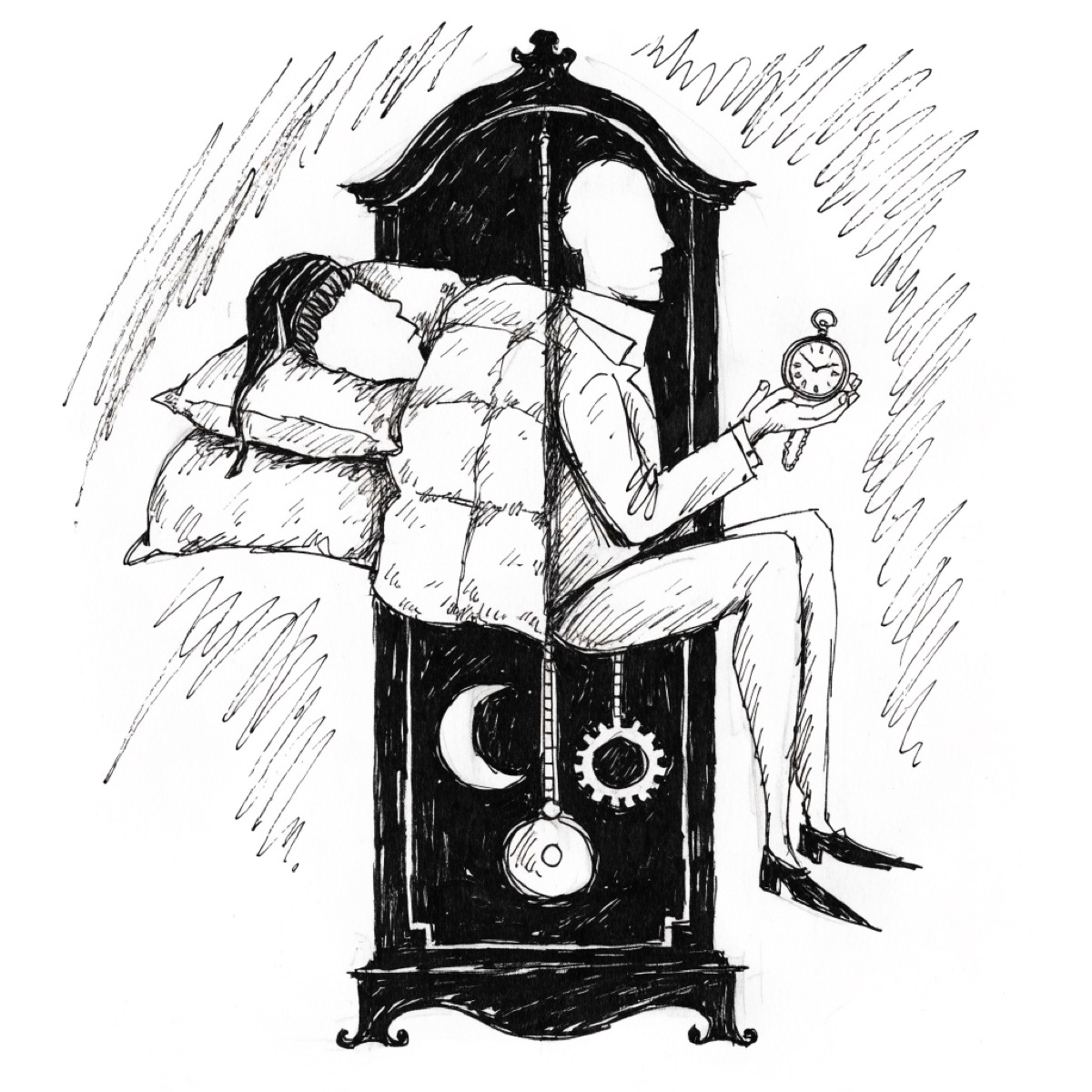
You jolt awake at 3 a.m. The room is dark, the house is silent, and before you've even fully surfaced into consciousness, the calculation has already begun: if I fall back asleep right now, I can still get four hours. Then three and a half. Then three. The dread metastasizes into its own alert, self-sustaining system — you're not just awake, you're anxious about being awake, which makes you more awake, which makes you more anxious.
It's one of the most recognizable experiences in modern life. Which makes what comes next so disorienting.
What if your body isn't malfunctioning? What if it's remembering something?
For most of human history, waking in the middle of the night wasn't a crisis to be managed or a symptom to be treated. It was scheduled. It was expected. In many cultures, it was cherished. The story of how that changed — and what was lost when it did — is one of the stranger and more consequential erasures in the history of everyday life.
The Historical Record Nobody Taught You
In the early 1990s, historian A. Roger Ekirch of Virginia Tech began noticing something odd in the pre-industrial documents he was researching for a book on nighttime in Western history. References kept appearing — in diaries, court records, medical manuals, and literary texts — to something called "first sleep" and "second sleep." Not as exceptions or anomalies. As unremarkable facts of life.
It took him sixteen years and the examination of over five hundred sources to map the full picture. What he found was that, before the industrial era, the dominant human sleep pattern wasn't a single consolidated block of eight hours. It was two shorter periods of sleep, each roughly four hours long, separated by an interval of wakefulness lasting anywhere from thirty minutes to two hours.
The references are remarkable in their casualness. Geoffrey Chaucer mentions characters waking after their "first sleep" in The Canterbury Tales. A 14th-century French surgeon named Henri de Mondeville advised married couples that the optimal time to conceive was during the waking interval between sleeps, when the body was rested but the mind was still soft and receptive. In an 1786 court case, a witness's account of being somewhere "between sleeps" was entered into the record without a single note of clarification — because everyone in that courtroom already knew exactly what it meant.
The linguistic evidence is perhaps the most haunting part. The phrase "first sleep" and its cognates — premier sommeil in French, primo sonno in Italian — appear across centuries and cultures, embedded so deeply in everyday language that the concept required no explanation. Those phrases have now vanished entirely. We didn't just stop sleeping that way; we lost the words, and with them, the memory that the pattern ever existed.
What the Brain Actually Does in the Dark
To understand why biphasic sleep might be our biological baseline, it helps to know what the brain is actually doing across a night. Sleep isn't a uniform state of rest — it's a precisely orchestrated sequence of cycles, each approximately 90 minutes long, cycling between non-REM (NREM) stages and REM sleep.
The architecture is not symmetrical. The first half of the night is dominated by slow-wave, deep NREM sleep — the kind that restores the body, consolidates motor memories, and clears metabolic waste from the brain via the glymphatic system. The second half tilts sharply toward REM sleep, the stage associated with vivid dreaming, emotional processing, and creative consolidation. The biological hinge between these two phases falls naturally around the four-hour mark.
That transition point isn't random. During the waking interval that occurs there, the pituitary gland releases a surge of prolactin — the same hormone that floods the body during nursing and orgasm. Prolactin produces a distinctive state: calm, alert, slightly dreamy, and deeply unhurried. It is, neurologically speaking, a different kind of consciousness than ordinary daytime wakefulness.
The most compelling evidence comes from a landmark study conducted in the 1990s by psychiatrist Thomas Wehr at the National Institutes of Health. Wehr's team placed healthy volunteers in conditions of 14 hours of darkness per night — roughly approximating pre-industrial winter — for several weeks. Within a month, nearly all the subjects had spontaneously reverted to a biphasic pattern: two sleep periods of roughly four hours each, separated by a quiet waking interval. Crucially, the subjects didn't report insomnia during those intervals. They reported something closer to meditation. Blood tests confirmed elevated prolactin throughout. Their bodies, freed from artificial light, had simply remembered what they were.
The Hour Between: What People Did With It
Pre-industrial accounts of the waking interval paint a picture that is almost impossible to imagine in the context of modern 3 a.m. anxiety. People used the time for prayer. For sex. For conversation with a sleeping partner who had also naturally stirred. For lying quietly and reflecting on their dreams while the images were still fresh — a practice that some medieval physicians actually prescribed as a form of spiritual self-examination.
The Catholic Church, famously attentive to the rhythms of daily life, had already built this natural awakening into its liturgical structure. The canonical hour known as Matins — sometimes called the Night Office — was designed to be observed in the small hours, around 2 or 3 a.m. Monks weren't forcing themselves awake against their biology. They were building a religious practice around it.
Psychologically, the interval functioned as a kind of natural processing chamber. Without the intrusion of artificial light or the pressure of an imminent alarm, the half-dreaming mind could wander through the residue of the day — its frictions, its unresolved tensions — in a state of gentle, unfocused awareness. Cognitive scientists would now recognize this as something close to the "default mode network" in its most productive state. Pre-industrial people didn't have that terminology. They just knew the dark hour was good for thinking.
The pattern wasn't confined to medieval Europe. Ekirch and subsequent researchers have identified references to segmented sleep in West African oral traditions, in accounts from Indigenous communities across North America, and in pre-colonial South American sources. This was not a regional quirk or a cultural accident. It appears to have been the human default — a biological inheritance that different civilizations independently built rituals around, until one technological revolution overrode all of them simultaneously.
How Electricity Rewired the Night (And Who Profits From Our Panic)
The shift didn't happen all at once, but it happened faster than almost any change in human behavior at scale. Gas lighting arrived in European and American cities in the 1820s, pushing the social hours of the middle and upper classes later into the night. Coffeehouses and theaters stayed open longer. The pressure to remain alert later in the evening displaced the onset of first sleep, compressing the window available for two-phase rest.
Then came Edison. After the electric grid became commercially viable in the 1880s, continuous artificial illumination stopped being a luxury and became an expectation. Factories could run at night. Streets were lit. The home bedroom, once a dark sanctuary where the body could follow its natural cues, became an electrically managed environment. Within a generation, the medical literature had quietly shifted its position. What had been an unquestioned biological norm was reclassified. Waking in the night became, by the early 20th century, a symptom. A problem. A disorder requiring intervention.
The economics of that reclassification have been extraordinary. The global sleep-aid market — sleeping pills, melatonin supplements, weighted blankets, white noise machines, blue-light glasses, and subscription-based sleep tracking apps — is projected to exceed $100 billion by 2030. Every product in that market is, at least in part, a solution to a problem that may be partly a creation of the same industrial system that produced it.
The cruelest irony is structural. When someone wakes at 3 a.m. and, in the darkness, reaches for their phone to search "why do I keep waking up at night," the screen's blue light suppresses melatonin, the cortisol spike from anxiety activates the body's stress response, and the cycle of genuine sleeplessness begins in earnest — triggered by the very act of trying to solve a problem that, moments before, wasn't actually one. The pre-industrial sleeper, lying quietly in the dark with elevated prolactin and no phone, never entered that loop.
What This Means for the Millions Who "Can't Sleep"
None of this is an argument against taking sleep disorders seriously. Sleep apnea, restless leg syndrome, and clinical insomnia are real, well-documented conditions with measurable health consequences and established treatment pathways. The point is not that everyone who struggles with nighttime wakefulness is simply a misclassified biphasic sleeper. The point is that some of them are — and nobody is telling them.
"Sleep maintenance insomnia" — the clinical term for waking in the middle of the night and struggling to return to sleep — is one of the most commonly reported sleep complaints in the developed world. A meaningful proportion of people diagnosed with it show no physiological abnormality when studied in a sleep lab. Their sleep architecture is intact. Their problem is not biological. It's psychological: the catastrophic misinterpretation of a normal awakening, transformed into a crisis by expectation and anxiety.
The intervention with the most evidence behind it isn't a pill. Cognitive behavioral therapy for insomnia — CBT-I — has consistently outperformed pharmacological treatments in long-term outcomes, and a key component of it involves correcting exactly this misinterpretation. Psychologist Gregg Jacobs at the University of Massachusetts Center for Mindfulness has shown that simply educating patients about the historical normalcy of biphasic sleep — telling them, straightforwardly, that waking at 3 a.m. is not a malfunction — measurably reduces anxiety and, paradoxically, shortens the duration of the waking interval. Knowing that your body is behaving as it was designed to behave is, it turns out, genuinely therapeutic.
There is something worth sitting with here that goes beyond sleep science. Somewhere in the last two centuries, a biological experience that humans had always understood as a moment of quiet between two necessary rests — a time for prayer, or dreams, or simply lying in the dark with someone you loved — was repackaged as a dysfunction, and an industry assembled itself to treat it. The problem isn't just that we sleep wrong. The problem is that we've been taught to be afraid of our own darkness. And the fear, it turns out, is the disease.