Health · 6 min read
How Loneliness Affects the Body: The Biology of Social Isolation
Your doctor can measure the damage loneliness does to your cells — the inflammation, the accelerated aging, the rewired immune system — and it looks remarkably like a slow-motion physical injury. The science is no longer metaphorical: social isolation triggers a specific biological cascade that quietly drives heart disease, dementia, and early death.
The Doctor Who Couldn't Find the Disease
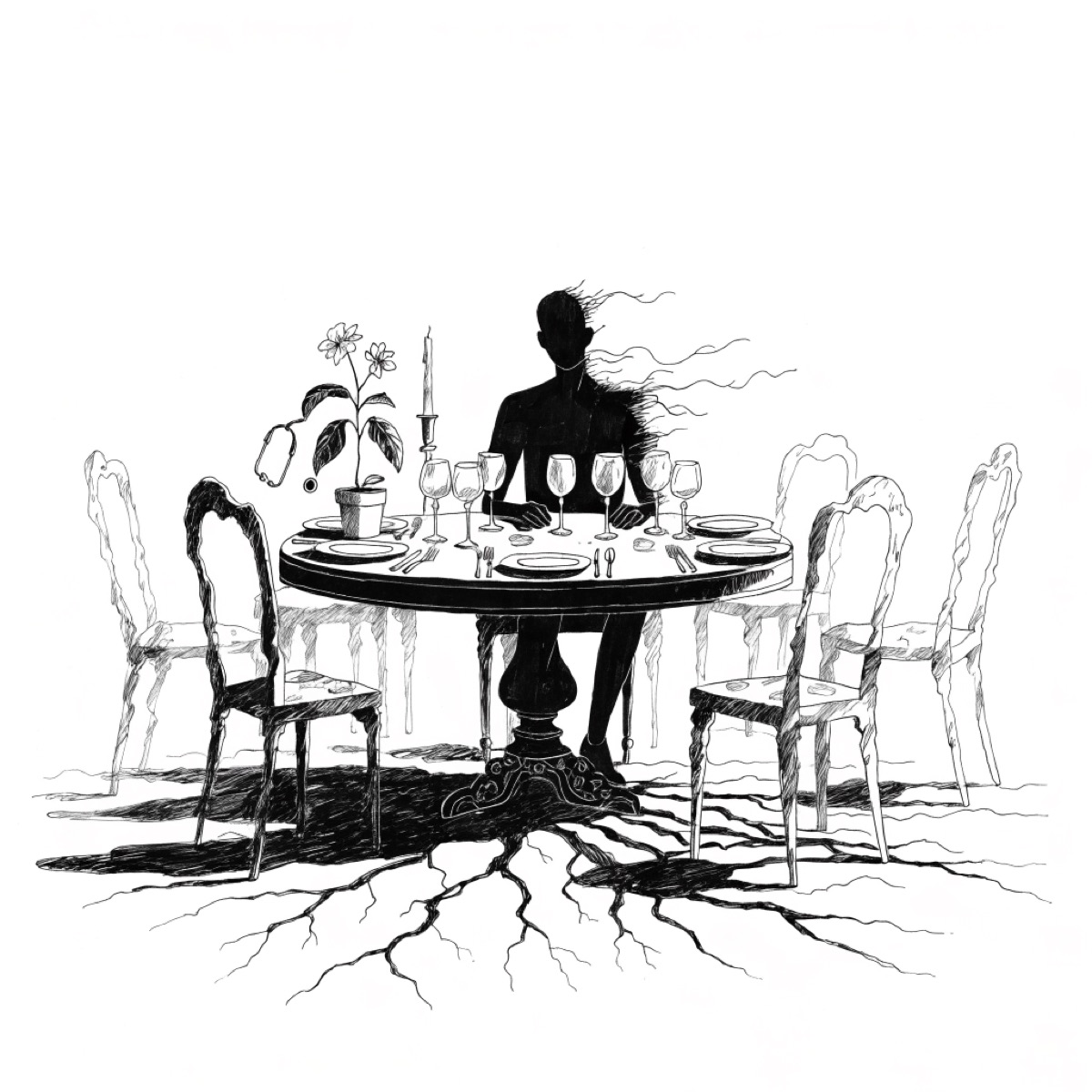
The patient's bloodwork told a troubling story. Elevated inflammatory markers. Chronically high cortisol. Telomeres — the protective caps on chromosomes that function as a kind of cellular aging clock — shorter than they should be for someone her age. No pathogen. No injury. No diagnosed autoimmune condition.
The culprit, after careful history-taking, turned out to be something her chart had no billing code for: years of profound social isolation following the death of her husband and a move away from her community. Her body had been responding to loneliness the way it would respond to an open wound — and had been doing so, quietly and continuously, for nearly a decade.
This is not a metaphor. In 2023, U.S. Surgeon General Vivek Murthy declared loneliness a public health epidemic, estimating that roughly 50% of American adults report measurable loneliness — a condition now associated with a mortality risk equivalent to smoking 15 cigarettes a day. The question worth sitting with is this: what if loneliness was never "just in your head"? What if it was always, first and foremost, happening in your cells?
What Science Actually Means by "Loneliness"
Before the biology makes sense, the definition has to be precise — because the popular understanding of loneliness is almost exactly wrong. Loneliness is not synonymous with being alone. It is the perceived gap between the social connection you want and the social connection you have. That distinction is everything.
The late John Cacioppo, a psychologist at the University of Chicago whose decades of research became foundational to this field, was meticulous on this point. Loneliness is not depression. It is not social anxiety. It is its own measurable psychological state — with its own distinct physiological fingerprint — that can exist even in the middle of a crowded room.
This is what makes loneliness simultaneously so difficult to diagnose and so dangerous. You can live largely in solitude — a monk, a writer on a remote island — and be biologically well, so long as your connections feel sufficient to you. You can be surrounded by colleagues and family and still trigger every alarm in your immune system if those connections feel hollow or absent. The body is not counting people. It is assessing belonging.
The Gene Expression Discovery That Changed Everything
In a series of landmark studies, Steven Cole and his colleagues at UCLA did something that would have seemed impossible a generation ago: they looked at how loneliness changes which genes are turned on and off. The results were not subtle.
Chronically lonely individuals showed a consistent genomic pattern that researchers call the Conserved Transcriptional Response to Adversity, or CTRA. This is the same signature the body produces in response to physical wounds or bacterial infection. The lonely body, at the molecular level, behaves as though it is under siege.
Specifically, the CTRA involves two simultaneous shifts. Pro-inflammatory genes — including those governing the production of cytokines like IL-6, IL-1β, and TNF-α (signaling proteins that marshal immune responses) — are cranked up. At the same time, antiviral genes are dialed down. The lonely immune system is, paradoxically, over-prepared for bacteria and under-prepared for viruses.
The evolutionary logic here is both elegant and haunting. Over millions of years, social exclusion reliably predicted physical danger — predation, starvation, conflict with rivals. A lone human was a vulnerable human. The genome appears to have been shaped by that reality: when the brain registers isolation, the body pre-emptively mobilizes an inflammatory defense, bracing for the wound that social exclusion historically tended to bring. The problem is that in modern life, chronic loneliness keeps that emergency switch permanently flipped to "on" — quietly inflaming tissue, blood vessels, and neural pathways for years at a stretch.
From Molecule to Mortality
Chronic low-grade inflammation is not merely uncomfortable. It is now understood to be a core driving mechanism behind cardiovascular disease, type 2 diabetes, Alzheimer's disease, and several cancers. Loneliness, by continuously activating inflammatory pathways, functions as an upstream risk factor — a hidden engine — behind the leading causes of death in the developed world.
Sleep is where the cascade accelerates. Lonely individuals show measurably worse sleep architecture: more micro-awakenings through the night, less time in the restorative slow-wave sleep stages where cellular repair happens. Poor sleep independently elevates cortisol and inflammatory markers the next day. This creates a feedback loop with no obvious exit — loneliness degrades sleep quality, and degraded sleep amplifies the body's stress response, which deepens the sense of threat and vigilance that loneliness already produces.
At the cellular level, the toll becomes literal. Multiple studies have found that chronic loneliness is associated with accelerated telomere shortening. Telomeres — the protective sequences at the ends of chromosomes — naturally shorten as we age, and their length is considered one of the most reliable markers of biological age. Loneliness does not merely feel like it ages you. It measurably does, at a pace that can diverge significantly from your chronological age.
Why the Brain Treats Rejection Like Physical Pain
Neuroimaging research has added another layer that is hard to dismiss. In studies using fMRI, social rejection and exclusion activate the dorsal anterior cingulate cortex — the same brain region that processes physical pain. This is not a loose analogy; it is the same neural real estate, responding with measurably similar intensity.
Naomi Eisenberger at UCLA, who has conducted some of the most cited work in this area, found that participants playing a simple computerized ball-tossing game who were suddenly excluded by the other (computer-controlled) "players" showed immediate activation of social pain circuitry. The brain does not distinguish cleanly between a broken bone and a broken social bond — both register as threats requiring urgent attention.
This explains why social rejection can feel physically unbearable in a way that seems disproportionate, and why over-the-counter pain relief has shown modest effects on social pain in preliminary studies — an odd finding that only makes sense if the two systems genuinely share infrastructure. The brain built its social alarm system on top of its physical danger system, which means loneliness arrives in the body with the full biochemical weight of an injury.
What This Means for How We Treat It
The biological framing changes what kinds of interventions make sense. If loneliness were purely psychological, talk therapy and mindset shifts might be sufficient. But if it operates through gene expression, immune function, and neural pain circuitry, the standard of care needs to reflect that complexity.
Cacioppo's own research suggested that the quality of social connection matters far more than quantity — and that simply increasing social contact for lonely people without addressing the underlying sense of perceived disconnection can be ineffective or even backfire, increasing hypervigilance to social threat. Targeted cognitive interventions that specifically address the threat-biased thinking patterns loneliness produces showed more promise in his trials.
Several countries have begun taking the public health dimension seriously. The United Kingdom appointed a Minister for Loneliness in 2018. Japan followed in 2021. Murthy's 2023 advisory called for redesigning physical environments, workplaces, and technology policies with social connection as an explicit health outcome — the same way urban planners now consider air quality.
The Uncomfortable Insight
Here is what the science ultimately forces us to confront: loneliness is not a character flaw, a failure of self-sufficiency, or a private emotional problem to be managed quietly. It is a biological state — as real, as measurable, and as consequential as hypertension — that the body enters when it perceives social disconnection, and that inflicts compounding physiological damage for as long as it persists.
We have spent decades treating the symptoms — the heart disease, the cognitive decline, the poor sleep — while leaving the upstream cause largely unaddressed, in part because the upstream cause sounds too soft to take seriously. The genome, it turns out, never made that mistake. Long before we had the tools to measure what loneliness does to the body, the body already knew.