Health · 6 min read
How Psychiatric Diagnoses Are Decided by Consensus
In 1973, American psychiatrists voted a mental illness out of existence—not through a clinical breakthrough, but by secret ballot. That moment wasn't a scandal. It was a confession about how psychiatric diagnosis has always worked.
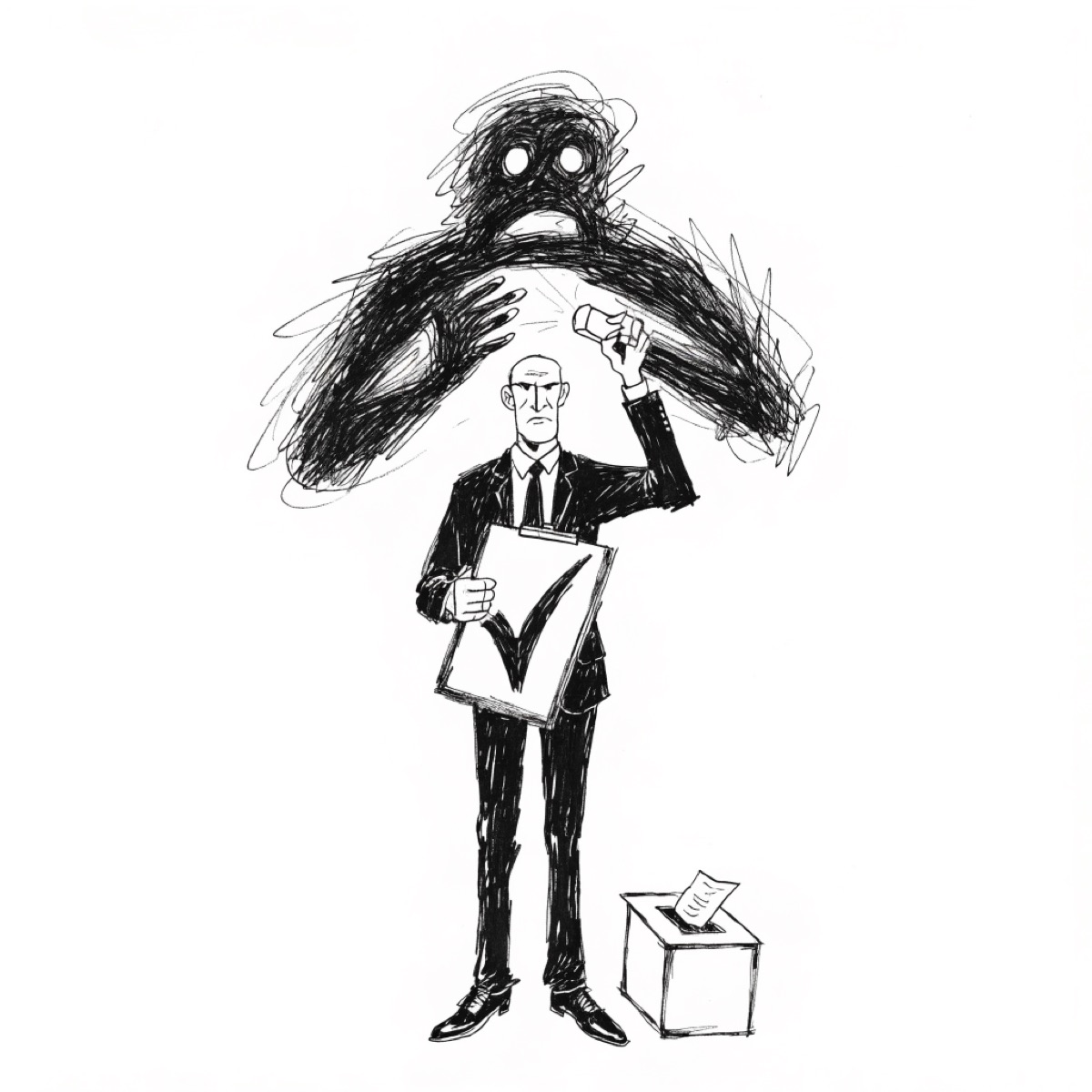
In 1973, the American Psychiatric Association held a vote. Not on a budget, not on leadership, but on whether a mental illness should continue to exist. By a margin of 5,854 to 3,810, homosexuality was removed from the Diagnostic and Statistical Manual of Mental Disorders—twenty-one years after it had been formally classified as a "sociopathic personality disturbance." No clinical trial had been run. No pathogen had been identified or ruled out. No brain scan had changed. Psychiatrists simply marked a ballot, and a condition ceased to be a condition.
The temptation is to treat this as an embarrassment—a historical wrong that medicine has since corrected and moved past. That reading is too comfortable. The 1973 vote was not an anomaly in the history of psychiatric diagnosis. It was the most transparent moment in that history: a rare instance when the negotiation that always underlies diagnosis happened in full public view, with numbered ballots and a declared result.
The Book That Decides What Counts as Sick
The DSM is the authoritative ledger of recognized mental illness in the United States, now in its fifth edition. Its reach extends far beyond American clinics—it shapes insurance coverage, courtroom verdicts, school accommodations, and pharmaceutical approvals worldwide. If the DSM names your suffering, systems are built to respond to it. If it doesn't, you are largely on your own.
What the DSM does not contain is biology. Its categories are not derived from blood tests, brain scans, or identified pathogens. They are defined by symptom checklists agreed upon by appointed committees of clinicians, then ratified by professional vote. This is not a secret, exactly, but it is a fact that sits uneasily alongside the clinical authority the manual commands.
Compare this to the rest of medicine. A diagnosis of Type 1 diabetes maps to a measurable biological mechanism—the autoimmune destruction of insulin-producing cells in the pancreas. A diagnosis of Major Depressive Disorder maps to a consensus that a particular cluster of reported experiences, lasting at least two weeks, crosses a threshold that a committee once decided mattered. The mechanism, if one exists, remains contested. The threshold was chosen.
How the Sausage Gets Made—The Committee Room
Every revision of the DSM begins with working groups: nominated clinicians tasked with reviewing evidence and proposing criteria. These groups argue about symptom thresholds with a specificity that can feel, from the outside, almost arbitrary. Why must a patient have five of nine possible symptoms to qualify for a depression diagnosis, not four? Why two weeks of persistent low mood, not ten days? Why not three weeks? The answers are less algorithmic than they appear.
During the development of DSM-5, the chair of the DSM-IV task force—Allen Frances, a man who had built the previous edition—went public with a detailed critique. He warned the new manual would "medicalize normality," citing proposed expansions of ADHD criteria, the new category of bipolar disorder in children, and the elimination of the "bereavement exclusion," which had previously prevented clinicians from diagnosing grief as depression within two months of losing a loved one. Frances was not an outsider agitating against the establishment. He was the establishment, watching his successor work and finding the process alarming.
There is also the question of who sits in those committee rooms. A 2006 analysis published in Psychotherapy and Psychosomatics found that 56% of DSM-IV panel members had financial ties to the pharmaceutical industry. For panels specifically covering mood disorders and schizophrenia—the diagnostic categories most directly linked to drug prescribing—the figure reached 100%. This is not evidence of deliberate corruption. It is evidence that the people doing the negotiating arrive with interests, relationships, and incentive structures that do not disappear when they take their seats.
The Cultural Timestamp on Every Diagnosis
Every era writes its anxieties into its diagnostic manuals, and the writing is rarely subtle in retrospect. In 1851, a Louisiana physician named Samuel Cartwright formally described "drapetomania"—a supposed mental illness that caused enslaved Black people to flee captivity. The cure he recommended included whipping. In the nineteenth and early twentieth centuries, "hysteria" was applied almost exclusively to women, mapping female emotional expression onto a framework of pathology. In the Soviet Union, "sluggish schizophrenia" was deployed as a clinical instrument to psychiatrically commit political dissidents—people whose disorder, by diagnostic definition, manifested as disagreement with the state.
These examples are not ancient embarrassments that a more enlightened medicine has transcended. They are evidence of a structural feature. When the line between deviance and disorder is drawn by consensus, the surrounding culture inevitably holds the pen. The question is not whether this is happening in contemporary psychiatry. The question is which current categories future historians will look back on with the same discomfort we feel reading Cartwright.
Some candidates are already contested. "Prolonged grief disorder," added in DSM-5-TR in 2022, defines grief lasting more than a year as a clinical condition—a designation that has drawn both defenders (genuine suffering goes untreated without a diagnosis) and critics (grief has a timeline now?). The expanding radius of premenstrual dysphoric disorder, the continuously negotiated borders of autism spectrum disorder—each shows the same tension between real suffering, cultural framing, and the professional interests of those doing the framing.
Why This Doesn't Mean "Mental Illness Isn't Real"
Here is where the argument most often gets hijacked. Pointing out that psychiatric categories are socially negotiated tends to trigger a particular misreading: that the suffering those categories describe must therefore be fabricated, exaggerated, or a matter of personal weakness. This is precisely backwards.
The pain of severe depression, the terror of acute psychosis, the paralysis of debilitating anxiety—these are as real as any broken bone. The dispute is not about whether the suffering exists. It is about where we draw the fence around it, what we name the territory inside, and who holds the deed to the land.
The philosopher Ian Hacking developed a concept that helps here: "looping effects." Diagnostic categories, he argued, don't simply describe people from the outside. They reshape how people understand and experience themselves from within. A teenager who receives an ADHD diagnosis reads their entire past differently—the failed homework, the interrupted friendships—and relates to their future through a new lens. The category becomes partly constitutive of the experience it describes. This is not a reason to distrust diagnosis. It is a reason to recognize that diagnosis is a more powerful and more complex act than labeling.
The Downstream Consequences for Every Patient
The abstraction becomes concrete at the insurance desk. In the United States, mental health coverage is typically contingent on a DSM diagnosis. This means the committee's deliberations—which symptoms to include, which thresholds to set, which conditions to recognize—directly determine whether your suffering qualifies for reimbursement. The vote in the committee room becomes the decision at the claims window.
Patients navigate this terrain constantly, often learning to perform their symptoms in ways that match the diagnostic checklists their coverage requires. Clinicians learn to code strategically, selecting the diagnosis most likely to unlock treatment for a patient whose actual presentation resists clean categorization. The system creates incentives to fit people to categories rather than categories to people.
None of this means the DSM should be abandoned, or that psychiatric diagnosis is useless. It means that the manual is a tool built by humans, revised by humans, shaped by the cultural and commercial pressures of its moment—and that treating it as a neutral discovery rather than an ongoing negotiation has costs. The psychiatrists who voted in 1973 were not doing something unusual. They were doing, in unusually visible fashion, what psychiatric diagnosis has always required: deciding, together, where suffering ends and sickness begins.
That line has moved before. It will move again. The only question worth sitting with is who gets to hold the pencil—and whether they know it's in their hand.