Psychology · 8 min read
What the Ego Depletion Debate Shows About Self-Control
A landmark study found that judges grant parole 65% of the time after breakfast—and nearly 0% right before lunch. What if everything you believe about willpower, discipline, and moral character is just biology in disguise?
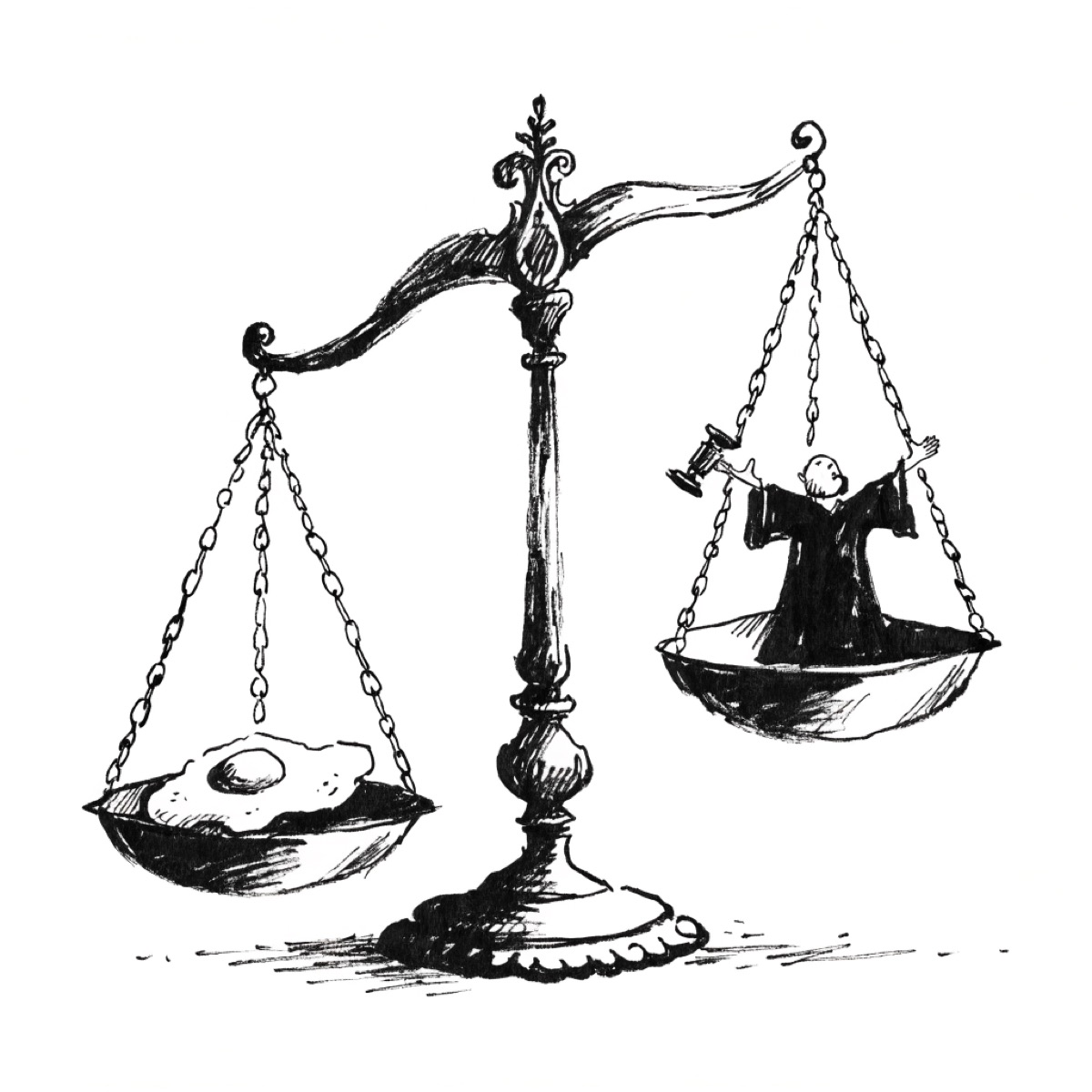
The Judge Who Sentences You Before Lunch
In 2011, a team of researchers led by Shai Danziger published a study that should have upended how we think about human judgment. They analyzed over 1,000 parole hearings before an Israeli parole board and found a pattern so stark it reads like a prank. Judges granted parole roughly 65% of the time at the start of each session. As the session wore on—before a scheduled food break—approval rates collapsed toward nearly zero. Then, after the judges ate, approval rates snapped back up to 65%.
The prisoners seen just before lunch were no more dangerous than those seen just after breakfast. Their crimes were not worse, their behavior records not grimmer. The only variable that changed was the metabolic state of the people deciding their fates.
So here is the uncomfortable question: if a trained legal professional's capacity for mercy is governed by blood sugar, what exactly are we measuring when we praise someone's "iron will"—or condemn someone for lacking it? The thesis of this article is simple and, if taken seriously, fairly radical. Self-control is not a character trait forged in moral fire. It is a biological resource governed by metabolism, sleep, and social safety—and treating it otherwise causes measurable human harm.
The Science of Ego Depletion: What Held Up and What Didn't
The modern scientific story of willpower begins in 1998, in Roy Baumeister's psychology lab at Case Western Reserve University. Participants were brought into a room that smelled of fresh-baked cookies. Some were allowed to eat the cookies. Others were told to eat radishes instead—and to resist the cookies. Both groups were then given a frustrating geometric puzzle to solve. The radish-eaters, who had spent their mental energy on resisting temptation, gave up on the puzzles significantly faster.
Baumeister called the phenomenon ego depletion, and proposed that willpower draws from a single, finite pool—like a muscle that fatigues with use. The idea was intuitive, elegant, and enormously influential. It spawned hundreds of follow-up studies and a popular-science industry built on "decision fatigue" and "willpower as a muscle."
Then came the reckoning. In 2016, a massive pre-registered multi-lab replication effort led by Martin Hagger and colleagues attempted to reproduce the basic ego depletion effect across 23 independent labs. They failed. The effect essentially vanished under rigorous conditions, sending the field into a genuine crisis. The "single resource" model, it seemed, had been built on shakier foundations than anyone wanted to admit.
But here is the crucial distinction that often gets lost in the headlines about replication failures: what collapsed was the specific mechanism—the idea of one unified "willpower tank" draining with each act of resistance. What survived scrutiny was something more interesting. The link between glucose and self-control remained robust. The connection between sleep deprivation and diminished self-regulation held firm. And research on perceived effort—the idea that believing you are depleted can functionally impair you—proved surprisingly durable. The muscle metaphor was wrong. The metabolic reality was not.
Your Brain's Balance Sheet: Glucose, Cortisol, and the Cost of Restraint
The prefrontal cortex is the part of your brain most responsible for impulse control, long-term planning, and the suppression of immediate desires in favor of future rewards. It is also, relative to its size, one of the most glucose-hungry regions in the brain—and disproportionately sensitive to fluctuations in fuel supply. Even mild hypoglycemia, the kind that creeps in before a meal, measurably degrades executive function. Not just your mood. Your actual capacity to make considered decisions.
Chronic stress adds a vicious amplifier to this system. Sustained stress floods the body with cortisol, which disrupts glucose regulation—making it harder for the brain to maintain stable fuel levels. At the same time, cortisol increases the brain's tendency to rely on fast, automatic, low-effort decision shortcuts rather than deliberate self-regulation. This means self-control becomes doubly expensive for anyone living under sustained social, financial, or physical pressure. The very people society is most likely to judge harshly for "poor choices" are operating in conditions that make considered choices biochemically harder.
Then layer on sleep. Matthew Walker, in Why We Sleep, synthesizes research showing that a single night of poor sleep reduces prefrontal cortical activity by up to 14%—while simultaneously spiking cortisol the following day. The person who "lacks discipline" on Monday morning may simply be running a genuine neurological deficit from Sunday night. Calling that a character flaw is like blaming someone for being slow in a race after you've removed part of their engine.
The Social Safety Variable: Why Poverty Taxes Willpower
In their 2013 book Scarcity, behavioral economist Sendhil Mullainathan and psychologist Eldar Shafir introduced a framework that recontextualizes self-control entirely. Their argument, supported by a series of elegant studies, is that cognitive bandwidth—the mental capacity available for reasoning, planning, and resisting impulse—is a finite resource. And the constant, grinding mental arithmetic of financial insecurity eats through it voraciously.
Can I make rent this month? Which bill do I pay and which do I defer? What happens if the car breaks down? This kind of calculation is not background noise—it is foreground processing, running continuously on the same prefrontal hardware that governs self-regulation. Mullainathan and Shafir call this tunneling: scarcity captures attention so completely that it crowds out peripheral considerations, including long-term planning and impulse resistance. This is not a moral failure. It is what an overloaded operating system looks like.
Consider a concrete example. A parent working two jobs on four hours of sleep, managing food insecurity and a difficult commute, reaches for a cheap, calorie-dense food instead of a nutritious one—or snaps at their child after a long shift—or skips the gym for the third week in a row. Now consider a well-rested, financially stable person in the same moment. Both are judged against identical moral standards. But they are not in identical neurological territory. The stable person has a full tank; the exhausted parent is running on fumes and being penalized for not going faster.
How Institutions Encoded Physiological Ignorance Into Moral Judgment
Dieting Culture
Weight-loss programs built on "just say no" rhetoric contain a lethal irony: chronic caloric restriction itself lowers blood glucose and elevates cortisol—biochemically dismantling the very self-control required to sustain the diet. The person who "cheats" on day eleven is not weak-willed. They are depleted in the most literal sense. Their glucose is low. Their cortisol is high. Their prefrontal cortex is running in power-save mode. The diet industry's response to this failure is, almost universally, to suggest they try harder next time.
Criminal Justice
The parole board study is not an outlier curiosity. Research on prosecutorial charging decisions, patterns in stop-and-frisk policing, and recidivism intervention timing all reveal metabolic and fatigue variables operating quietly as confounds in systems that present themselves as purely rational. A judge is not supposed to sentence you more harshly because your hearing is scheduled at 11:45 a.m., but the evidence suggests they are statistically more likely to. That is not justice. It is glucose arithmetic dressed in a robe—and it has real consequences for real lives.
Workplace Productivity Culture
"Hustle" ideology—the cultural religion of grinding, always-on work, and treating rest as laziness—operates on the implicit assumption that depleted performance reflects character. If you are not delivering at 9 p.m., it means you don't want it badly enough. What this framing ignores is that the institution itself has drained the resource it is then evaluating. Long meetings, constant context-switching, decision-dense environments, and inadequate recovery time all draw from the same glucose budget that determines whether someone performs at their best. Tying promotions, firings, and moral reputation to a resource the organization has systematically depleted is not a meritocracy. It is a theater of virtue built on physiological denial.
Reframing Self-Control: From Virtue to Infrastructure
If self-control is metabolic rather than moral, the implications ripple outward rapidly. Willpower becomes something to manage rather than something to judge—a system to design around, not a character quality to test. This is not a counsel of determinism or a get-out-of-jail-free card for behavior. It is a call for accuracy.
The practical consequences of this reframe are substantial. At the individual level, it means designing environments that reduce the decision load rather than relying on raw resistance—what researchers call "choice architecture." Eating better is easier when junk food isn't in the house, not because you've become more virtuous, but because you've reduced the metabolic demand on your prefrontal cortex. Sleep becomes a non-negotiable input to self-regulation, not a luxury to sacrifice for productivity.
At the institutional level, the reckoning is harder but more important. Courts that schedule hearings without accounting for decision fatigue are not administering impartial justice. Employers who demand peak performance across twelve-hour stretches are not measuring talent—they are measuring who can most quietly absorb depletion. Schools that punish students for impulsivity without asking what those students ate for breakfast, or how many hours they slept, or how many stressors are tunneling through their prefrontal cortex, are measuring circumstance and calling it character.
The moral philosopher's question has always been: what should a person do? But the metabolic reality insists we ask first: what state is this person actually in? A society that answers the first question while ignoring the second is not holding people accountable. It is punishing them for the predictable behavior of depleted brains—and mistaking that punishment for virtue.
Here is the thought worth sitting with: the people with the most visible "willpower failures" in our society—those who struggle with weight, addiction, poverty, criminal recidivism—are, almost without exception, also the people under the most sustained metabolic stress. That correlation is not a coincidence, and it is not a character indictment. It is a diagnosis. The question is whether we are willing to treat it as one.