Business · 7 min read
Why Market Crash Warnings Get Ignored
Every major market crash in modern history was predicted by credible analysts months or years before it happened—and every time, those warnings were mocked, buried, or ignored. The real scandal isn't that no one saw it coming; it's that seeing it coming was a career-ending move.
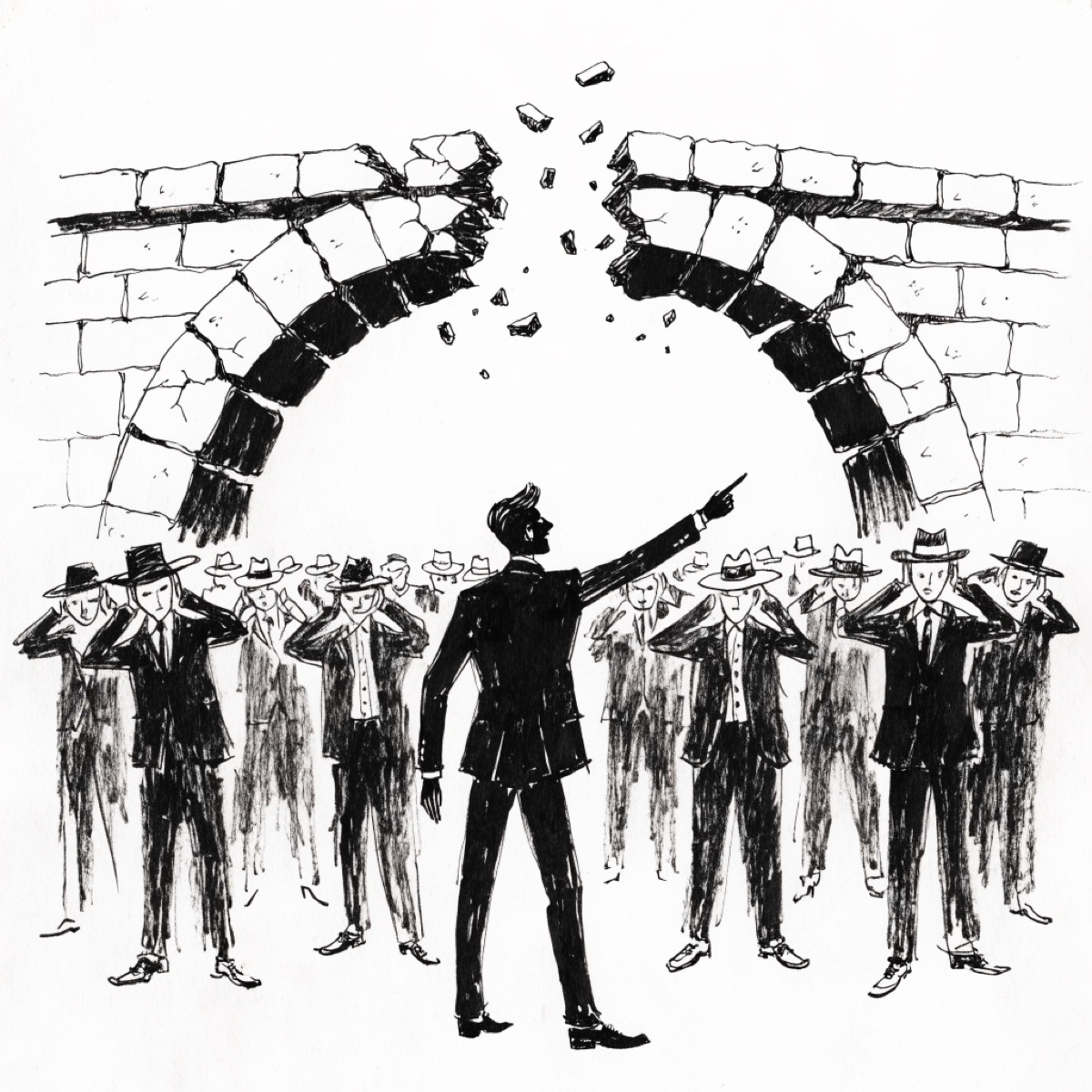
At least twelve credible analysts publicly warned of the 2008 housing collapse between twelve and twenty-four months before it happened. Their names are on record. Their reports were filed. Their memos were sent, read, and set aside. And yet, when the rubble finally settled, the phrase uttered most often by the people in charge was some variation of: nobody could have known.
That phrase is not confusion. It is policy.
The Cassandra Problem Has a Price Tag
In Greek mythology, Cassandra was cursed not with blindness but with clarity—she could see exactly what was coming and was condemned to be believed by no one. It is a tragedy of foresight, not ignorance. What's striking is how precisely this maps onto the structure of modern financial markets, except with one crucial difference: on Wall Street, the curse is not divine punishment. It is a job description.
Every major crash in modern memory arrived with a paper trail of warnings. The real mystery is not why no one saw it coming. The real mystery is why seeing it coming was, reliably and repeatedly, a career-ending move.
"Nobody Could Have Known" — The Myth That Won't Die
Walk back through the historical record and the pattern is almost tedious in its consistency. Before the 1929 crash, economist Roger Babson spent years warning of speculative excess and was publicly ridiculed as an alarmist—right up until October. Before the dot-com collapse, analysts at major firms circulated internal memos questioning whether companies with no revenue and no path to profitability deserved nine-figure valuations. Before COVID triggered the March 2020 market shock, pandemic risk had been flagged in insurance actuarial tables, public health literature, and a now-famous 2015 TED Talk viewed tens of millions of times.
The 2008 case is the most documented. Economist Nouriel Roubini stood before the International Monetary Fund in 2006 and delivered a detailed forecast of collapsing home prices, a subprime mortgage crisis, and cascading bank failures. He was called "Dr. Doom" and largely dismissed. Hedge fund manager Michael Burry not only predicted the collapse but constructed a financial instrument to profit from it—and his own investors tried to pull their money while he was in the process of being proven spectacularly right. Brooksley Born, chair of the Commodity Futures Trading Commission, warned the Clinton administration about systemic risk in the over-the-counter derivatives market in 1998. She was not just ignored; she was legislatively sidelined, her regulatory authority explicitly curtailed by Congress after pushback from Alan Greenspan and Robert Rubin.
The myth of unpredictability is not an accident. It functions as institutional amnesia—a convenient retroactive fog that exonerates decision-makers after the fact and, crucially, leaves the same incentive structures in place for the next cycle.
The Incentive Architecture of Silence
To understand why warnings get buried, you have to understand how financial analysts are actually paid. Analysts at banks and brokerages earn their keep through commissions, client retention, and annual bonuses—all of which depend, structurally, on optimism. A bullish call keeps clients invested, keeps assets under management, keeps the fee revenue flowing. A bearish call triggers redemptions, irritates the sales desk, and makes you a problem to be managed.
Economists call this career risk asymmetry, and the data on it is striking. Studies of Wall Street analyst ratings have consistently found that "buy" recommendations outnumber "sell" recommendations by ratios of 7:1 or higher—even in the months immediately preceding major market corrections. That is not analysis. That is a social contract wearing the costume of analysis.
The research desk that issues bearish warnings does not just lose clients. It loses internal standing. It faces pressure from advertising relationships, from the bankers down the hall whose deals depend on bullish coverage, from executives who have tied their own net worth to a rising market. Being right too early, in this environment, is functionally indistinguishable from being wrong.
How Institutions Eat Their Own Warning Systems
There is a concept worth borrowing from epistemology here: epistemic capture. When an organization's culture, compensation structure, and social norms make certain conclusions professionally dangerous to voice, the institution effectively amputates its own early-warning system. It does not lack the capacity to see risk. It punishes the people doing the seeing.
In the lead-up to 2008, internal risk officers at major banks who flagged subprime mortgage exposure were routinely overruled by trading desks generating record revenues. The immune system was present. It was actively suppressed by the organism it was meant to protect. Revenue was real and immediate; risk was theoretical and future-tense, and in that asymmetry, risk lost every time.
The ratings agencies made the same calculation in a different key. Analysts at Moody's and S&P who privately doubted the AAA ratings being slapped on mortgage-backed securities faced a structural dilemma: the client paying for the rating was the bank that had assembled the product and needed a favorable verdict to sell it. The agencies knew this was a conflict. It was not a secret. It was, instead, a business model.
The Psychology of the Crowd That Knows Better
Even when individuals privately doubt a consensus, they often stay silent because they assume everyone else believes it. Social psychologists call this pluralistic ignorance—the phenomenon where a room full of skeptics collectively produces a consensus that no single person in the room actually holds. Applied to a trading floor or a Fed meeting, it helps explain how smart people in close proximity can collectively fail to say out loud what each of them suspects privately.
The most candid articulation of this dynamic came from Citigroup CEO Chuck Prince in July 2007—mere months before his bank would require a government bailout. Asked about the frothy leveraged-buyout market, Prince said: "When the music stops, in terms of liquidity, things will be complicated. But as long as the music is playing, you've got to get up and dance. We're still dancing." It was a rare, almost surreal moment of institutional honesty—and it revealed something important. Many insiders knew the floor was shaking. They kept dancing anyway because stopping, unilaterally, while everyone else was still moving, carried its own enormous cost.
Cognitive dissonance compounds everything. Once an institution has committed billions to a position, contradictory information is not just unwelcome—it is unconsciously filtered out. Sunk cost psychology, normally a personal quirk, operates at civilizational scale during a bubble. The larger the commitment, the more aggressively the mind protects it from revision.
Why Regulation Hasn't Fixed This — and What Might
Post-2008 reforms were not nothing. Dodd-Frank introduced stress testing, enhanced capital requirements, and a new architecture of systemic risk oversight. The Consumer Financial Protection Bureau created genuine accountability where little had existed. Some of this has worked, at the margins. But the incentive architecture underneath—the career risk asymmetry, the client capture, the compensation tied to short-term optimism—remains largely intact. You can add more guardrails to a road where the drivers are still being paid to speed.
The structural proposals that actually address root causes tend to be less glamorous than sweeping legislation. Anonymous whistleblower frameworks with meaningful financial protection change the personal calculus for the analyst who sees something. Mandatory "red team" analysis—requiring a designated devil's advocate role on major risk assessments—forces institutions to formally produce the bearish case rather than allowing it to die in a hallway conversation. Compensation structures that reward accuracy over optimism, evaluated across multi-year windows rather than annual bonus cycles, realign the incentive at its source.
These ideas are not utopian. Some institutions have already built them in. The Bank for International Settlements, sometimes called the central bank of central banks, has developed a reputation for issuing genuinely contrarian warnings—its economists flagged dangerous credit expansion and asset price inflation before both the dot-com collapse and the 2008 crisis. Certain sovereign wealth funds have institutionalized dissent as a formal part of their investment process. The point is that the problem is not human nature. It is organizational design. Humans in the right structures will tell you the truth. Humans in the wrong ones will dance.
The deepest irony in all of this may be that the most valuable information in a financial system—the early warning, the dissenting memo, the model that says this doesn't add up—is precisely the information that the system is structurally designed to destroy. Every crash is a crime scene with the evidence still intact. We just keep deciding, afterward, that we'd rather not look at it.