Health · 8 min read
Why Placebo Responses Are Rising in Clinical Trials
Sugar pills are beating real drugs at an unprecedented rate—and the phenomenon is accelerating in ways that have quietly derailed billions of dollars in pharmaceutical research. The answer to why may reveal something profound about the hidden machinery of human healing.
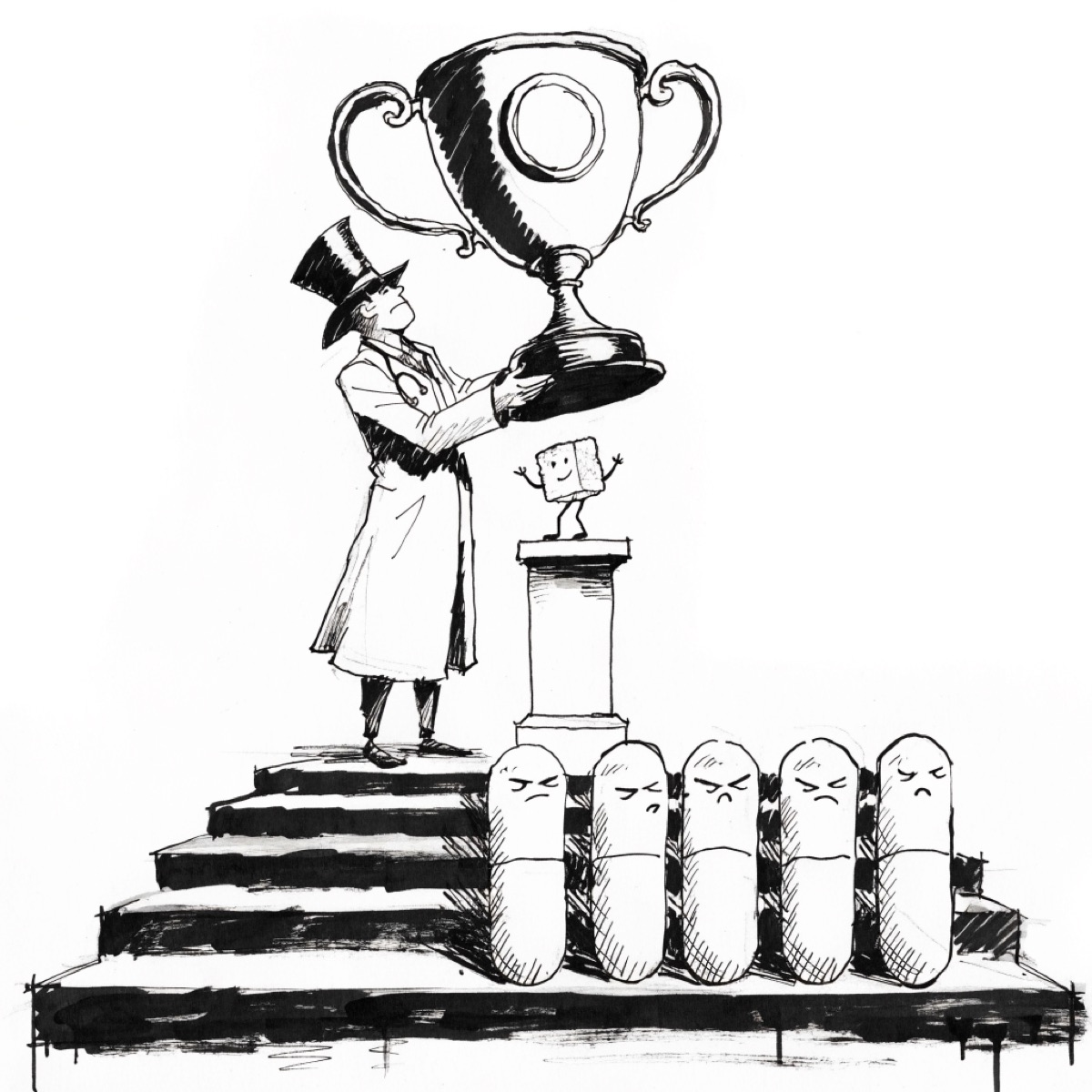
In clinical trials testing new pain medications, something deeply strange has been happening for the past three decades. The patients getting fake pills—sugar tablets, saline injections, inert capsules—keep getting better. Not occasionally, not marginally, but at rates that have nearly doubled since the 1990s. In some antidepressant trials, 40 to 50 percent of patients receiving placebos now report significant improvement. The sugar pill, it turns out, has been quietly lifting weights.
This creates one of the most unsettling paradoxes in modern medicine: we have developed more sophisticated drugs than at any point in human history, yet those drugs are increasingly struggling to outperform nothing—or at least, nothing pharmacologically active. Pharmaceutical companies are watching promising compounds collapse in late-stage trials not because the drugs stopped working, but because the people taking fake versions of them got better too. The bar keeps rising, and nobody ordered it raised.
The question is whether this is a catastrophe or an accidental revelation. Because if fake treatments are producing real results on a measurable, growing, neurologically verifiable scale, we may have been accidentally measuring something medicine has always undervalued: the extraordinary power of expectation, ritual, and human attention to physically reshape the body's response to suffering.
The Data Nobody Wanted to Find
The clearest signal came in 2015, from a team at McGill University. Researcher Jeffrey Tuttle and colleagues analyzed 84 clinical trials conducted over 23 years, tracking placebo response specifically in neuropathic pain studies. What they found made pharmaceutical executives uncomfortable: placebo response rates had climbed from roughly 27 percent in the early 1990s to over 44 percent by the time of publication. That trend has not reversed. If anything, it has steepened.
What makes this finding genuinely puzzling—rather than simply alarming—is that it is not a universal phenomenon. The amplification is most dramatic in American trials. European and Asian studies show the same effect, but weaker, more stable, less disruptive to drug development. This geographical fingerprint is crucial. It rules out explanations rooted purely in human biology or in some global shift in how pain is experienced. Something specific to the American context is turbocharging the placebo response, and that specificity is where the real story lives.
The practical consequences are severe. Several analgesic and antidepressant compounds have been abandoned mid-development pipeline not because they demonstrated harm, not because they showed no biochemical activity, but because the placebo group erased the statistical gap. Patients who might have benefited from those treatments will never receive them. The drugs simply could not prove themselves against an opponent that kept getting stronger. That has cost the industry billions—and cost patients options they don't know they're missing.
Why America? The Cultural Amplifier
The leading hypothesis centers on something unique to the American and New Zealand media landscape: direct-to-consumer pharmaceutical advertising. Every other developed nation bans it. American television does not. The result is decades of conditioning in which patients have watched actors describe miraculous relief, name specific medications, and instruct viewers to "ask your doctor"—a ritualized expectation loop that primes the nervous system for dramatic pharmaceutical outcomes before a single pill is swallowed.
This is not a fringe theory. If expectation is the engine of the placebo effect—and the neuroscience increasingly suggests it is—then a culture saturated with vivid, emotionally resonant promises of pharmaceutical salvation has been running that engine at higher and higher RPMs. Patients entering trials in the United States may arrive with neurological accelerators already pressed down, ready to experience relief the moment a treatment ritual begins, regardless of what's actually inside the capsule.
But advertising alone probably doesn't explain everything. Consider the structure of modern clinical trials themselves. Longer studies mean more touchpoints with attentive, empathetic researchers. Sophisticated consent procedures involve detailed conversations about a patient's condition. Trial facilities are often sleek and well-staffed. Participants receive more focused medical attention than most will ever experience in routine care. All of this is, functionally, a therapeutic intervention—and it has been growing more elaborate over time, precisely as placebo response rates have climbed.
There is also a deeper conditioning argument worth taking seriously. Americans have spent decades taking pills that work spectacularly well—antibiotics that clear infections within days, statins that measurably alter cardiovascular risk, SSRIs that lift moods that felt immovable. This accumulated experience may have trained a neurological reflex: the body has learned that the act of taking a pill signals incoming relief and begins preparing for it. The ritual becomes the trigger, and the trigger fires whether or not the chemistry is present.
What Is Actually Happening in the Brain
The most important thing to understand about the placebo effect is that it is not imaginary. It is not patients lying, exaggerating, or performing wellness for researchers they don't want to disappoint. The relief is biochemically real, and we have the tools to prove it.
The clearest demonstration involves naloxone, a drug that blocks opioid receptors in the brain. When researchers administer naloxone to patients who are experiencing placebo-induced pain relief, the relief partially disappears. This is not a subtle finding. It means the placebo effect was generating actual endorphin release—real opioid activity in the brain—and the naloxone interrupted it. The body was not imagining the painkiller. It was becoming one.
Neuroimaging has added another layer to this picture. When patients receive placebos, the prefrontal cortex and nucleus accumbens—regions central to expectation and reward processing—activate in patterns that closely resemble those produced by genuine analgesic compounds. The brain is not being fooled into thinking it received treatment. It is being activated by the anticipation of treatment. The distinction matters enormously: fooling implies a passive error; activation implies a deliberate, functional response.
Perhaps the most disorienting recent finding involves what researchers call open-label placebos. In these studies, patients are told explicitly, clearly, and upfront that they are receiving a sugar pill with no active ingredients. And then—remarkably—many of them still get better. Researcher Ted Kaptchuk at Harvard has demonstrated this across multiple conditions including irritable bowel syndrome and cancer-related fatigue. If deception were the mechanism, honesty should kill the effect. It doesn't. Which means the ritual of receiving care, independent of any belief that the treatment is real, carries genuine therapeutic weight.
The Drug Approval Crisis Nobody Talks About Loudly
Inside regulatory agencies and pharmaceutical boardrooms, the rising placebo response has created a bind that is rarely discussed in public with full candor. The FDA requires that new drugs demonstrate superiority over placebo in randomized controlled trials—a reasonable standard that is the backbone of evidence-based medicine. But as the placebo bar rises, that statistical hurdle rises with it, and compounds must now clear a higher jump than their predecessors faced. A drug that would have met the approval threshold in 1995 might fail today's trials not because its pharmacological action has diminished, but because the comparison group has improved.
This problem cuts deepest in psychiatry and pain medicine—exactly the areas where the need for new treatments is most acute. Depression, anxiety, chronic pain, PTSD: these are conditions where the placebo effect is most powerful, most variable, and most sensitive to the contextual factors that American trials amplify. The conditions most desperately in need of pharmaceutical innovation are precisely the ones where innovation is now hardest to prove. Researchers know this. They discuss it at conferences and in journal editorials, but the full weight of the crisis rarely reaches the public conversation about drug development.
There is an even more uncomfortable corollary. If placebo response was weaker when earlier generations of drugs were tested, some medications currently sitting on pharmacy shelves and being prescribed millions of times per year might struggle to replicate their original approval results under modern trial conditions. That does not necessarily mean those drugs don't work—but it does mean their efficacy relative to placebo may be less definitive than the original data suggested. This is a quiet validity crisis, largely unspoken, embedded in the infrastructure of modern medicine.
The Therapeutic Opportunity We Keep Ignoring
Medicine has largely treated the intensifying placebo effect as a methodological nuisance—noise to be controlled for, a confound to be corrected, a problem for statisticians to solve. But there is another way to read the same data: as proof of concept that the context of care is a quantifiable medical intervention with measurable physiological effects, one that could be deliberately designed and optimized rather than accidentally generated.
Harvard's Program in Placebo Studies, led by Kaptchuk and his colleagues, has been doing exactly this. Their research suggests that placebo components can be disaggregated—pulled apart like ingredients in a recipe—and individually tested and amplified. Longer consultations produce stronger effects. More empathetic language produces stronger effects. Warmer, more human clinical environments produce stronger effects. The attention of a care provider who communicates genuine concern is not merely psychologically comforting; it is, in a mechanistic sense, medicine.
This reframes the rising placebo response not as a crisis but as an inadvertent measurement of something we have been systematically underinvesting in: the therapeutic content of human connection, of ritual, of expectation well-managed and hope carefully cultivated. We have spent the last century refining molecules. We have spent considerably less time refining the conditions under which healing happens.
The deepest implication may be this: the placebo effect does not get stronger because patients are becoming more gullible. It gets stronger because the elaborate, attentive, expectation-laden apparatus of modern American medicine has become—quite accidentally—an increasingly potent therapeutic environment. The drugs are not failing. The context is succeeding. And medicine has yet to decide whether that is a problem to be solved or a discovery to be used.