Environment · 6 min read
Why the Amazon's Net Oxygen Contribution Is Close to Zero
For years, we've been told the Amazon is the "lungs of the Earth" — but atmospheric chemists have a quietly devastating correction: the forest's net oxygen output is essentially zero. If the most repeated environmental fact of the last two decades is chemically wrong, what have we been missing about what actually makes the Amazon irreplaceable?
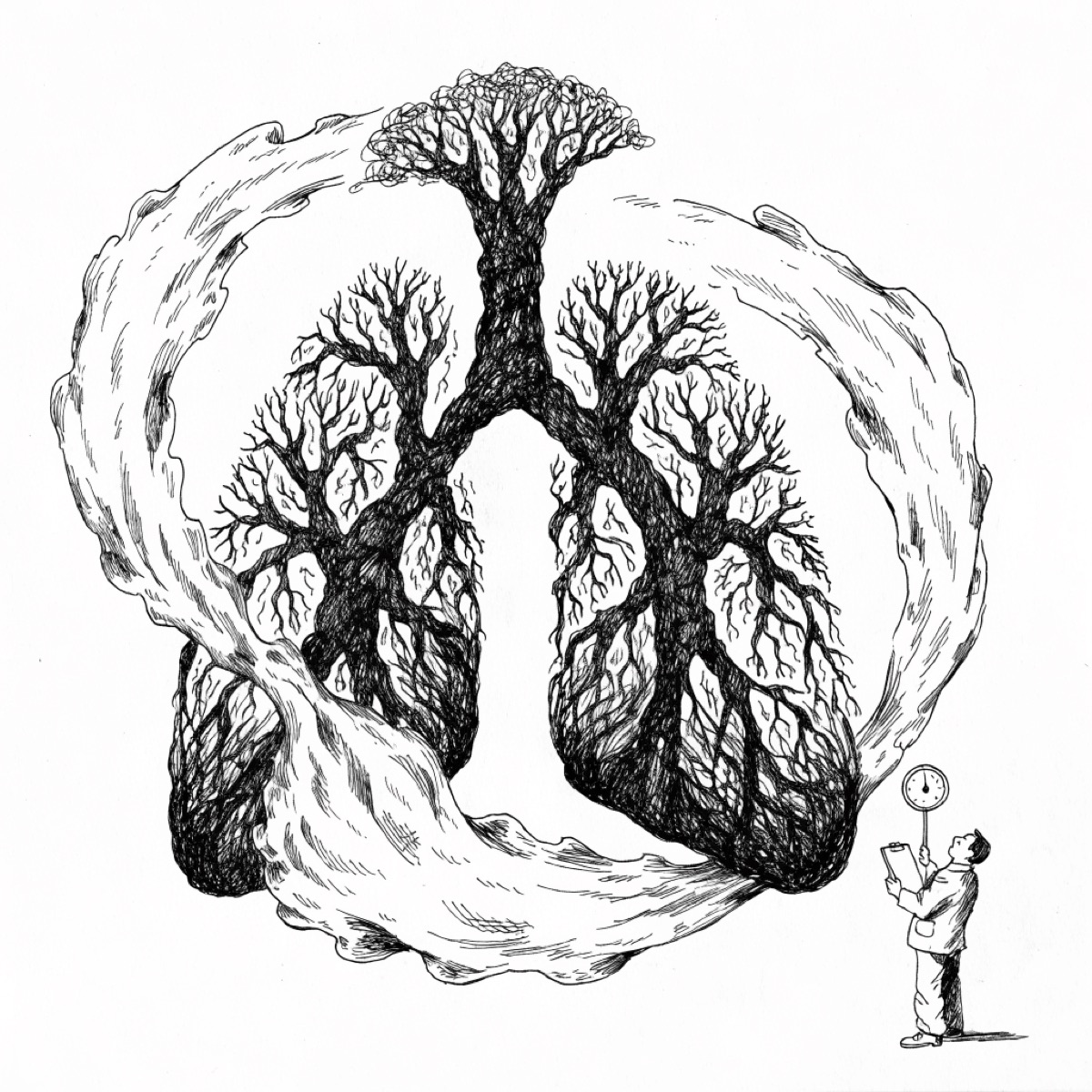
In August 2019, the Amazon burned — and the internet caught fire with it. #PrayforAmazonia trended globally for days. Leonardo DiCaprio posted. Emmanuel Macron declared an international emergency. Millions of dollars flooded conservation organizations overnight, driven by a single, endlessly repeated claim: the Amazon produces 20% of the world's oxygen. It is, the headlines insisted, "the lungs of the Earth," and those lungs were in flames.
There was just one problem. The atmospheric chemists watching all of this unfold knew something the viral posts didn't mention: even if every tree in the Amazon burned to ash, it would barely register as an oxygen crisis. Because the Amazon's net contribution to Earth's atmospheric oxygen is, to a very close approximation, zero.
If that lands like a punch to the gut — good. Not because the Amazon doesn't matter, but because it matters so much more than the oxygen myth allows us to see.
The Metaphor That Felt Too Right to Check
The phrase "lungs of the Earth" has been circulating since at least the 1970s, carried through environmental writing and eventually turbocharged by social media into one of the most durable facts in popular ecology. It feels right. A vast green forest, half the size of the contiguous United States, teeming with photosynthesizing life — of course it's pumping oxygen into the sky.
The intuition is understandable. The chemistry, however, tells a different story.
Here's the basic cycle: during the day, trees absorb carbon dioxide and release oxygen through photosynthesis. But at night, those same trees respire — consuming oxygen and releasing CO₂, just like we do. And the trees are only part of the equation. The Amazon is also home to an estimated 390 billion trees, plus uncountable billions of insects, mammals, fungi, and bacteria, all of which breathe oxygen constantly. Then there's decomposition: every fallen leaf, every dead animal, every rotting log is broken down by microbes that consume oxygen in the process.
In a mature, stable forest ecosystem, these processes reach a near-perfect chemical equilibrium. Photosynthesis and respiration balance each other out. Researchers at the Max Planck Institute for Chemistry have confirmed what ecologists have understood for decades: the Amazon's net oxygen output trends toward zero. It is not a source. It is a cycle.
The Oxygen Math, Without Losing You
The 20% figure isn't fabricated — it's just misrepresented. The Amazon does produce roughly 20% of the world's oxygen through gross photosynthesis. The critical word there is gross. The forest consumes nearly the same 20% through the respiration of everything living and dying within it.
Think of it like a very busy bank account: enormous sums flowing in and out every day, with an end-of-day balance that barely moves.
The same logic applies to the ocean. Phytoplankton are often credited with producing about 50% of Earth's oxygen, which is true in gross terms — but marine organisms consume the vast majority of it back. What actually built up Earth's atmospheric oxygen over geological time wasn't forests or phytoplankton per se, but the burial of organic matter in sediment, locking carbon away before it could be respired back. Our oxygen reservoir is the product of billions of years of geological bookkeeping.
And it is a massive reservoir. Earth's atmosphere contains approximately 1.2 quadrillion tonnes of oxygen, accumulated over 2.7 billion years. Even aggressive, sustained deforestation across the entire planet would take tens of thousands of years to make a measurable dent in that supply. Framing deforestation as an oxygen crisis isn't just scientifically imprecise — it's a red herring that distracts from what is actually at stake.
The Real Superpower: Flying Rivers
Here is what the Amazon actually does that no other system on Earth can replicate — and it has nothing to do with oxygen.
The Amazon's trees are relentless water pumps. A single large Amazonian tree transpires up to 1,000 liters of water vapor into the atmosphere every day. Multiply that across billions of trees and you get what researchers call "flying rivers" — massive, invisible columns of moisture that flow westward through the atmosphere, carrying more water than the Amazon River itself carries to the sea.
This moisture doesn't just drift away. It cycles through the basin multiple times, feeding rainfall systems that stretch from the Brazilian cerrado to the foothills of the Andes and down to the Río de la Plata basin in Argentina. The forest, in essence, generates its own weather. It waters itself and then waters everything downwind of it.
The human stakes are staggering. São Paulo — a city of 22 million people — depends heavily on this aerial moisture conveyor for its water supply. Brazil's agricultural heartland, one of the world's most productive farming regions, draws on rainfall patterns sustained by Amazonian transpiration. Antonio Nobre, a climate researcher at Brazil's National Institute for Space Research, has spent years documenting this "biotic pump," arguing that it underpins South American civilization far more profoundly than any oxygen contribution ever could. When Nobre talks about the Amazon's importance, he doesn't reach for a chemistry equation. He reaches for a rain gauge.
Why the Wrong Myth Persists — And Who It Serves
So why does the oxygen narrative dominate? Because oxygen is personal. You are breathing right now. The idea that a distant forest is supplying your next breath is viscerally immediate in a way that "moisture recycling across a continental watershed" simply isn't. You cannot tweet a hydrological cycle and expect it to trend.
Conservation campaigns built around oxygen have real emotional power and genuine global appeal — but they misrepresent the nature and urgency of the threat. They frame deforestation as a direct, universal danger to every human's next breath, when the actual catastrophe is slower-moving, more regional, and more complex: the unraveling of a rainfall system that took millions of years to evolve.
There is a darker problem too. When scientists step forward to correct the oxygen myth — as many have, gently and repeatedly — it hands bad-faith actors a crowbar. Climate skeptics and deforestation advocates have seized on the correction to argue that Amazon conservation fears are generally overblown, that environmentalists can't be trusted, that the whole thing is hysteria. A myth deployed in good faith becomes a liability precisely when credibility matters most.
What the Amazon Actually Needs Us to Understand
The real threat to the Amazon isn't that it will stop making oxygen. It's that it will stop making rain.
Tipping point research — including landmark work by Thomas Lovejoy and Carlos Nobre — suggests that somewhere between 20 and 25% deforestation, the Amazon may cross a threshold from which it cannot recover. Some models put the current clearing closer to that boundary than most people realize. Beyond the tipping point, the forest's ability to generate its own rainfall collapses. The flying rivers dry up. The biotic pump stops pumping. What remains transitions toward dry savanna — a process called "savannaization" — and the agricultural systems of half a continent begin to fail.
That is the catastrophe. Not asphyxiation. Agricultural collapse, water scarcity, regional climate disruption, and the permanent loss of the most biodiverse ecosystem the planet has ever produced.
The Amazon doesn't need us to be afraid of running out of air. It needs us to understand something more demanding: that a forest we will never visit is generating the rain that grows food we will eat, stabilizing a climate system we all share, and harboring species whose biochemistry may one day matter enormously to human medicine. That is a harder case to make than "the lungs of the Earth are burning." It requires more of us — more knowledge, more imagination, more willingness to care about something abstract and distant.
But here is the thought worth sitting with: the Amazon survived for millions of years before humans arrived to mythologize it. The myths are not for the forest's benefit. They are a measure of how much simplification we require before we can summon the will to protect something real.