Culture · 6 min read
How Printed Menus Changed Choice and Pricing in Restaurants
How menus evolved into a practical link among diners, prices, dining rooms, and kitchens.
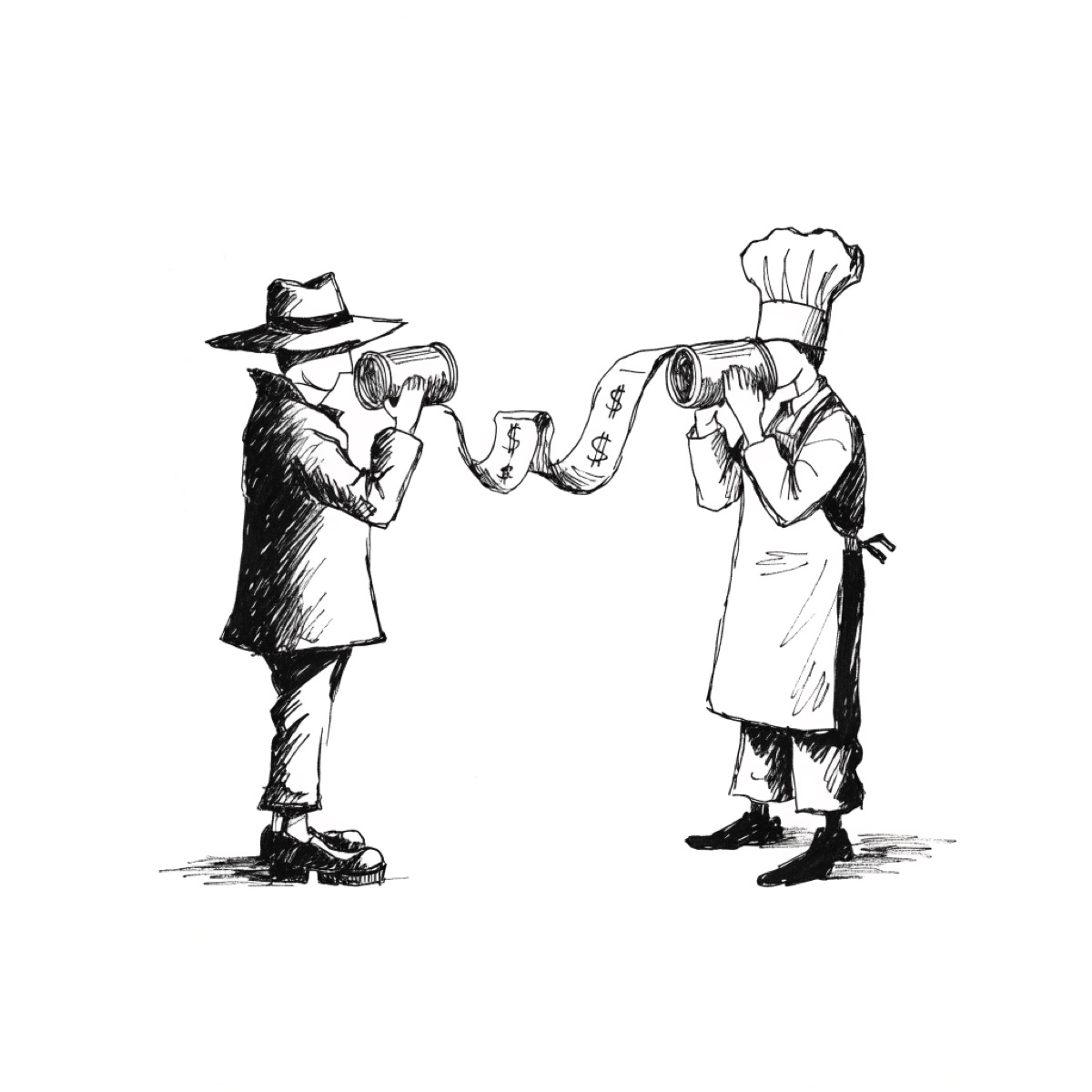
The menu is a contract made before a meal
A restaurant menu looks like a simple list, but it coordinates several decisions at once. It tells diners what can be ordered, gives the kitchen a bounded set of promises, attaches prices to those promises, and often signals what kind of occasion the room is selling. That combination developed gradually. Lists of dishes existed long before the modern restaurant, but they did not necessarily offer each diner a set of individually priced choices.
The distinction matters because the history of the menu is sometimes compressed into an invention story: a named proprietor creates a list, and the restaurant follows. Historian Rebecca L. Spang's archival study The Invention of the Restaurant offers a more cautious account. In eighteenth-century Paris, a restaurant first referred to a restorative preparation, often a broth, and then to establishments that sold such foods. The institution changed through regulation, commercial experimentation, print, and new expectations about privacy and choice. No surviving document makes one person the sole inventor of the menu as diners now know it.
Earlier banquets had written bills of fare, and inns or tables d'hôte could announce what would be served. Yet a fixed meal at a common table is operationally different from ordering one dish at a stated price. The modern menu joins information to selection. It lets a customer commit before the kitchen begins that customer's plate.
Individual choice emerged beside the restaurant
In ancien-régime France, food trades were governed by guild privileges. Caterers, innkeepers, pastry cooks, and other specialists had different rights to prepare and sell dishes. Spang shows that the early restorative establishments found a niche in this regulated system: they served delicate foods at flexible hours, often at small separate tables. Diners did not have to arrive for a communal meal or accept a host's sequence.
Political and legal changes around the French Revolution weakened the guild structure, while cooks, capital, and customers moved through a rapidly changing Paris. Restaurants expanded their repertoires. The printed or posted carte made a larger range manageable by presenting dishes as units that could be selected. The familiar phrase à la carte preserves that relationship: ordering according to the card, item by item, rather than taking a set meal.
This transition was not a clean replacement. Fixed-price menus and individually priced cards coexisted, as they still do. A tasting menu, a school lunch, and a banquet retain the older logic of a sequence chosen in advance. Restaurants also continued to borrow service practices from elite households. What changed was the wider availability of a commercial setting where unrelated diners could choose different foods, eat at separate tables, and know prices before ordering.
The menu therefore did more than describe cuisine. It redistributed authority. A proprietor decided which options existed and at what price; a diner selected within that frame. The apparent freedom was real but bounded. Choice increased at the table while the kitchen reduced the universe of possible requests to a list it could provision and execute.
Print turned an offer into a repeatable object
Handwritten cards, chalkboards, and spoken recitations could perform the same basic task, but printing made menus reproducible. A restaurant could stabilize names, prices, house identity, and typography across many copies. Changes in commercial printing during the nineteenth century made elaborate cards more affordable, and menus became advertisements and souvenirs as well as ordering tools.
The New York Public Library's Buttolph Collection contains more than 20,000 historical menus, mainly from the mid-nineteenth to mid-twentieth centuries. Its digitization project, “What's on the Menu?,” shows the variety hidden by the singular word menu: hotel bills of fare, railway and steamship menus, banquet programs, wine lists, neighborhood restaurant cards, and commemorative dinners. The Smithsonian's Warshaw Collection likewise includes both prix fixe and à la carte examples. These archives document coexistence rather than a single universal sequence.
They also show how menus made prices comparable. Once dishes and amounts were fixed in print, a diner could compare options within one establishment, while historians can compare establishments and periods. The National Endowment for the Humanities notes that researchers have used the New York collection to investigate commerce, consumption, and changing food prices. Such work still requires caution: a listed price does not reveal portion size, ingredient quality, wages, tips, or whether the dish was available that day.
Printed choice could become spectacular. Large urban restaurants sometimes advertised extensive lists requiring inventories, specialized labor, and a service hierarchy able to transmit detailed orders. But length was not a steady measure of progress. A short menu may reflect a deliberate style, scarce refrigeration, seasonal supply, or a kitchen organized around rapid turnover. The object records a business model, not merely appetite.
Menus organize labor behind the dining room
For the kitchen, a menu converts uncertain demand into a forecastable range. Ingredients can be purchased for specified dishes; stations can divide preparation; servers can translate a diner's selection into a ticket; prices can incorporate expected food and labor costs. The system does not eliminate uncertainty—nobody knows precisely how many customers will choose the fish—but it narrows it.
The names on the page do cultural work too. A French culinary term can claim refinement; a geographic label can suggest origin; a chef's name can turn authorship into value. Those descriptions are evidence of how a restaurant wanted a dish understood, not reliable proof of provenance. Historical menus may include language that reflects colonial hierarchies, racial stereotypes, or marketing fashions. Reading them as transparent inventories would reproduce the claims they were designed to sell.
Digital menus preserve the same coordinating role while changing its timing. A restaurant can alter a price or mark an item unavailable across all screens immediately. Delivery platforms can reorder the list, attach photographs, test promotions, and collect selection data. The offer becomes more responsive but also more dependent on software and intermediaries. A paper card presents the same arrangement to people holding it; a platform may sort or highlight items differently for different contexts.
These newer forms clarify what the printed menu accomplished. It separated the restaurant's offer from a server's memory, made the terms inspectable, and created a portable interface between customer, dining room, and kitchen. “Interface” is a modern metaphor here, not a historical term used by early restaurateurs, but it accurately labels the coordinating function.
What the archive can and cannot establish
Surviving menus are unusually vivid evidence, yet survival is selective. Collectors favored decorated banquet cards, famous establishments, hotels, and special occasions. Informal eateries, street vendors, oral ordering traditions, and businesses serving people with fewer resources are less consistently represented. Literacy also shaped who could use a printed card without assistance. The history of menus cannot stand in for the history of eating away from home.
Nor did the restaurant menu spread everywhere in the same form. Many food cultures used displayed dishes, verbal ordering, tokens, wall signs, or fixed combinations. Global hotel and restaurant industries circulated European menu conventions, sometimes through empire and tourism, but local practices modified them. A menu's presence does not establish that diners experienced choice, price, or service in identical ways.
What is established is narrower and useful. Lists of food are ancient, but the individually priced restaurant card became powerful alongside commercial dining because it linked selection, price, and production. Print made that link repeatable and collectible. The precise route varied, and the archives favor institutions that produced durable paper. The modern menu is best understood not as one person's isolated invention, but as a practical device that matured with restaurants and helped make individualized ordering workable at scale.
Sources and review note
1 source, every one with a link you can follow.
- Key sources are Rebecca L. Spang's The Invention of the Restaurant and her author's project page; the New York Public Library's culinary-history guide and What's on the Menu? archive; and the Smithsonian's Warshaw menu collection.
The main uncertainty is diffusion: preserved French and American printed menus do not establish a single global chronology.