Culture · 9 min read
How the Novel Shaped the Modern Idea of the Inner Life
You lie awake at night suspecting your inner life is somehow inadequate—too quiet, too mundane, lacking the dramatic depth of the characters you read about. The unsettling truth is that this feeling isn't a personal failing; it's a literary side effect installed by an art form invented roughly 300 years ago.
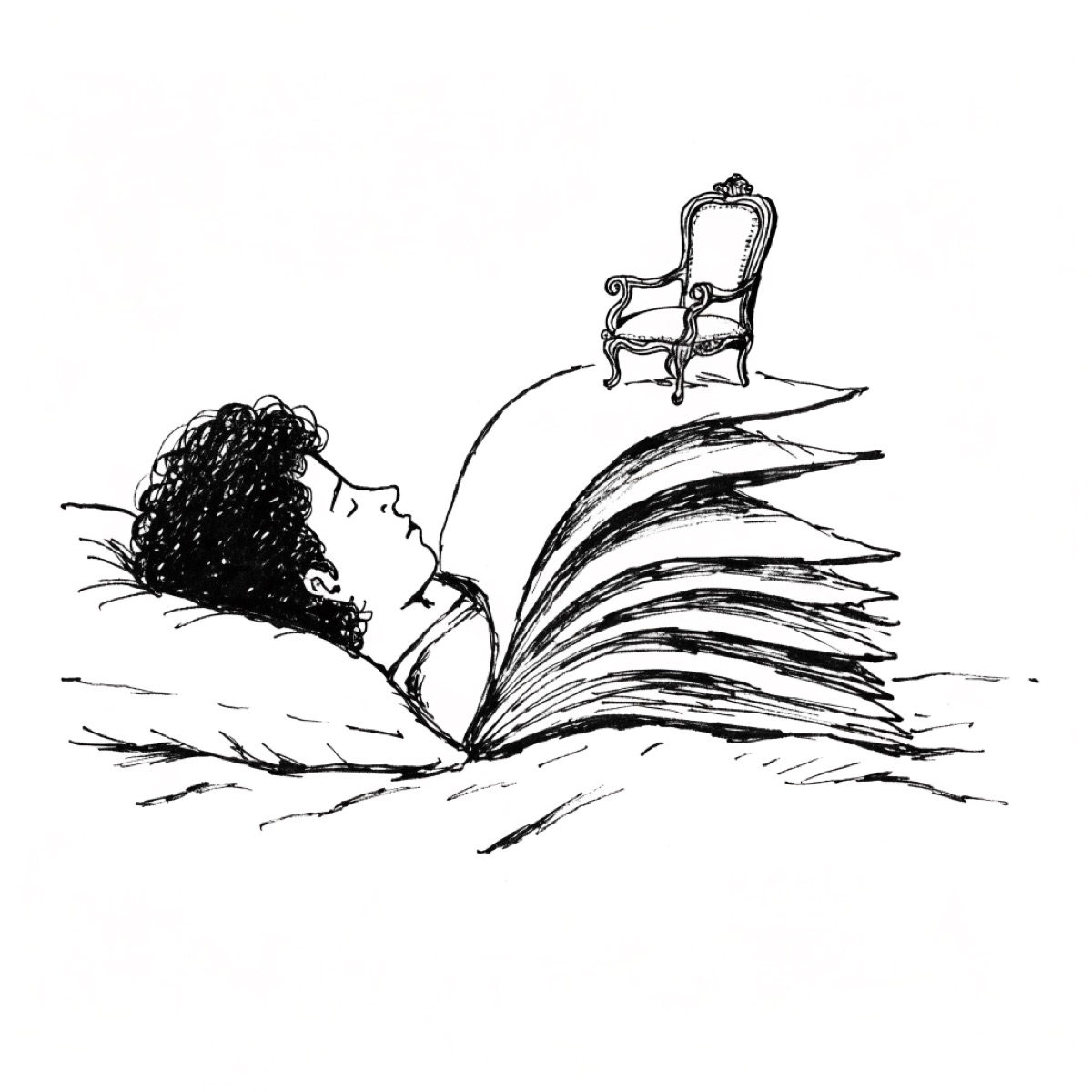
There's a particular kind of anxiety that visits in the small hours. You're lying awake, and you become aware of your own thoughts—and they are, frankly, disappointing. No rich torrents of feeling, no luminous self-revelation. Just a recycled argument from work, a vague worry about a dental appointment, the hook from a song you don't even like. Compared to Elizabeth Bennet's keen moral perception, or Raskolnikov's thunderous guilt, or even Bridget Jones's compulsive self-inventory, your inner monologue feels thin. Underpopulated. Not quite worthy of being called an inner life at all.
Here is the provocative possibility worth sitting with: that feeling of interior inadequacy isn't a psychological failing. It isn't evidence that you need more therapy, more journaling, more mindfulness. It is, instead, a literary side effect—a bug installed by a specific art form invented roughly three hundred years ago, one that is so embedded in how we understand personhood that we can no longer see it as an invention at all.
The novel didn't hold a mirror up to the inner life. It built the mirror, hung it in every room, and then quietly convinced us we were obligated to have something worth reflecting.
Before the Novel, the Self Was Not a Story
To understand what the novel did, you have to imagine a world before it did it—and that requires dismantling something that feels as solid as bone: the assumption that interiority is simply what humans have.
Pre-modern models of selfhood looked nothing like the inner theater we take for granted. For most of Western history, the self was primarily understood as a soul—property of God, embedded in community, defined by social role and obligation rather than private psychological depth. You were a craftsman, a peasant, a lord, a monk. Your identity was relational and hierarchical, not autobiographical.
The philosopher and historian Charles Taylor gave this pre-modern self a memorable name: the "porous self." In A Secular Age (2007), Taylor argues that before modernity, the self was not sharply bounded from the external world. It was permeable—open to spirits, to divine influence, to the rhythms of community and cosmos. Inner life wasn't a private palace you retreated to; it was more like a commons, a shared space where the human and the beyond mingled without a firm wall between them.
This explains something that often puzzles modern readers of ancient and medieval literature: the near-total absence of sustained psychological interiority. Homer's characters act. They rage, weep, deceive, and die—but they do not, in any sustained way, brood. When Achilles grieves, his grief is enormous and externalized, not the slow interior drip we'd expect from a contemporary novel. Scholars have spent decades debating whether Shakespeare's characters have something we'd recognize as an inner life, precisely because Hamlet's famous soliloquies feel so different from the rest of the canon—so modern, so interior, so novelistic. The suspicion grows that Shakespeare was reaching toward something the form of his age couldn't quite accommodate.
How the Novel Built the Interior Room
The eighteenth century is when everything changes, and it changes through specific, traceable formal inventions—techniques so successful they eventually became invisible.
The first is epistolary fiction: novels told through letters. Samuel Richardson's Pamela (1740) and Clarissa (1748) let readers inhabit a character's mind in real time, watching her reason, doubt, revise, and feel. The letter is a peculiar technology—it freezes thought into text, gives the impression of spontaneous consciousness while being, of course, composed and crafted. Readers consumed these novels with something close to fever, weeping at Clarissa's fate, writing letters to Richardson begging him to change the ending. The illusion of direct mental access was that powerful.
The second invention is free indirect discourse—the technique, perfected by Jane Austen, of embedding a character's thoughts into the narrative voice without quotation marks or dialogue tags. "It was a truth universally acknowledged" is not just irony; it's an instruction in how to merge your own consciousness with a narrator's, to feel that you are simultaneously inside and outside a mind. The philosopher Dorrit Cohn called it the defining formal feature of the novel genre, and she was right: no other art form can do quite this.
These weren't just new storytelling tricks. Ian Watt's landmark The Rise of the Novel (1957) argued that Defoe, Richardson, and Fielding were inventing a new kind of realism—but he underestimated the philosophical stakes. These writers were building a new ontological category: the documented inner life as proof of personhood. To have rich, recordable, legible inner experience was to be fully human. To lack it was to be, somehow, less.
Charles Taylor, in Sources of the Self (1989), traces how this literary development and Romantic individualism arrived together and reinforced each other in a feedback loop. The novel taught people what a self was supposed to feel like. Romanticism told them it was their deepest, most sacred possession. By the end of the eighteenth century, interiority had stopped feeling like a cultural construction and started feeling like a biological fact—like something you either had in full or were deficient in.
The Expectation Economy of the Inner Life
Once readers had consumed hundreds of pages of a character's rich, structured, meaningful inner experience, something subtle but consequential happened. They began benchmarking their own minds against that standard—a standard that was itself an artifice of extraordinary craft, compression, and authorial selection.
Call it the edited highlight reel problem. Fictional interiority is the product of a novelist's labor: years of revision, ruthless selection, the discarding of everything that is boring or incoherent or merely repetitive. Real consciousness is mostly noise. It is grocery lists and earworms and the phrase "I should really call my mother" recurring seventeen times without resolution. It is not narratable in any satisfying way, because it has no author making choices about what to include.
Yet we judge our actual minds by the standard of the curated ones. We find ourselves dull by comparison, and we conclude the fault is ours.
The nineteenth century dramatically accelerated this pressure. The circulating library, the serial novel, and the expansion of mass literacy meant that by the Victorian era, the interior-rich self was no longer a literary curiosity—it was a social requirement, particularly for the emerging middle class. To be respectable was to be cultivated, and to be cultivated was to be in possession of a rich, refined, morally serious inner life. The novel was the technology through which you built this inner life, and also the mirror in which you checked whether you had managed it. It was a closed loop of production and anxiety.
Alienation as Literary Side Effect
Modern alienation has a familiar set of origin stories: Marx's alienated labor, Durkheim's anomie, Freud's divided self. These are all compelling. But they share a quiet assumption that is worth excavating.
Before you can feel alienated from your inner life, you must first believe you are supposed to have one of a particular richness and depth. The sensation of interior emptiness only lands as loss if you've already been told what fullness looks like. The novel—specifically, the novelistic tradition—is what did the telling.
Look at the parallel rise of the diary and the confessional autobiography in the eighteenth and nineteenth centuries. These were not innocent self-expression; they were technologies of self-surveillance explicitly modeled on novelistic conventions. Samuel Pepys writes like a proto-novelist. Rousseau's Confessions is structured like a bildungsroman with himself as the hero. People began writing themselves as if they were characters in fiction, applying narrative logic—arc, revelation, coherent motivation—to the actual chaos of their lives. And then they felt the chafe between the form and the reality. The narrative wouldn't always cohere. The self refused to be the protagonist it was supposed to be.
The contemporary amplifications of this dynamic are not hard to spot. Social media's confessional aesthetics—the caption that reveals vulnerability, the thread that performs self-knowledge—are direct descendants of the epistolary novel's logic. Therapy culture's imperative to "know yourself" and "do the inner work" and "sit with your feelings" is a secular heir to the Romantic-novelistic tradition, now professionalized and monetized. The epidemic of people who feel emotionally inarticulate, internally empty, or incapable of "accessing" their feelings is the modern form of a 300-year-old literary hangover. We have a richness problem: we were promised an interior palace, and we keep finding a studio apartment.
What We Lose When We Mistake the Map for the Territory
The costs of this confusion are concrete, not merely philosophical.
The therapeutic industry is built, at least partially, on the premise that a coherent, narratable inner life is the goal of psychological health—that the analyzed self, the storied self, the self that can explain itself in terms of childhood patterns and emotional arcs, is the healthy self. This is a genuinely useful model for many people. It is also a model with a specific cultural genealogy, and one that systematically disadvantages those whose minds don't naturally operate in narrative mode.
Wellness culture has turned depth and authenticity into premium products, accessible through the right retreat, the right journaling practice, the right breathwork facilitator. The implicit message is that the failure to feel deeply is a problem to be solved through consumption—a position the novel itself, with its relentless invitation to feel someone else's feelings, helped to create.
And then there is the quieter, everyday cost: the low-grade existential shame of people who find meditation boring, introspection unrewarding, and sustained self-examination like trying to read a book with no text in it. These people are not broken. They may simply have declined the particular invitation the novel issued, and found that the self is more comfortable as a commons than a palace.
Many philosophical traditions have reached similar conclusions without the modern anxiety attached. Certain strains of Buddhism are explicitly unimpressed by the coherent, narratable self—they regard it as a useful fiction, and liberation as the act of seeing through it rather than perfecting it. The Zen tradition is notably uninterested in your inner monologue. The Stoics cared about what you did, not the depth of your internal commentary on it. These traditions managed to produce wisdom, and even happiness, without a theory of the interesting self.
The Thought Worth Keeping
None of this means novels are bad—an argument this article has not made and does not intend to make. The novel is one of the great technologies of empathy in human history, a machine for inhabiting other minds, and its gifts are real.
But gifts can come with debts. The specific gift of the novel was an unprecedented immersion in another person's inner life—and the debt, collected quietly across three centuries, is the suspicion that your own inner life is insufficient. Too quiet. Too mundane. Not quite the story it was supposed to be.
Here is perhaps the most disorienting version of this thought: the inner life you have may be perfectly adequate for living. It is only inadequate for narrating. And the demand that it be narratable—coherent, deep, emotionally legible, worthy of sustained attention—is not a demand that comes from the nature of being human. It comes from the particular shape of an art form, one that was invented by a handful of writers in eighteenth-century London and spread outward until it became the operating system of modern selfhood.
The novel taught us to read ourselves as characters. What we have not yet fully reckoned with is whether that was a reading, or a rewriting.