Literature · 6 min read
How Volunteer Readers Helped Build the Oxford English Dictionary
Millions of quotation slips connected volunteer reading to centralized editorial judgment, producing a rich but selective history of English usage.
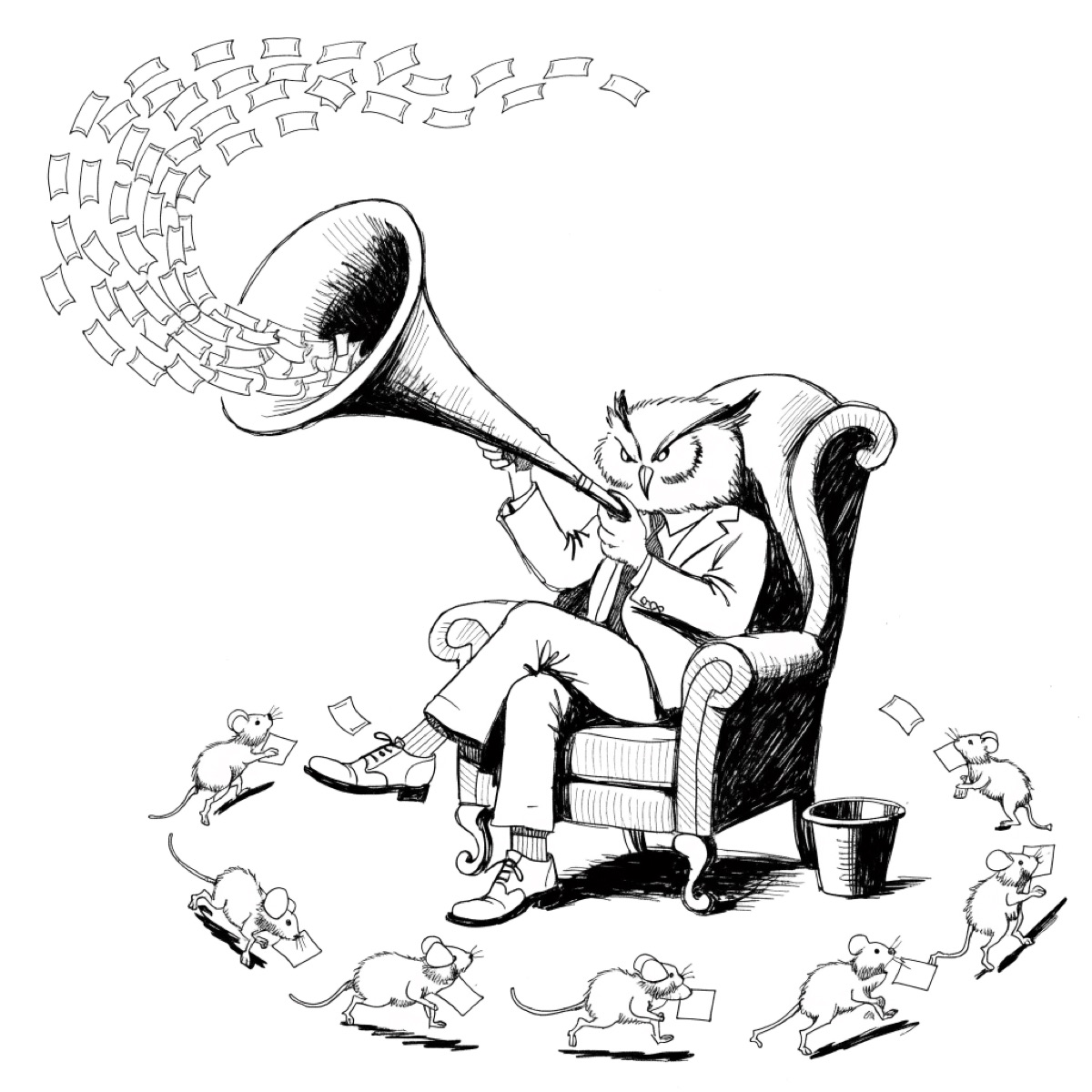
The first edition of the Oxford English Dictionary was assembled from millions of pieces of paper. Readers copied passages from books, newspapers, and other texts onto slips, adding the word, quotation, source, and date. Editors sorted those slips into chronological evidence for senses and spellings.
This was distributed data collection before networked computers, but “crowdsourcing” captures only part of the system. The volunteers did not define words by vote. They gathered examples under detailed instructions; paid editorial staff selected, checked, ordered, and interpreted them. The resulting dictionary was both a record of English usage and a record of which texts and readers the project managed to recruit.
A dictionary designed as historical evidence
In 1857, Richard Chenevix Trench argued before the Philological Society that dictionaries should document a language’s history rather than prescribe an editor’s preferred usage. The society’s project sought to trace words from their earliest recoverable appearances through changes in form and meaning.
The task soon exceeded the capacity of a small committee. English had centuries of printed material distributed across private libraries and institutions. No complete searchable corpus existed. To find evidence, the project had to divide the act of reading among many people.
The first fascicle appeared in 1884 under the title A New English Dictionary on Historical Principles. The first edition was completed in 1928. Oxford University Press’s archive dates the underlying slip collection from the project’s inception in 1857 through that completion, with later slips supporting supplements and the 1989 second edition.
Historical arrangement shaped the entry. Rather than supply one current definition, editors distinguished senses and illustrated them with dated quotations. The dictionary’s authority was intended to emerge from cited use, though editorial judgment remained necessary to decide where one sense ended and another began.
How volunteer readers made the corpus
When James Murray became editor in 1879, he issued “An Appeal to the English-Speaking and English-Reading Public.” The appeal and accompanying directions asked readers to examine assigned or chosen works and record noteworthy uses. Instructions specified the information a useful slip should contain.
A quotation without a source or date had limited historical value. A slip therefore functioned like a structured record: headword, context, bibliographic reference, and chronology. Standard paper dimensions and predictable fields made physically distributed observations sortable.
Readers varied greatly in output and expertise. Some supplied occasional examples; others sent thousands. Murray corresponded with specialists and volunteers across countries. His family and assistants sorted the flood in the corrugated-iron workroom known as the Scriptorium.
The popular story often centers on William Chester Minor, a prolific contributor confined at Broadmoor asylum. His work was real, but allowing one unusual biography to stand for the project hides the larger network. Recent scholarship has recovered contributions by women, colonial administrators, clergy, teachers, and readers outside Britain whose labor was long less visible than Murray’s.
Oxford University Press’s archive now holds more than five million slips for the first edition alone. They include handwritten quotations, definitions, etymologies, clippings, and sketches. Paper shortages led contributors to reuse documents, so the backs sometimes preserve unrelated traces of social history.
From quotation slips to entries
Incoming slips were filed alphabetically until editors reached the relevant word. Assistants then sorted quotations and selected evidence. Chronological ordering could reveal that a familiar modern sense appeared late or that an apparently obsolete sense persisted.
Editors did not print the whole file. They chose quotations that illustrated a form, sense, or transition and wrote definitions and etymologies around them. Slips were numbered and sent to compositors, who transformed manuscript records into type. Proofs moved back through correction cycles.
One consequence was visible auditability. A disputed definition could be returned to its quotation file, where editors might find counterexamples or gaps. The file was not public in the modern sense, but it retained the path from printed claim to source. That differs from a dictionary assembled mainly from an editor’s intuition.
The workflow separated collection from synthesis. Distributed readers increased coverage; centralized editing imposed consistency. That combination is recognizable in modern citizen-science and open-source projects, but the nineteenth-century system depended on postal communication, physical storage, and editorial hierarchy.
It also produced delays. Murray underestimated the scale, and Oxford University Press repeatedly worried about cost and pace. Alphabetical publication meant early entries could reflect different policies from later ones. Supplements were needed even before the language stopped changing, because the evidence and editorial methods changed during the project.
The slip is best understood as a claim with provenance, not as a fact by itself. A dated quotation establishes that a form appeared in a particular source no later than that publication. It does not establish the first time anyone spoke the word, how common it was, or whether the printed meaning was representative.
The system's exclusions and distortions
The reading program favored material that volunteers could access and considered worth excerpting. Canonical literature was heavily represented. Oxford’s “Examining the OED” research project documents tension between Murray’s broad interest in newspapers and pressure from Press delegates to privilege “great writers.”
Printed evidence favors literate and published communities. Speech, private language, working-class usage, colonial varieties, and the vocabulary of marginalized groups were harder to capture. Offensive labels and imperial categories entered not just as neutral data but through the institutions and texts of their time.
Volunteer attention was uneven. An unusual word was more likely to be copied than an ordinary function word; a dramatic quotation more attractive than routine use. Readers could misdate editions, omit context, or select passages that confirmed an expected sense.
Editorial synthesis added another layer of choice. Dividing a continuous history into numbered senses is analytically useful but not mechanically dictated by slips. Etymologies reflect the comparative knowledge available at the time. Definitions can encode social assumptions even when quotations are accurate.
These limitations do not make the dictionary valueless. They define what kind of evidence it contains. Modern corpus tools can search billions of words and quantify frequency, but digital corpora also inherit selection, copyright, platform, and metadata biases.
What the paper archive still teaches
What is established is that the OED’s first edition relied on a vast reading program and more than five million surviving slips, processed through a centralized editorial workflow. Murray’s 1879 appeal expanded the volunteer network, and publication proceeded in fascicles from 1884 until completion in 1928.
What is contested concerns representativeness and authority. The dictionary documents an extraordinary range of historical English, but it cannot be treated as a complete sample of the language. Researchers continue to reassess whose contributions and varieties were minimized.
What remains unknown for many words is their true earliest use. A newly digitized newspaper or manuscript can antedate an entry. OED revision is therefore not an admission that the historical method failed; revision is part of a method whose evidence can grow.
The slips make the institution legible. Each polished entry rests on acts of noticing, copying, filing, selecting, and defining. The dictionary became authoritative not because it escaped human judgment, but because it preserved enough provenance for judgments to be checked and revised. Its paper system offers a durable lesson for digital knowledge projects: scale increases evidence, while selection still determines what the evidence can say.