Philosophy · 7 min read
Moral Luck and the Limits of Responsibility
The problem of moral luck separates judgments of choice, harm, repair, and character without dissolving their tension.
Responsibility seems to require control
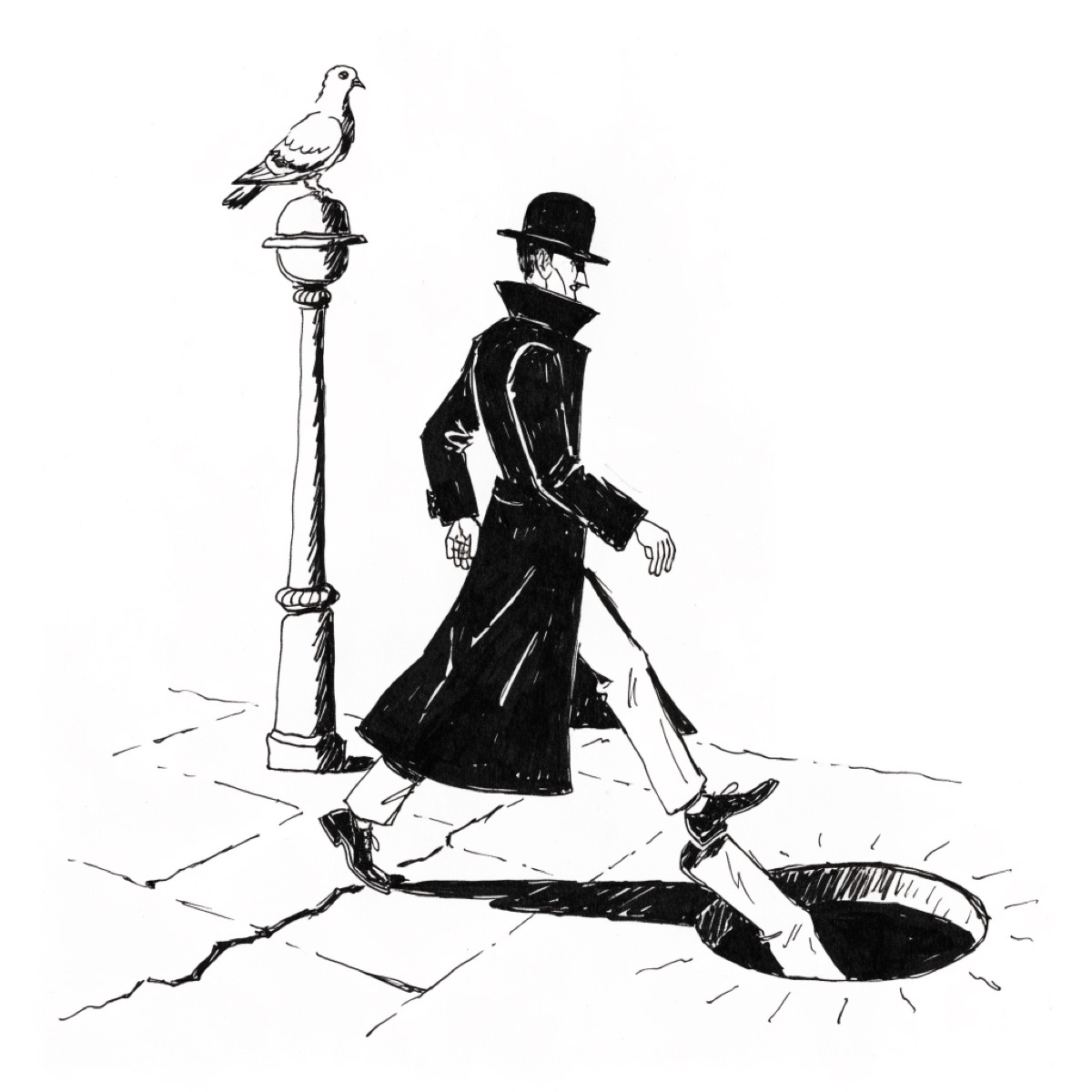
A familiar moral principle says that people should be judged only for what is under their control. Two equally reckless drivers appear equally blameworthy before either reaches the next intersection. If a child happens to cross in front of one car but not the other, chance changes the outcome, not the drivers’ prior choices. Yet ordinary judgment and law often condemn the driver who kills more severely than the driver who arrives home without incident.
This tension is called moral luck: factors outside an agent’s control appear to affect the moral assessment of that agent. Bernard Williams introduced the phrase in a 1976 essay, and Thomas Nagel developed a related taxonomy in his 1979 essay of the same title. Their problem was not simply that luck affects what happens. It was that luck appears to reach into judgments of character, decision, and responsibility even when morality is supposed to exclude it.
The issue remains open because each easy solution sacrifices something important. Ignore outcomes, and moral judgment can seem detached from harms people actually cause. Count outcomes fully, and responsibility appears hostage to coincidence. Deny that choices are shaped by luck, and the denial conflicts with what psychology, history, and ordinary experience show about human development.
Four places where luck enters
Nagel distinguished four kinds. Resultant luck concerns how actions turn out. The reckless drivers illustrate it: the presence of a pedestrian changes the result. A would-be murderer whose bullet is stopped by a bird can be guilty of attempt rather than murder, despite no improvement in intention.
Circumstantial luck concerns the situations a person faces. Someone never tested by political repression does not have the opportunity either to resist courageously or to collaborate. We cannot know with certainty how that person would have acted under the other history. The actual dissident and the comfortable observer may possess similar dispositions, but only one acquires a record of courage.
Constitutive luck concerns traits and dispositions. Temperament, early care, education, cognitive capacity, and social position are not self-created from nothing. People can work on their character, but the starting capacities for that work also have causes they did not choose.
Causal luck concerns the chain of events that produces an action. If every decision arises from prior states of the person and world, the space for ultimate self-origination becomes difficult to locate. At this point moral luck connects to the wider dispute about free will. One can accept meaningful agency without claiming that an agent authored every cause of that agency, but the boundary needs argument.
The categories overlap. A driver’s tiredness may reflect a chosen late night, a sick infant, an employer’s schedule, or an undiagnosed disorder. Circumstance, constitution, choice, and result meet in one act. Moral judgment simplifies this history because practical decisions require a tractable account of who did what and with what awareness.
Williams and Nagel diagnose different pressures
Williams’s central example is a fictionalized artist, Gauguin, who leaves family obligations to pursue painting. Whether the decision can be justified appears to depend partly on artistic success, something not fully knowable when he acts. Failure would expose the decision as self-indulgence; achievement may provide a kind of retrospective justification. Williams did not argue that success erases every wrong. He used the case to question whether a life can be assessed entirely from rules available before its outcome.
Nagel pressed toward a more general paradox. Strip away everything not controlled by the agent—results, circumstances, constitution, causal history—and little may remain as an object of moral judgment. The control principle seems compelling, but consistently applying it threatens the judgments it was meant to discipline.
Philosophers have responded in several ways. Some accept moral luck and argue that responsibility legitimately tracks actual relationships and harms. Some preserve the control principle by distinguishing moral blameworthiness from the appropriate response to an outcome. Others argue that luck affects what can be blamed but not the degree of blame, or that agents can be responsible without ultimate control so long as actions express their reasons-responsive capacities.
Susan Wolf’s work on the “deep self,” John Martin Fischer and Mark Ravizza’s account of guidance control, and later skeptical arguments offer different locations for responsibility. None is a measurement that resolves the question. Each proposes what kind of control matters and why.
Law makes the tension operational
Criminal law often punishes completed harms more than attempts. That looks like resultant luck. But law has purposes beyond assigning pure moral desert: expressing the gravity of harm, incapacitating dangerous actors, deterring conduct, and recognizing victims. A legal difference does not by itself prove a moral difference.
Law also limits outcome-based responsibility. Causation doctrines ask whether a result was sufficiently connected and foreseeable. Mens rea distinguishes purpose, knowledge, recklessness, and negligence. An unforeseeable intervention can break legal responsibility even when the defendant’s act appears in the causal history. These rules do not eliminate luck; they regulate how much luck the institution will count.
Civil practice supplies another distinction. A person may owe compensation for damage caused without deserving moral condemnation equal to the loss. Responsibility can mean an obligation to repair, exposure to sanction, answerability for reasons, or a negative judgment of character. Arguments about moral luck often become confused when these senses are treated as one.
The two-driver case illustrates the separation. Both drivers may deserve equal criticism for recklessness. The driver who hits the child has additional reasons to call emergency services, cooperate, compensate, and live with a relationship to the harm. Those outcome-specific responsibilities need not prove a deeper defect of character. Whether this preserves the control principle or quietly admits moral luck is disputed.
Ordinary judgments are mixed
Experimental philosophers have tested how people judge paired cases. Results often show an outcome effect: participants assign more blame when identical risky conduct produces harm. But the size of the effect changes with wording, foreseeability, negligence, and whether the question asks about blame, punishment, causation, or character. Some studies find that careful reflection reduces the difference; others find persistent asymmetry.
These experiments establish how sampled people respond to constructed cases. They do not establish how people ought to respond. They can reveal that intuitions are unstable or that different concepts are being measured. A philosophical theory still has to explain which judgments deserve revision.
Real cases are harder than paired vignettes because conduct is rarely identical except for outcome. A fatal crash may lead to more investigation, uncovering facts that would remain unknown after a near miss. Survivors, institutions, and the agent acquire new relationships and duties. Treating every observed difference as irrational outcome bias can miss those changes.
Counterfactual equality is also difficult to prove. “The same choice” may produce different outcomes because of small differences in attention or control that evidence cannot recover. Moral luck is sharpest in a stipulated example; applying it to history requires epistemic modesty.
A judgment can state which luck it counts
The problem does not force a choice between moral silence and total outcome worship. A judgment can separate the quality of the decision from the harm produced, distinguish blame from repair, and identify what the agent could reasonably foresee. It can also acknowledge constitutive and circumstantial advantages without treating agency as unreal.
What is established is conceptual rather than empirical: common commitments to control conflict with common outcome-sensitive practices. Williams and Nagel showed that removing one isolated accident does not dissolve the conflict, because luck also shapes situations and selves. What remains contested is whether this reveals a flaw in ordinary morality, a flaw in the control principle, or several legitimate kinds of responsibility operating at once.
No neutral formula tells us how much luck to admit. The most defensible judgment makes its basis explicit. Was the criticism directed at a choice, a foreseeable risk, an actual harm, a duty to repair, or a pattern of character? That clarification cannot eliminate fortune from human life. It can prevent fortune’s different effects from being smuggled into one undifferentiated verdict.
Sources and further reading
4 sources, 1 of them with a link you can follow.
- Bernard Williams, “Moral Luck,” Proceedings of the Aristotelian Society, supplementary volume 50 (1976), revised in Moral Luck (1981).
- Thomas Nagel, “Moral Luck,” in Mortal Questions (1979).
- Dana Nelkin, “Moral Luck”, Stanford Encyclopedia of Philosophy.
- Fiery Cushman, “Crime and Punishment: Distinguishing the Roles of Causal and Intentional Analyses in Moral Judgment,” Cognition (2008).