Philosophy · 6 min read
What Trolley Problems Reveal About Moral Judgment
Trolley cases reveal patterned moral distinctions, but they do not diagnose a person or forecast behavior in a real emergency.
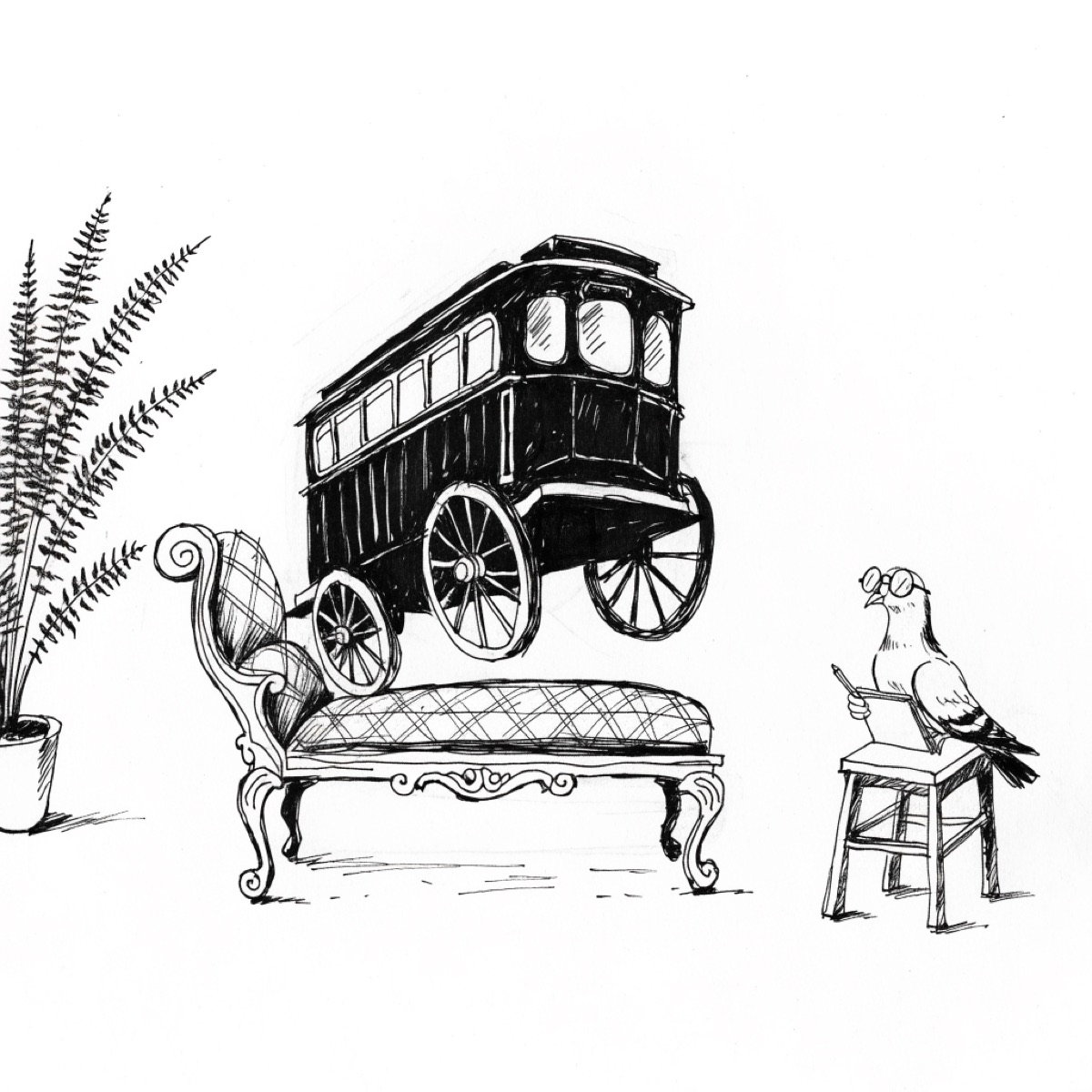
A runaway trolley approaches five people on a track. A bystander can divert it onto a side track where it will kill one person. Many respondents say switching the trolley is permissible. Change the case so that the five can be saved only by pushing one person from a footbridge, and approval falls.
These scenarios are often presented as personality tests: choose one and discover whether you are a utilitarian. That interpretation mistakes the purpose of the original philosophical work and exceeds what the empirical evidence can support. Trolley cases are controlled comparisons. By changing one feature at a time, philosophers and psychologists test which distinctions people consider morally relevant.
The resulting judgments are robust enough to require explanation but variable enough to resist a single rule. They reveal patterns in moral evaluation, not a hidden moral essence or a dependable forecast of conduct during emergencies.
The original problem was about moral distinctions
Philippa Foot introduced the runaway tram example in “The Problem of Abortion and the Doctrine of the Double Effect,” published in the Oxford Review in 1967. Her topic was not transportation. She was examining why causing one death as a foreseen side effect can seem different from using a person’s death as a means, and whether that distinction survives comparison across cases.
Judith Jarvis Thomson expanded the problem in 1976 and again in a 1985 Yale Law Journal article. The label “trolley problem” refers partly to a problem about moral theory: why do judgments change between cases that preserve the same numerical outcome of one death versus five?
The switch case removes the five from danger by redirecting a threat. The person on the side track is killed as a consequence. In the footbridge case, the person’s body is used to stop the trolley. Philosophers have proposed distinctions involving intention, means versus side effect, doing versus allowing, personal force, rights, and the agent’s relation to the threat.
None is a neutral description. Whether a death counts as intended, or a person counts as used as a means, can itself be disputed. Trolley cases do not automatically validate the doctrine of double effect or any other principle. They expose points where those principles need further explanation.
Why switch and footbridge cases differ
Moral psychology has identified several factors associated with judgments. Direct physical force tends to reduce approval. So does making harm the instrumental route to saving others rather than a side effect. Personal proximity, certainty of outcomes, and whether the endangered people caused the threat can also matter.
Joshua Greene and colleagues used functional magnetic resonance imaging in a 2001 Science paper to compare “personal” and “impersonal” moral dilemmas. They reported different patterns of brain activity and longer response times for some emotionally conflicting judgments. The study helped launch a dual-process account in which emotional responses and controlled reasoning contribute differently across cases.
The interpretation remains contested. Brain regions participate in multiple processes, so activation does not map cleanly onto “emotion” or “reason.” Categories such as personal and impersonal bundle several features. Later researchers have challenged whether utilitarian judgment is best understood as overriding emotion through deliberation.
Other work separates two dimensions often collapsed under “utilitarianism”: accepting instrumental harm and endorsing impartial concern for the greater good. A person can approve sacrificing one to save five in an artificial case while showing little impartial concern in ordinary life. Conversely, a person may donate extensively to strangers while rejecting intentional killing.
What experiments find across populations
A large cross-cultural study by Edmond Awad and colleagues, published in Proceedings of the Royal Society B in 2020, analyzed sacrificial-dilemma choices from roughly 70,000 participants in 42 countries. The researchers found broad similarities alongside national variation. People generally distinguished the switch and footbridge versions, but the size of that difference varied and was associated with measures such as relational mobility.
The scale is informative, but recruitment occurred through the Moral Machine website. This was a self-selected online sample rather than a probability sample of each country. Country-level correlations can suggest hypotheses; they cannot establish that a national characteristic caused an individual judgment.
Wording and framing also matter. Whether the one person is described as a stranger, relative, aggressor, or volunteer can change responses. Asking what is “permissible” is different from asking what someone “would do.” Repeated exposure can make participants search for experimenter intent or adopt a more consistent strategy.
Order effects complicate interpretation as well. A participant who sees several variants may compare them and try to avoid contradiction; someone shown one case responds without that contrast. Both designs answer legitimate but different questions.
Some response patterns are surprisingly stable, but there is no universal percentage that defines human morality. Translation, legal culture, religion, age, education, and sample platform can all shape measured judgments. Cross-cultural evidence weakens claims that one population’s response distribution is a species-wide moral law.
Why hypothetical answers are not behavior
Trolley dilemmas intentionally remove uncertainty. The tracks, casualties, and causal consequences are stipulated. Real emergencies contain incomplete information, time pressure, personal danger, institutional roles, and options that were not listed in advance.
A button press or survey answer has almost none of the cost of harming a person. For ethical reasons, researchers cannot reproduce the central stakes. Experiments using virtual reality, monetary losses, animals, or loud noises add immediacy but remain analogues. Each changes the moral object being studied.
The gap between judgment and action is not a minor technicality. People may state a principle but freeze, defer to authority, seek another option, or misunderstand events. Training and role obligations can dominate abstract preference. A firefighter’s decision procedure and a surprised bystander’s impulse are not interchangeable.
Trolley responses also do not diagnose psychopathy, political ideology, or professional fitness on their own. Associations reported in a sample are probabilistic and sensitive to measurement. Turning one forced choice into a personal label discards that uncertainty.
The autonomous-vehicle debate shows another misuse. A car manufacturer does not face one isolated choice with known casualties. It designs sensing, braking, risk distribution, legal compliance, and testing across millions of uncertain situations. The central questions concern reducing expected harm and assigning responsibility, not installing a passenger’s preferred trolley answer.
The proper use of a thought experiment
What trolley problems establish is that moral judgments respond to more than the number of lives saved. Means, agency, contact, and causal structure influence evaluation. Philosophical analysis can ask whether those influences are defensible; experiments can map how common and variable they are.
What remains contested is the best explanation. Dual-process models, rights-based principles, causal models, learned social norms, and features of action representation each explain part of the pattern. No brain scan or survey has resolved the normative question of what a person ought to do.
What remains unknown is how any respondent would behave in a genuine crisis and whether the simplified distinction transfers to a complex policy. The thought experiment gains clarity by excluding context; that same exclusion limits application.
Its proper use is therefore diagnostic at the level of arguments. If a principle approves the switch but rejects the push, it should explain why. If it treats the cases alike, it should explain which apparent distinction is irrelevant. The scenario supplies no verdict; it identifies the consequences that a verdict must address.