History · 10 min read
The History of Smallpox Inoculation and Its Professional Opponents
The story we tell about smallpox inoculation casts fearful peasants and firebrand priests as the villains — but the real organized opposition came from licensed physicians protecting their professional turf. The history is more uncomfortable, more instructive, and almost entirely forgotten.
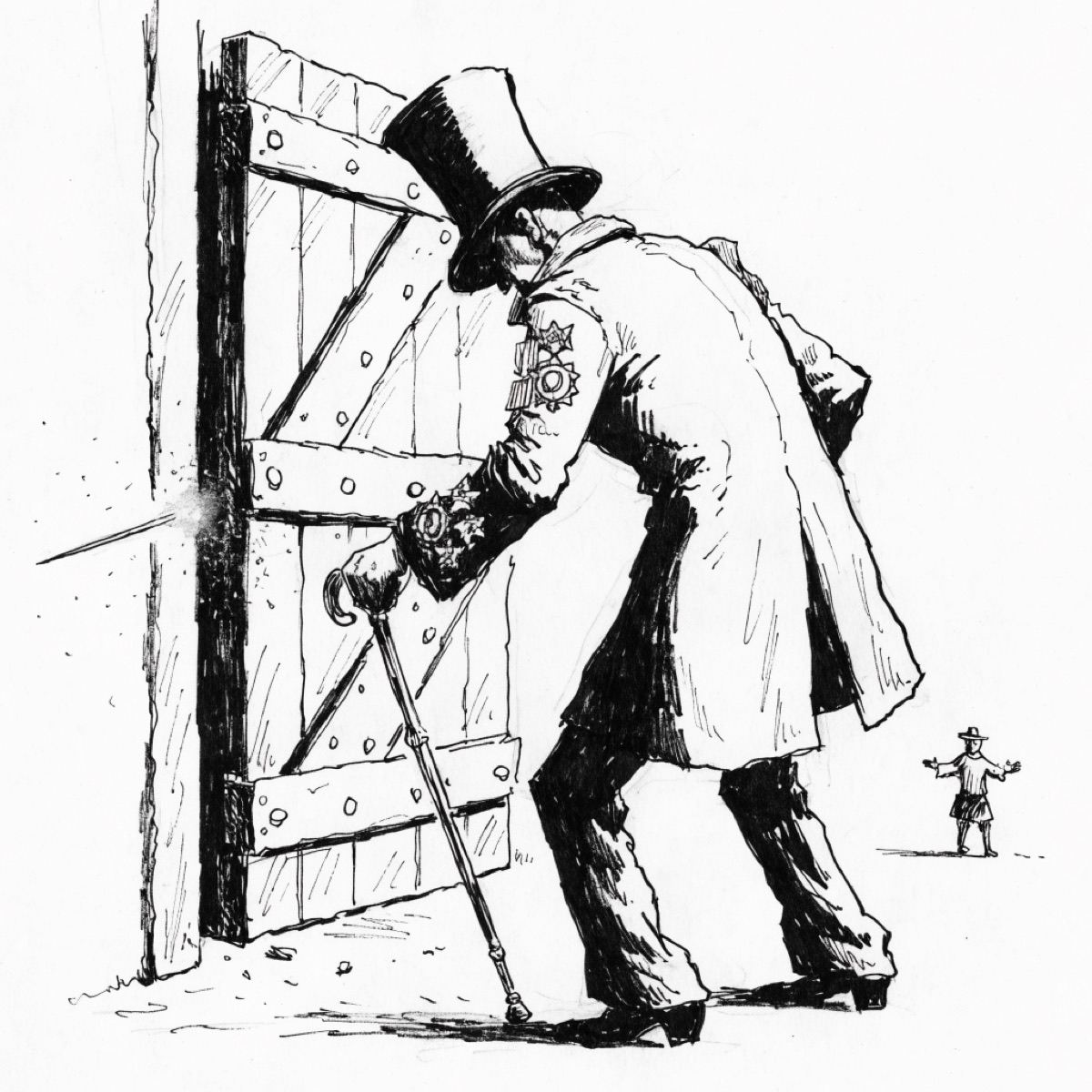
When Lady Mary Wortley Montagu arranged for her four-year-old daughter to be inoculated against smallpox in April 1721, she did something deliberately theatrical. She invited Fellows of the Royal College of Physicians to watch. The assembled doctors were not there to learn. They were there to find fault — and they would spend the next several decades doing exactly that, with a persistence and ingenuity that says less about medical science than about professional self-preservation.
This is the part of the vaccination origin story that tends to get quietly edited out.
The Myth We Tell About Medicine and Progress
Medical history loves a particular narrative arc: ignorance yielding to enlightenment, superstition retreating before evidence, a heroic vanguard of scientists fighting backward publics and reactionary priests. It is a satisfying story. It is also, in the case of smallpox inoculation, largely backwards.
The 18th-century record shows something more uncomfortable. Ordinary people — including curious aristocrats, pragmatic merchants, and worried parents — embraced variolation with remarkable openness once they heard what it could do. The organized, sustained, and often dishonest campaign against it came primarily from credentialed medical professionals who had strong institutional reasons to want it to fail.
Understanding why requires understanding what medicine was in 1700, and what a simple, teachable procedure threatened to do to it.
A Practice Older Than European Medicine Knew
Variolation — the deliberate introduction of matter taken from a mild smallpox case into a healthy person, typically by scratching it into the skin — was not an 18th-century invention. It had been practiced for generations across Ottoman Turkey, sub-Saharan Africa, and China before any European physician wrote it up in a learned journal.
In West Africa, the technique was so well established that it traveled across the Atlantic in the minds of enslaved people. In 1706, a man named Onesimus, enslaved by the Boston minister Cotton Mather, described the procedure to his owner from direct personal experience. He had been inoculated as a child in Africa. He carried a scar to prove it. "He had undergone an operation," Mather later wrote, "which had given him something of the smallpox, and would forever preserve him from it."
The Greek and Armenian women of Constantinople who performed the procedure had refined it over years of accumulated observation. Lady Montagu, who witnessed their work firsthand while her husband served as British ambassador, described the sessions as almost neighborly in character — neighbors gathering in late summer for what she called "ingrafting parties," a skilled older woman moving calmly from patient to patient with her needle and her walnut shell of material. No physician present. No theory required. Just practical knowledge, passed woman to woman, tested against thousands of outcomes.
That testing had produced real results. Practitioners had learned to operate in cooler months, to prefer younger patients, to select material carefully. The death rate from variolation, compiled across large case series, ran somewhere between 1 and 2 percent. The death rate from naturally acquired smallpox ran closer to 30. These were not subtle numbers.
Why Physicians Fought It — And How They Fought Dirty
European medicine in the early 18th century derived its authority from complexity. The humoral system — the elaborate architecture of blood, phlegm, yellow bile, and black bile, of constitutions and temperaments and miasmatic airs — required years of university training to master, or at least to perform fluently. A physician charged fees commensurate with that training. His social standing depended on it. His entire professional identity rested on the proposition that health was too complicated for amateurs.
Variolation was something anyone could learn in an afternoon. That was the problem.
The Royal College of Physicians in London and the Paris Faculté de Médecine both issued formal statements opposing variolation on the grounds of patient safety. The concern was not entirely fabricated — the procedure did carry real, if small, risks. But critics noticed something telling about the selectivity of this sudden solicitude. These same bodies maintained conspicuous silence about the standard treatments their members were administering daily: bleedings that drained patients to the edge of shock, purges violent enough to cause fatal dehydration, mercury cures that rotted teeth and destroyed kidneys. If the Royal College had applied its stated mortality threshold consistently, it would have had to condemn half of 18th-century medicine along with variolation.
The argument was not made in good faith, and the bad faith showed most clearly in how the opposition handled data.
When the Boston smallpox epidemic of 1721 gave Cotton Mather an opportunity to compile systematic outcome records — 287 inoculated patients, with careful notation of those who sickened, those who died, and under what circumstances — he produced what was, by any honest assessment, a sophisticated piece of early epidemiology. The results were unambiguous. Inoculated patients died at a fraction of the rate of the uninoculated. The medical response in both Boston and London was not to engage the numbers. It was to question whether a minister had any business having them.
This is a recognizable tactic. When you cannot defeat the evidence, you challenge the standing of whoever gathered it.
The Clergy and the Crowd Were More Open Than Advertised
The standard history of inoculation resistance casts organized religion as the other great villain alongside popular ignorance. The actual record refuses to cooperate. Cotton Mather himself was a clergyman — a prominent and influential one — who became variolation's most dogged American champion. Across the Atlantic, numerous clergymen wrote and preached in favor of the procedure, arguing that protecting God's creation from preventable death was not hubris but stewardship.
The Reverend Edmund Massey's 1722 sermon in London, which argued against inoculation on theological grounds, has been quoted in medical histories so often that it has come to stand in for the entire clerical response. But Massey's sermon was notable partly because it was exceptional. The Church of England's response to variolation was not unified opposition — it was divided, contested, and frequently supportive.
The popular resistance in Boston in 1721 is more interesting than it is usually described. Citizens were genuinely angry, but their anger was specific. Inoculation was being performed in a crowded city without community discussion, during an active epidemic, in ways that raised real questions about who bore the risk and who made the decision. A bomb was thrown through Mather's window. This has been cited repeatedly as evidence of popular irrationality. What it actually reflects is a community dispute about consent and process — a concern that is not primitive but recognizable, and that Mather himself never adequately addressed.
Among the general English public, uptake was surprisingly fast once Montagu began her public advocacy. Wealthy and middle-class families arranged inoculations for their children with an urgency that embarrassed the physicians opposing the practice. The professional class — surgeons, apothecaries, and physicians — maintained organized opposition longest. This is the inverse of what the standard narrative predicts.
The Racial Politics of Dismissing Indigenous Knowledge
The Ottoman and African origins of variolation were not incidental to how European physicians talked about it. They were central to the dismissal.
The period term of art was "empiric" — a word meaning, roughly, a practitioner who operated from experience rather than theory. In the medical culture of the time, it was an insult. Empirics were unlettered, untheorized, primitive. The fact that variolation had been developed and refined by Ottoman women, West African communities, and Chinese practitioners made it, in the professional vocabulary of 18th-century Europe, almost definitionally suspect. You could not expect systematic knowledge to emerge from people like that.
The career of Onesimus's testimony illustrates the mechanism precisely. His account, given to Mather in 1706, was treated as anecdote — interesting, perhaps, but hardly the foundation for medical practice. The knowledge acquired credibility in 1714, when the Philosophical Transactions of the Royal Society published a letter from Emanuel Timoni, a Greek physician trained in Western medicine, describing the Constantinople practice in learned terms. Same practice. Same outcomes. Laundered through a European professional, it became evidence.
This dynamic — where effective non-Western or indigenous medical practice requires European validation before it can be taken seriously — is not unique to variolation. It runs through colonial-era medicine as a structural feature. Cinchona bark, used by Peruvian healers against fever for generations, required Jesuit intermediaries before European medicine would consider quinine. Numerous wound treatments, dietary interventions, and pharmacological compounds followed the same path: disregarded until endorsed, endorsed only when reclassified as European discovery.
The costs were not merely intellectual. Delayed adoption of practices that worked was measured in lives. Variolation was demonstrably available and demonstrably effective in Europe by 1714. The organized campaign against it extended well into the 1750s. The mathematics of that delay, applied to smallpox mortality rates, is not comfortable.
How Inoculation Finally Won — And What It Cost to Win
Variolation was not vindicated by physician consensus. It won through the most traditional of European mechanisms: royal demonstration.
Princess Caroline of Wales, having read and thought carefully about the evidence, approached the problem with a combination of maternal urgency and political shrewdness. In 1721, she arranged for the procedure to be tested on six condemned prisoners at Newgate, with pardons promised to survivors. All six survived. She then arranged trials on orphaned children. When those too went well, she had her own daughters inoculated. The daughters of the Princess of Wales were visibly and publicly fine.
The adoption cascaded through European aristocracy with a speed that measured exactly how much the previous resistance had been driven by professional interest rather than honest concern. Courts across the continent arranged inoculations. Frederick the Great had his Prussian troops variolated. Catherine the Great, who arranged her own inoculation in 1768 and then her son's, was so pleased with the English physician who performed it that she sent him home with gifts, a title, and a pension.
The physicians did not change their minds. The institution changed around them.
This is an important distinction. The history of variolation is sometimes offered as a story of science eventually self-correcting — error identified, consensus updated, truth prevailing. But the error was not corrected through scientific deliberation. It was overridden by social power. The Royal College of Physicians did not revisit its evidence base and publish a correction. It became increasingly irrelevant to a practice that was happening with or without its blessing.
Edward Jenner's cowpox vaccine, developed in 1796, eventually replaced variolation with a safer alternative and gave the medical profession a procedure it could claim as its own — theorized, European, credentialed. The story was subsequently rewritten, with Jenner as the heroic originator and the prior century of Ottoman, African, and lay practice quietly reassigned to the category of prologue. Medical textbooks still tell something like this version.
What the Record Actually Shows
The history of smallpox inoculation is useful precisely because it is so legible. The interests involved were obvious. The arguments were demonstrably selective. The outcome data existed and was ignored for reasons that had nothing to do with the data.
None of this means that medical skepticism of new treatments is always wrong — rigorous examination of evidence genuinely matters, and the history of medicine includes catastrophic interventions that were adopted too quickly. The point is that institutional opposition to an innovation is not the same thing as scientific opposition, and conflating them lets professional bodies claim the authority of evidence when they are actually defending something else entirely.
What is striking about the 18th-century record is how modern it feels. The pattern of amplifying individual failures while ignoring statistical trends, of attacking the credentials of those who gather inconvenient data, of invoking patient safety as a screen for professional concern — these are not archaic behaviors. They appear in contemporary debates about medical practice with enough regularity that their history deserves to be known.
Lady Montagu spent years watching the Royal College find fault with a procedure she had seen save lives on the streets of Constantinople. She was not a physician. She was a woman, an aristocrat, a traveler, someone who had been curious about how other people solved problems. That combination of attributes — curious, undefended, unaffiliated — turned out to be a better epistemological position than the one occupied by the credentialed men watching her with their arms crossed.
The uncomfortable insight is this: the most dangerous form of resistance to effective medicine is not the frightened villager who won't let the doctor in. It is the professional institution that controls who the doctor is, and what he is allowed to know.