Art · 6 min read
Vermeer and the Camera Obscura: Evidence and Uncertainty
Vermeer painted effects compatible with optical observation, but the surviving evidence cannot establish a specific device or workflow.
Johannes Vermeer left no known statement explaining that he used a camera obscura. No device has been securely traced to his Delft studio. Yet details in his paintings have led generations of artists and scholars to ask whether optical projections informed how he saw or composed them.
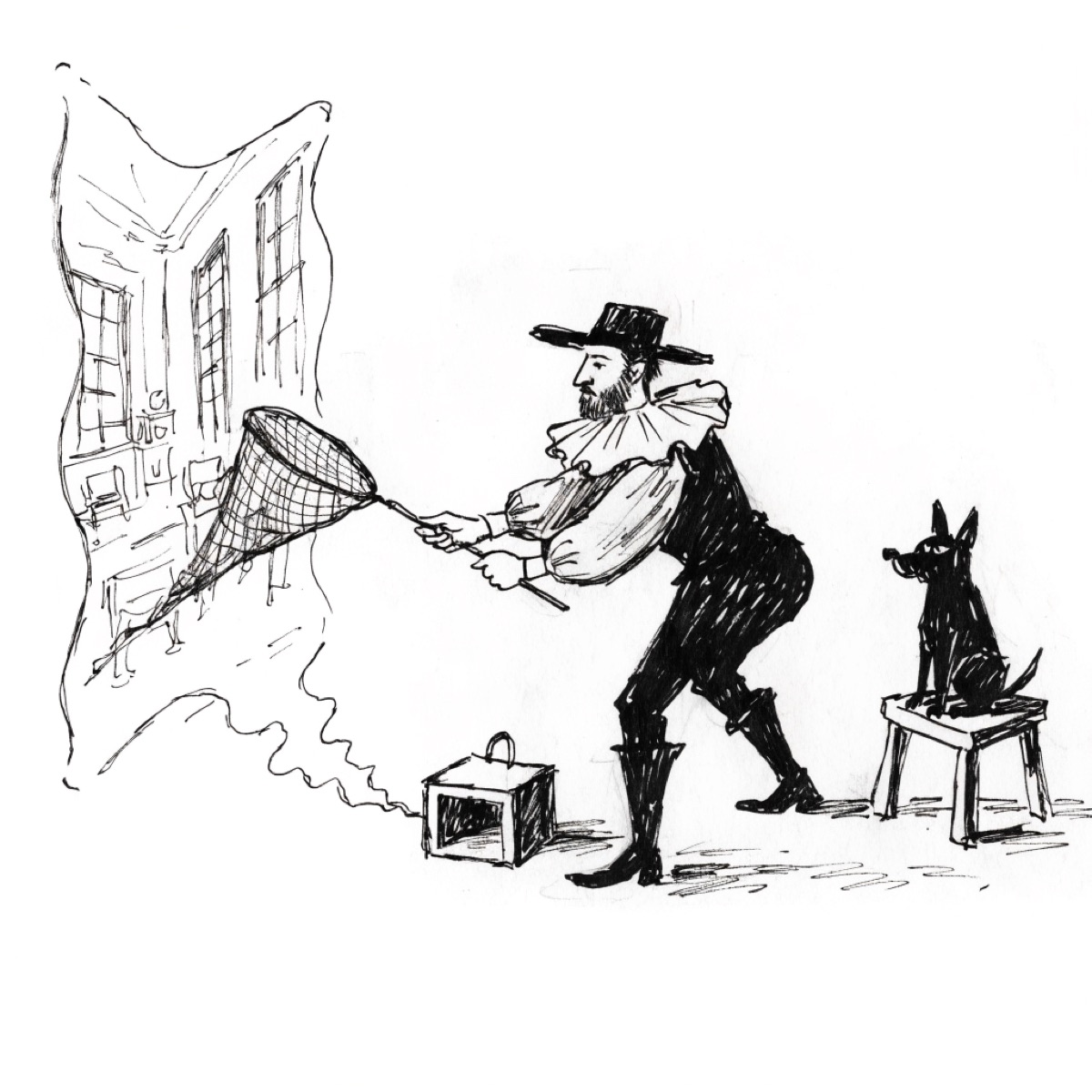
The camera obscura was available in the seventeenth-century Netherlands. It projects an image through a small opening or lens into a darkened space, producing an image that can be observed or traced. The historical question is not whether such a device could produce a room image. It is whether Vermeer used one, how often, and at which stages of painting.
Evidence supports optical familiarity more strongly than it supports any exact workflow. Reconstructions can show possibility and explain visual effects. They cannot, by reproducing an outcome, establish what happened in a studio for which the decisive documentary record is missing.
Why the camera hypothesis arose
Vermeer’s domestic interiors often share a controlled viewpoint, light entering from the left, and a carefully organized back wall. Some passages appear sharply described while others dissolve into bright disks or soft transitions. These features resemble artifacts of a lens-projected image more than the conventions of uniformly detailed linear perspective.
The idea predates recent films. Art historians and optical researchers debated Vermeer’s possible camera use throughout the twentieth century. Charles Seymour published experiments in 1964; Daniel Fink offered a comparative study in The Art Bulletin in 1971. The National Gallery of Art’s 1995 Vermeer catalogue treated camera-obscura use as a serious scholarly question rather than a settled fact.
Availability is plausible. Descriptions of camera obscuras circulated in early modern Europe, and Delft was a center of instrument making and scientific activity. Vermeer’s near contemporary Antoni van Leeuwenhoek worked with lenses, though claims of a close personal relationship between the two men are circumstantial.
Plausibility does not establish possession. Inventories taken after Vermeer’s death list household and studio objects but no camera obscura. A device might have been borrowed, omitted, described under another term, or dismantled. Those possibilities preserve the hypothesis without adding positive evidence.
Optical effects visible in the paintings
The most cited feature is the “circle of confusion.” Points of light outside a lens’s focus can appear as disks rather than points. In The Lacemaker, bright threads and highlights in the foreground expand into bead-like circles. Similar effects appear on metallic highlights and bread in other works.
Scale is another clue sometimes offered. A simple camera projection changes size with lens position and screen distance, and Steadman argued that clusters of canvas sizes correspond to plausible projection arrangements. Yet canvases were commercially available in recurring dimensions, so clustering is not uniquely optical evidence.
A painter unaided by optics can invent or learn such effects. The evidential claim is comparative: these disks resemble features a camera obscura makes conspicuous and were unusual in contemporary painting. They are clues to a mode of looking, not evidence unique to one device.
Vermeer also used precise perspective. In several paintings, pinholes at the vanishing point suggest that he snapped chalked string against the canvas to lay out orthogonals. That is direct physical evidence of a perspective method. It shows that manual construction and optical observation need not be rivals.
Some tonal passages suppress outlines and emphasize patches of light. A projected image can encourage that organization because it presents luminosity before object identity. But restoration, aging, pigments, and the painter’s deliberate style affect what viewers now perceive. A twenty-first-century photograph of a cleaned painting is not transparent access to its original surface.
Reconstructions and what they can demonstrate
Architect Philip Steadman compared the geometry of several interiors and argued in Vermeer’s Camera (2001) that they could depict the same room from positions consistent with a booth-style camera obscura. He built spatial models and examined apparent dimensions in the paintings. His work made the hypothesis testable at the level of room geometry.
If multiple compositions correspond to a consistent real space and viewpoint, coincidence becomes less likely. Yet reconstruction depends on assumptions about canvas cropping, furniture dimensions, lens placement, and whether painted objects were altered for composition. A model can fit because its uncertain parameters are adjusted.
The 2013 documentary Tim’s Vermeer followed inventor Tim Jenison as he reproduced The Music Lesson using a lens and comparator mirror. The project demonstrated that an untrained but technically skilled person could, with extensive labor, build a visually close copy through repeated tonal comparison.
That is evidence of feasibility, not historical identity. Jenison’s comparator arrangement is not documented in Vermeer’s studio. Reproducing a finished painting after its composition is known differs from originating the composition, selecting pigments, controlling edges, and making revisions. The experiment answers “could a device assist this task?” more directly than “did Vermeer use this device?”
A 2024 University of Cambridge study of the hypothesis emphasized how limited the experimental research remains and compared modern reconstructions with seventeenth-century optical texts. Such work is valuable precisely because it treats the device as a historical object with period constraints, rather than as an abstract projection method.
Missing documents and alternative explanations
The strongest limitation is documentary. There is no known purchase record, studio description, letter, or contemporary witness connecting Vermeer to a camera. By contrast, physical pinholes in canvases directly support string-based perspective construction.
The camera hypothesis also risks explaining too much. Soft focus, bright disks, scale, perspective, and composition may have different causes. Training, visual memory, lenses used only for observation, small portable boxes, full-room projection, or no projection at all are distinct hypotheses. Evidence for one optical effect does not choose among them.
Critics note that Vermeer’s compositions are highly edited and symbolically embedded in Dutch genre painting. That does not disprove optics; a tool does not select the subject or meaning. It does challenge the idea that the painting is a mechanically copied snapshot.
Technical imaging has revealed underpaint, changes, and simplified early stages in some works. These findings show active construction. Whether a projection guided outlines, tonal blocks, isolated observations, or no stage of the process remains difficult to infer from layers that the artist repeatedly revised.
What changes if Vermeer used optics
What is established is that Vermeer used deliberate perspective procedures and painted effects compatible with lens-based observation. Camera obscuras were known in his period, and reconstructions show that they could assist with room projection and tonal comparison.
What is contested is the strength of inference from compatibility to use. Scholars disagree about room models, the diagnostic value of optical effects, and whether experimental replications match historically plausible practice. Specific devices proposed in popular accounts have weaker evidence than the general possibility of optical aid.
What remains unknown is the workflow. A lens could have been an occasional viewing instrument, a compositional aid, a tracing device, or a sustained painting apparatus. The surviving record does not distinguish those uses confidently.
Using a camera would not make Vermeer’s decisions automatic. Projection does not determine which scene to construct, where to place figures, which edges to sharpen, how to layer paint, or when an image is complete. The useful reconsideration is not that technology either made or did not make the art. It is that seventeenth-century seeing could combine geometry, instruments, craft, and judgment—and that the precise combination in Vermeer’s studio remains unresolved.