Art · 10 min read
What Gothic Cathedral Carvings Show About Medieval Devotion
High on the facade of Notre-Dame, a perfectly carved face stares into empty air — its pupils drilled, its expression nuanced, its hair rendered strand by strand — and no medieval worshipper ever saw it. The people who built the great Gothic cathedrals weren't making art for human eyes, and understanding why might be the most disorienting idea in the history of craft.
The Gargoyle Nobody Was Supposed to See
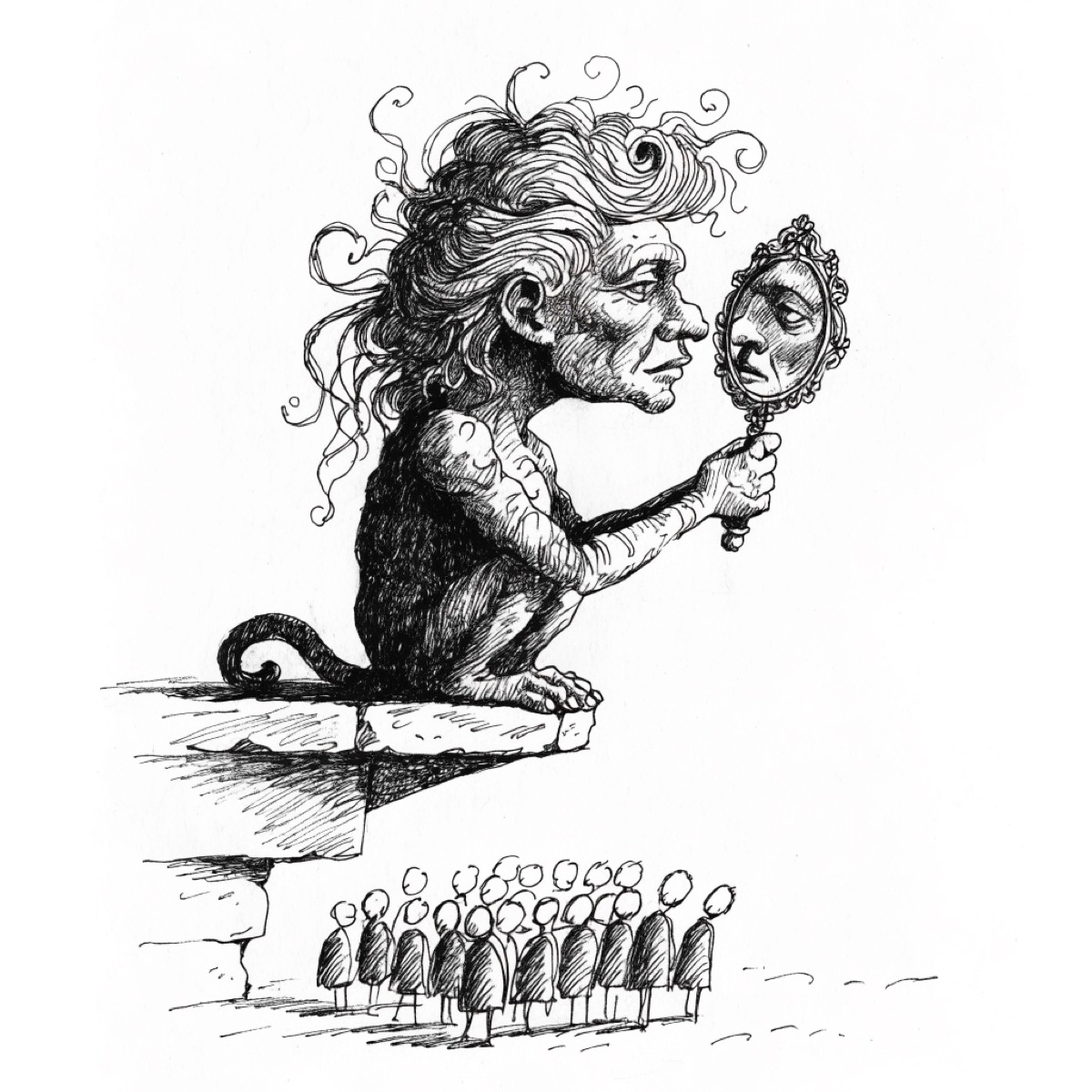
Somewhere in the restoration records of Chartres Cathedral, there is a moment that stops you cold. A conservator, elevated on a hydraulic crane to inspect storm damage some thirty meters above the nave floor, finds herself face to face with a corbel figure that has been up there since the thirteenth century. The face is not rough. It is not approximate. The pupils have been drilled with a fine chisel, the hair falls in individually separated locks, and the expression — somewhere between contemplation and mild surprise — has the kind of psychological specificity you'd expect from a portrait meant to hang at eye level in a wealthy merchant's hall.
Nobody down below could see any of this. Nobody ever had.
Architectural surveys of Gothic cathedrals across France, England, and Germany have documented what that conservator experienced firsthand: figural carvings, decorative capitals, and narrative scenes positioned above roughly fifteen meters show no meaningful reduction in craft quality relative to work at eye level. The hands that made them applied the same pressure, the same patience, the same refusal to cut corners — literally — regardless of altitude. This is not an isolated quirk of one ambitious workshop. It is a pattern, consistent enough to be a policy, or something even deeper than policy.
Which forces a genuinely strange question. If art is fundamentally an act of communication between a maker and a viewer, what do we call something made to be seen by no one alive?
The Scaffold Goes Down, the Work Stays Perfect
To appreciate how deliberate this was, you need to picture how Gothic cathedrals were actually built. Craftsmen worked on temporary wooden scaffolding erected against the rising stone, carving figures and foliage more or less in place. When a section was complete, the scaffold came down — not to be replaced, but to be moved or dismantled. The mason who finished a capital thirty meters up knew, with complete certainty, that once he descended and the planks were pulled away, that capital was gone from human reach. There was no subsequent inspection, no patron review, no audience to applaud the finish. The work would become, for all practical purposes, invisible.
Modern project management has a clean answer for situations like this: deprioritize. If no one will see it, spend less on it. Redirect labor to surfaces that earn admiration, generate donations, attract pilgrims. This is not cynicism — it is optimization, the rational allocation of finite effort. The medieval masons, by every material measure, ignored this logic entirely.
They were not alone in doing so. Egyptian tomb painters decorated burial chambers sealed the moment the pharaoh's body was interred, covering walls that no living eye was intended to visit. Japanese temple carpenters fitted invisible interior joints with the same precision as exterior joinery — a practice sometimes explained as professional pride, though that explanation quietly sidesteps the question of why pride would extend past the last moment of human visibility. There is a cross-cultural phenomenon here, recurring across centuries and continents, that resists reduction to craft ego or oversight by overenthusiastic artisans. Something else was motivating the work.
When the Audience Is Omniscient
The theological answer is almost disarmingly straightforward once you step inside the worldview that produced it. Medieval Christian cosmology did not partition reality into seen and unseen the way we habitually do. God, in orthodox Scholastic theology, perceives everything simultaneously — not sequentially, not from a fixed vantage point, but with a gaze that is total, continuous, and indifferent to the distinction between what humans can access and what they cannot. From this perspective, the category "hidden from view" simply does not exist in any ultimate sense. The face thirty meters up was always visible. Just not to us.
Abbot Suger of Saint-Denis, the twelfth-century cleric often credited as the intellectual father of Gothic architecture, wrote explicitly about the purpose of material splendor in sacred space. For Suger, elaborately worked surfaces were not decoration in any frivolous sense. They functioned anagogically — a word from the Greek for "leading upward" — drawing the perceiving mind from physical beauty toward divine truth by a kind of graduated ascent. The beauty was a ladder, not a destination. Bernard of Clairvaux famously disagreed with Suger about whether monks' cloisters should be visually rich or austerely plain, but both men were arguing within the same framework: that beauty in sacred space was a theological act, not an aesthetic one.
This reframes the carvings entirely. If God is the intended audience, then the mason chiseling a face at thirty meters is not decorating a building. He is doing something closer to prayer — a prayer made permanent in limestone, addressed to a perceiver for whom altitude is irrelevant. Our word "art" starts to feel like a poor fit. Art, in the sense we currently use it, implies a human transaction: an artist, a work, a beholder, a response. Pull the human beholder out of that equation and the whole architecture of the concept collapses.
The Surprisingly Recent Invention Called "The Aesthetic"
Here is where the intellectual history gets genuinely uncomfortable. The word aesthetics — meaning the philosophical study of sensory beauty as a distinct category of human experience — was coined by the German philosopher Alexander Baumgarten in 1735. Before that date, beauty was not a separate domain with its own rules and vocabulary. It was a branch of theology, or of metaphysics, or of moral philosophy. The idea that there exists a specifically aesthetic mode of experience, separable from religious meaning or ethical judgment, and that this experience forms the proper basis for evaluating art, is not ancient wisdom. It is an Enlightenment invention, roughly as old as the steam engine.
The Romantic movement consolidated this invention into something that now feels like common sense. Art became, above all, a transaction between an artist's inner life and a human beholder's emotional response. Sensory pleasure, imaginative resonance, the cultivated judgment of the critic — these became the criteria by which objects were elevated into "art" and distinguished from mere craft, decoration, or devotional furniture. The framework is so dominant, so thoroughly absorbed into how educated people talk about making things, that we apply it reflexively to everything — including cultures that never held it, never needed it, and would have found it baffling.
When we stand in Chartres and describe the rose window as "breathtaking" or discuss the "artistic achievement" of the nave capitals, we are speaking a dialect that the people who made those things did not speak. We are not wrong, exactly — the objects are breathtaking — but we are translating, and something is lost in the translation. Calling Gothic cathedral carving "art" in the modern aesthetic sense may be a category error of the same kind as calling a monk's private prayer a "performance" because someone happened to overhear it. The monk was not performing. He was speaking to someone specific. The fact that you could hear him was incidental.
What This Tells Us About Modern Making
You can find secular echoes of the medieval mason's ethic in contemporary work, though they are rare enough to stand out when you encounter them. The open-source programmer who writes internal code documentation with the same care and wit as the user-facing interface — explaining functions to hypothetical future readers who may never exist — is practicing something structurally similar. So is the chef who, as a matter of personal discipline, plates the underside of a tart before inverting it onto the serving dish: the customer will never see it, but the chef insists on it. In both cases, the invisible work is not wasted. It is the evidence of a standard that does not negotiate with visibility.
These examples are notable precisely because they are exceptions. The default logic of modern production is audience-facing. We optimize for the seen surface, the user-tested interface, the line of the argument that will be quoted. The parts no one will scrutinize — the load-bearing prose in the middle of a long report, the plumbing inside a wall, the structural joints behind a facade — attract less effort, less thought, less pride. This is rational. It is also, over time, an erosion. When audience approval becomes the only justification for care, care migrates entirely to the visible, and the invisible work quietly degrades.
Medieval cathedrals make the counter-argument in stone. The discipline of working as if an omniscient observer attends to every surface — not as a theological claim, but as a practice — appears to produce qualitatively different results. The standard does not waver at altitude. The chisel does not get lazy in the dark. Whether or not you believe in the theological premise, the practice it generated seems to have been generative in its own right: a form of craft integrity that held even when no human witness remained to enforce it.
Seeing the Invisible Now, and What It Costs Us
There is an irony built into our current moment. Drone photography, photogrammetry, and high-resolution imaging have finally made those thirty-meter carvings visible in a way no medieval worshipper — and no medieval mason, after the scaffold came down — ever experienced. The face that waited in anonymity for eight hundred years now appears in coffee-table books, Instagram feeds, and museum catalogs. We can zoom in on the drilled pupils. We can argue about whether the expression is melancholy or merely worn by weather. The hidden has been made spectacular.
But it was never made for this. The visibility we've created is a fundamentally different thing from the visibility the carver imagined. He imagined God's gaze: total, non-photographic, metaphysically present. We've given the carving a photographer with a drone and a license for commercial use. Something has been revealed, certainly. Whether something has also been violated is a harder question, and one worth sitting with.
It is the same question raised by Navajo sand paintings, which are created over days of exacting ceremonial work and then deliberately destroyed upon completion — the destruction being not the tragedy but the point. Or by Tibetan Buddhist monks who construct mandalas of colored sand with extraordinary precision over weeks, then sweep them into a river as a teaching about impermanence. Or by the Japanese tea ceremony, in which ceramic vessels are prized for irregular glazings and asymmetries that no maker catalogued as intentional decisions, because the maker was not, in the relevant sense, the author of those qualities. In each case, the modern aesthetic impulse — document it, preserve it, publish it, analyze it — runs directly against the logic of the original making. We keep trying to stabilize what was made to be transient, or to publicize what was made in private address. We call this appreciation. The makers might have called it something else.
The God-Shaped Audience
Return, one last time, to the restorer on the crane. She is the first human being in roughly eight hundred years to be close enough to truly see that face — to meet its gaze at the distance for which the gaze was carved. It does not respond to her. It does not acknowledge the wait. It stares into the middle distance with the particular calm of something that was never waiting for her specifically, that was addressed elsewhere from the moment the chisel lifted away.
What the medieval mason's indifference to our gaze reveals is not a failure of communication but an entirely different theory of what making things is for. He was not trying to reach us. He was not even, in the way we would understand it, trying to impress God — as if God needed impressing. He was participating in an order of things in which careful work was its own form of alignment with the real, regardless of who was watching. The audience was not the justification. The work was.
That is the idea that survives all the scaffolding and theology and intellectual history: that the quality of attention you bring to invisible work is not separate from the quality of attention you bring to visible work. It is the same attention, practiced in the dark so that it holds in the light. The cathedral knew this. The mason knew this. The face thirty meters up, staring patiently into the air while we scroll through our photographs of it, knows it still.