Culture · 9 min read
Why Humor Doesn't Translate Across Cultures
We assume laughter is one of the few things that unites us across cultures—but the science of what actually triggers a laugh reveals something far stranger: humor is a precise map of how a culture constructs reality itself. What happens when the map doesn't match is more revealing than any anthropology textbook.
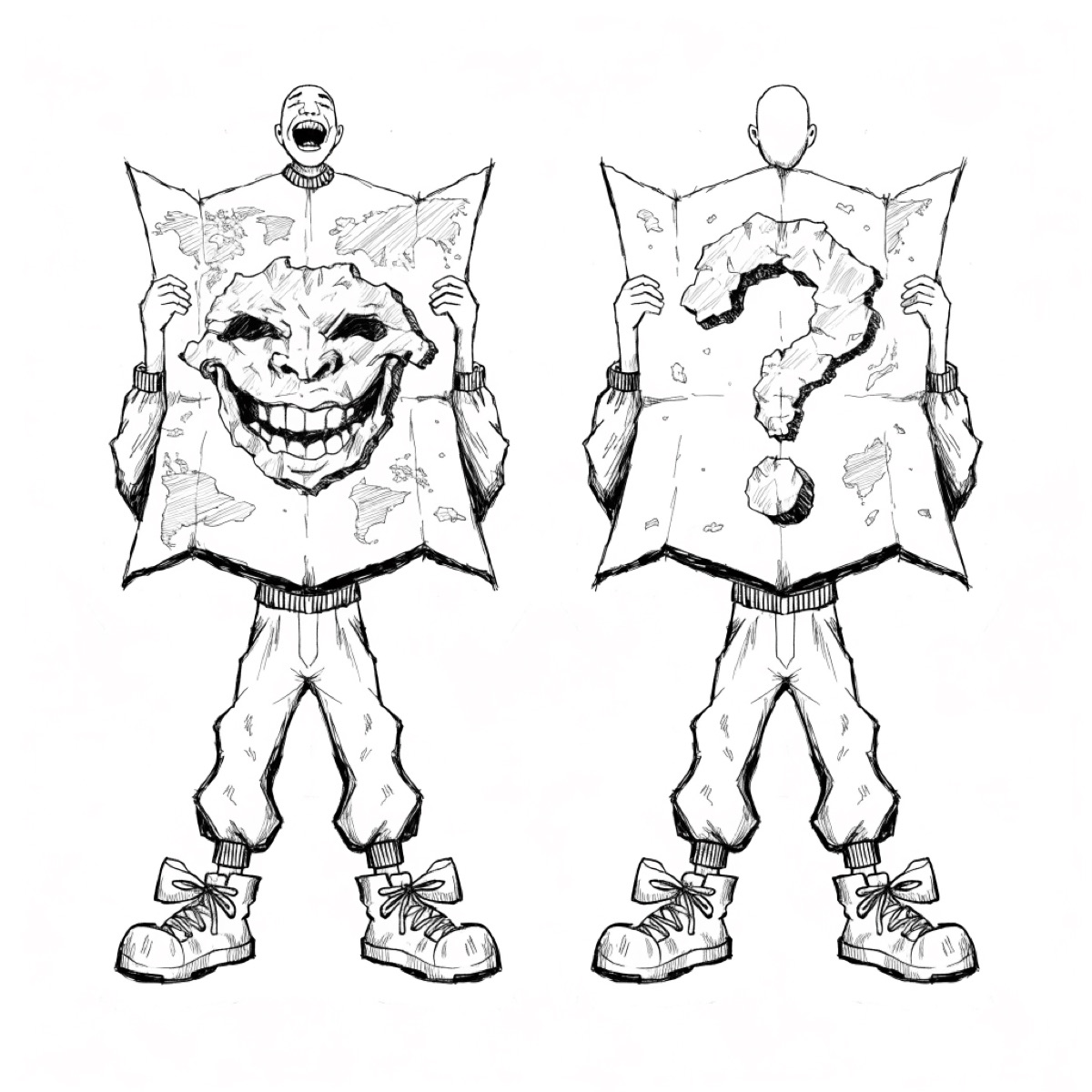
Picture a British comedian—let's call him exactly what he was, a mid-career Edinburgh Fringe veteran—standing on a stage in Tokyo, killing it on the setup. The crowd is attentive, leaning in. He delivers the punchline, the one that had reliably buckled audiences in Manchester and Melbourne. Silence. Not awkward silence. Just silence, the way a stone wall is silent.
He tried again. A different joke, same architecture: misdirection, subverted expectation, verbal snap at the end. More silence. Not hostility—the audience was, by any measure, engaged. They just weren't laughing. He later described it as performing for a room full of people who were watching him in a language he thought he spoke fluently, only to realize he'd been speaking it wrong his entire life.
We treat laughter as the great human universal—and in one narrow sense, it is. Every culture laughs. But the trigger for laughter is not universal at all, and that gap is scientifically significant in ways that go far beyond comedy. What makes something funny turns out to be a compressed map of a culture's deepest assumptions about agency, causality, and social order. The joke that bombs in Tokyo is not a translation failure. It is a window into two incompatible models of how reality works.
Why Your Brain Finds Anything Funny at All
The leading cognitive theory of humor is called Benign Violation Theory, developed by Peter McGraw and Caleb Warren at the University of Colorado in 2010. Its premise is elegant: something is funny when it simultaneously violates an expectation and remains non-threatening. Trip on a banana peel and break your neck—tragedy. Watch someone else trip on a banana peel and catch themselves—comedy. The violation has to register, but the stakes have to stay low enough that the brain can enjoy the rupture rather than panic at it.
Before Benign Violation, the dominant framework was the incongruity-resolution model, which proposed that humor fires when the brain detects a mismatch between expectation and reality and then resolves it. The laugh, in this view, is the neural reward for successfully processing a cognitive paradox. Setup creates the expectation; punchline collapses it into a new, surprising coherence.
Here's the critical wrinkle that neither theory fully foregrounds: what counts as a violation and what counts as benign are not hardwired into the brain. They are culturally constructed. The expectation being broken is not a biological given—it's an assumption your particular civilization installed. This is where comedy stops being a question of taste and starts being a question of worldview.
The Agency Problem: Who (or What) Is Supposed to Be in Control?
In American stand-up comedy, one of the most reliable comic archetypes is the person who should be in control and isn't. The hapless manager who can't manage. The CEO who walks into a glass door. The bureaucrat whose system swallows itself. The joke works because the underlying assumption—that individuals can and should control their circumstances—is so deeply shared that violating it reads as absurd. Failure of personal agency is inherently funny.
Contrast this with a dominant mode of humor in many East Asian and Middle Eastern contexts, where the target of the joke is more often fate, cosmic irony, or the system itself. The expectation being violated isn't "this person should be in control"—it's "the universe was supposed to make sense." The humor is less about individual incompetence and more about the fundamental unreliability of order. The locus of the joke has moved from the person to the cosmos.
This maps almost precisely onto what cross-cultural psychologist Geert Hofstede identified as the individualism-collectivism dimension—one of the most replicated findings in cultural psychology. Cultures that score high on individualism (the U.S., Australia, the U.K.) consistently produce and prefer humor that targets individual failure and celebrates individual cleverness. Cultures that score lower tend toward humor where the butt of the joke is impersonal: the system, the situation, the gods. Studies on self-deprecating versus other-deprecating humor show measurable divergence along exactly these lines. You're not just laughing differently. You're operating from a different theory of where responsibility lives.
The Hierarchy Paradox: Punching Up, Punching Down, and Who Decides Which Is Which
In contemporary Western liberal discourse, there is a fairly settled moral grammar of comedy: punching up (mocking the powerful) is acceptable; punching down (mocking the vulnerable) is not. This framework feels, to those inside it, like a moral universal—simple fairness, applied to jokes. But the framework only makes sense if you assume a relatively flat social baseline, where hierarchies are provisional and contestable. The moral logic of "punching down" requires you to believe, at least implicitly, that status is not supposed to be fixed.
In cultures with more explicit and accepted social hierarchies, the same joke reads entirely differently. Take self-deprecating humor from a high-status individual. In Japanese corporate and social culture, a senior executive who makes gentle fun of himself signals admirable humility—kenson, a form of modest self-presentation that strengthens rather than undermines social bonds. The audience doesn't think less of him. They think more of him for not taking himself too seriously. In American corporate culture, the same routine from a CEO risks being read as an admission of incompetence—a crack in the armor that others may exploit.
Same joke. Opposite social function. The difference is not in the words but in the ontology of power each culture is carrying into the room. Comedy, it turns out, doesn't just reflect a society's assumptions about hierarchy—it encodes its live operating assumptions, the ones too obvious to state aloud. The joke that reads as cruel in Brooklyn reads as egalitarian in a context where someone at the top is expected to stay firmly, ceremonially at the top. When a joke offends across cultures, it is often not because one side lacks a sense of humor. It's because they're living inside incompatible social architectures.
Time, Causality, and the Absurd: Why Finnish Silence Is Actually a Punchline
The setup-punchline structure is so dominant in Anglo-American comedy that we've started to treat it as the definition of a joke, rather than one culturally specific form of it. But the structure itself encodes a worldview: linear time, cause and effect, disrupted sequence. Something was supposed to happen next. Something else happened instead. The humor lives in that gap.
Cultures with more cyclical or fatalistic cosmologies generate comedy differently. Russian and Eastern European dark humor—some of the richest and most philosophically sophisticated comedic traditions in the world—doesn't find the disruption funny. It finds the inevitability funny. The joke isn't that something went wrong when it was supposed to go right. The joke is that you ever expected anything else. Soviet-era jokes (anekdoty) are a masterclass in this: they derive their power from the grim recognition that disaster is the natural state, and optimism itself is the absurd position. The violation being registered is the expectation of improvement. The benign framing is: yes, of course, what did you think would happen.
Then there is Finland. Finnish humor is often described by outsiders as non-existent, which is itself a misreading rooted in unfamiliarity. Finnish comic timing involves extended silences that would feel catastrophic on a British stage—gaps long enough that most comedians would compulsively fill them. But in Finnish communication culture, silence is not empty space. It's a meaningful signal, a form of active engagement. The absence of a verbal punchline is the punchline. The joke depends on your understanding that the silence is the comedian's final move, not a stall—and if you don't know that silence is meaningful here, you will miss the comedy entirely while sitting directly inside it.
Comedy as Cognitive Archaeology: What Jokes Excavate
There's a useful metaphor borrowed from paleontology: a fossil preserves not just the organism but the conditions of the world that surrounded it—the temperature, the pressure, the chemistry of the water. Jokes work the same way. The humor a culture finds reliably funny across generations preserves the implicit rules of that world: what's sacred, what's assumed to need no explanation, what's taboo in a way that makes transgressing it delicious. The joke is the fossil. The worldview is the rock.
Consider the structural dominance of wordplay and puns in Chinese comedic tradition. Mandarin and Cantonese are tonal languages with a very high rate of homophones—words that sound identical but carry entirely different meanings depending on tone or character. Puns in Chinese aren't groan-worthy filler; they are formally sophisticated, structurally built into the language itself. The cognitive move required to appreciate a Mandarin pun is different from the cognitive move required to follow a narrative incongruity joke in English. Different linguistic architecture, different comedic architecture, different mental workout. When researchers have studied humor cross-linguistically, they find that the type of cognitive flexibility most prized in comedy varies with the structure of the language itself—suggesting that what we find funny is partly shaped by the particular way our language forces us to process ambiguity.
This makes humor one of the most precise instruments available for mapping invisible belief systems. When a joke doesn't translate, most people's instinct is to assume the other side lacks sophistication, or that something was lost in translation. But the better reading is that the untranslatable joke marks the exact boundary where two models of reality diverge. It's a data point, not a failure.
What This Means for How We See Each Other
The diplomatic and corporate worlds have long treated cultural sensitivity as a matter of etiquette—don't use your left hand, bow at the right angle, avoid discussing certain topics at dinner. This framing treats culture as a set of surface customs to memorize. The deeper implication of humor's structure is more unsettling: culture isn't a set of rules laid over a shared reality. It is a reality, a specific construction of what the world contains, who is responsible for what happens, and what counts as a meaningful disruption.
Humor exposes this because comedy requires you to share the assumption being violated. You can't find something funny if you never held the expectation in the first place. When you don't laugh, it's not that you didn't get it—it's that you were never carrying the assumption the comedian punctured. And there's no way to explain the joke that will fix this, because the fix isn't cognitive. It's architectural.
This has practical stakes beyond comedy clubs. Negotiators who bomb their attempts at lightening the mood, managers who find their sarcasm read as genuine hostility, diplomats whose jokes about their own country's dysfunction are interpreted as admissions of weakness—these are people who confused the surface of humor with its structure. They thought they were sharing a laugh. They were actually revealing incompatible ontologies to each other at close range.
The most interesting thing about the British comedian in Tokyo is not that he failed. It's that both parties came away convinced they had shared an evening of mutual engagement—the comedian felt heard, the audience felt respectful—without anyone laughing at the same thing, for the same reason, at the same moment. Two rooms, same walls. The joke didn't travel. But then, neither did the universe it assumed.