Philosophy · 7 min read
Moral Luck and the Problem of Judging Outcomes
Why equal choices can receive unequal judgments, and what major philosophical responses preserve or revise.
Responsibility seems to require control
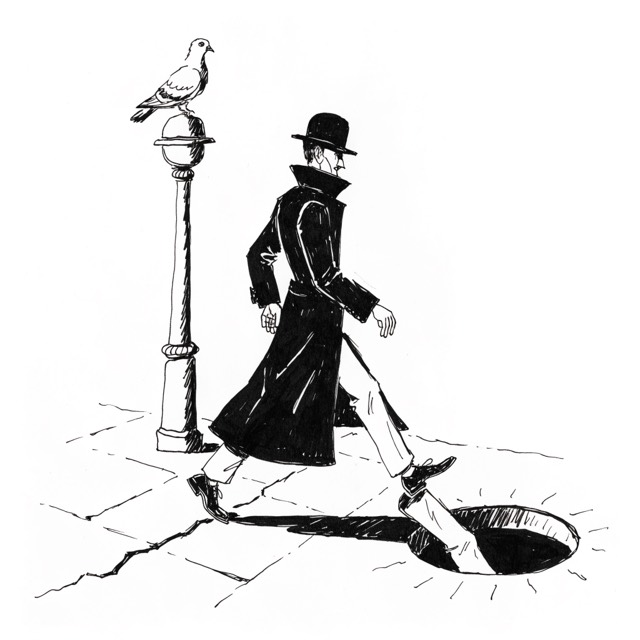
Two drivers make the same reckless choice. Each looks away from the road for the same length of time. A child runs into the path of one car but not the other. One driver causes a death; the other arrives home without learning how close the conduct came to tragedy. Courts, communities, and the drivers themselves are likely to judge the cases differently, even though the difference in outcome depended on something neither driver controlled.
This is the problem of moral luck. The phrase names a conflict between two plausible ideas. The first is a control principle: people should be morally assessed only for what depends on them. The second is an observation about ordinary judgment: outcomes, circumstances, character, and causes outside an agent's control regularly affect praise and blame.
Bernard Williams and Thomas Nagel gave the contemporary debate its defining form in essays published in the 1970s and collected in books soon afterward. They did not merely ask whether chance sometimes excuses a person. They asked whether luck enters so deeply into action that a morality purified of luck would have very little left to assess. The question remains open because each proposed solution preserves some judgments by revising others.
Four kinds of luck widen the problem
Nagel organized the issue into four categories. Resultant luck concerns how actions turn out. The two distracted drivers illustrate it. Attempted murder and murder can involve similar intentions and conduct but different legal and moral consequences because one attempt succeeds.
Circumstantial luck concerns the situations a person encounters. Someone living under a repressive regime may face a dangerous opportunity to resist, collaborate, or remain silent. A counterpart born elsewhere never faces that test. Their characters may be similar, but only one becomes blameworthy or courageous through action in those circumstances.
Constitutive luck concerns the traits and dispositions with which a person must act: temperament, capacities, upbringing, and other features the person did not choose from a neutral starting point. People can work on their character, but the abilities and motives used in that work are themselves shaped by prior conditions.
Causal luck concerns the antecedent events that produce an action. It approaches the free-will problem. If choices arise from causes outside a person's control, or include indeterminacy that the person also does not control, it becomes difficult to identify a remainder untouched by luck.
These categories do not establish that responsibility is impossible. They show why restricting responsibility to what is fully controlled is demanding. Michael Zimmerman and other “skeptical” theorists have argued that luck should not affect moral responsibility even when it affects what happens. On this view, the unsuccessful reckless driver may deserve the same degree of blame as the one who kills, although compensation, prevention, or legal administration could still respond differently to the harm.
Outcomes alter more than an observer's verdict
The strongest case against resultant luck says that the drivers' moral records should match because their agency matched. The death is an additional bad event, not evidence of a worse choice. That view separates blameworthiness from the amount of harm for which someone is causally responsible.
But equal-blame accounts face several objections. Actual harms create relationships and obligations that risks alone do not. The driver who kills may owe an apology or reparation to a particular family. The harmed people have claims grounded in what happened to them, even if the driver's antecedent fault was no greater. Law also needs administrable distinctions between completed and incomplete offenses, though legal convention by itself does not settle moral desert.
Williams's discussion of a fictionalized Gauguin brings a different dimension into view. An artist leaves family obligations to pursue a vocation; later artistic success may make the choice intelligible in a way failure would not. Williams was not offering success as a simple moral acquittal. He used the case to show that an agent's retrospective justification can depend on an outcome that could not be known at the time. Ethical life includes projects and identities whose meaning unfolds through events.
That argument is contested. Artistic achievement cannot erase wrongs to other people, and judging abandonment by later fame risks rewarding fortune. The example is useful because it resists a single score. A choice can remain unjust to those burdened by it while becoming central to the agent's life. Moral assessment may have several objects—quality of will, harm, obligation, and self-understanding—rather than one quantity called blame.
Proposed solutions revise the control principle
One family of responses retains control as an important condition but narrows what luck changes. It distinguishes the blame attached to choice from responsibility for consequences. Both drivers are equally culpable for recklessness; only one is responsible for an actual death and its repair. This preserves an equality in fault while recognizing outcome-dependent obligations.
A second response weakens the demand for complete control. Agency may require that conduct express a person's reasons, values, or quality of will, not that the person be the ultimate cause of every contributing feature. On this view, luck can affect which parts of character become visible and what consequences follow, but actions can still be attributable to the agent.
A third treats responsibility practices as serving relationships and social purposes rather than measuring metaphysical desert alone. Blame can communicate a demand, register another person's standing, or support expectations. The relevance of outcomes may then depend on what a practice is for. This approach must still explain when blame is fair and why useful condemnation should count as responsibility rather than mere behavior control.
Skeptical positions accept the pressure more fully. If control is necessary and luck pervades action, basic-desert responsibility may be sharply limited or absent. That need not entail abandoning protection, rehabilitation, moral criticism, or compensation. It changes their justification: society may respond to dangerous conduct without claiming that a person deserves suffering in an ultimate sense.
None of these approaches simply wins by definition. A control principle can be formulated more or less strictly; “responsibility” can refer to blameworthiness, answerability, causal involvement, liability, or obligations of repair. Apparent disagreements sometimes arise because theorists are answering different questions with the same word.
Moral luck is also an empirical pattern
Experimental philosophers and psychologists have tested whether ordinary judgments vary with outcomes. Many vignette studies find an outcome effect: participants often judge agents more harshly when identical or closely matched conduct produces worse consequences. Results vary with wording, whether negligence is present, what kind of judgment is requested, and whether participants clearly understand that luck controlled the outcome.
These experiments establish patterns in reported judgments, not the correctness of those judgments. They also do not show that every culture or person applies one stable theory. A participant may be assessing causal responsibility in one question and blame in another. Empirical findings can discipline claims about “common intuition,” but they cannot decide whether an intuition should survive reflection.
Law supplies concrete but mixed evidence. Criminal law often punishes completed harms more than attempts, while tort law usually requires actual damage for liability. At the same time, sentencing ranges, negligence standards, and attempt doctrines recognize intention and risk independent of outcome. These institutions balance retribution, prevention, proof, and administration; they are not direct transcripts of moral truth.
The unresolved issue is what fairness asks us to hold constant
The debate has clarified several points. Outcome and control can be separated analytically. Blame for a decision, causal responsibility for harm, duties to repair, and legal liability need not rise together. Luck enters not only results but opportunities, traits, and causal histories. A theory that removes one kind may still face another.
What remains contested is which form of control moral responsibility needs and which responsibility is at issue. Equal choices provide a strong reason for equal judgments of fault. Actual victims provide a strong reason for unequal obligations after harm. Constitutive and causal luck then press beyond the driver example toward the origins of agency itself.
Moral luck has no agreed solution because it exposes a cost in each direction. Ignoring outcomes can make moral judgment detached from people who were harmed. Letting outcomes determine desert can make chance distribute blame. The careful stopping point is not that responsibility is an illusion or that results settle character. It is that any defensible account must say which effects of luck it accepts, which it filters out, and why.
Sources and review note
2 sources, every one with a link you can follow.
- The central texts are Thomas Nagel's “Moral Luck”, Bernard Williams's essay collected in Moral Luck, and the Stanford Encyclopedia of Philosophy synthesis.
- The Internet Encyclopedia of Philosophy overview provides an independent map of later responses.
The human editor should watch the distinction between moral blame, causal responsibility, and legal liability; the literature does not use “responsibility” uniformly.