Philosophy · 6 min read
Moral Luck: Why Outcomes Complicate Judgments of Responsibility
Why control, consequences, character, and circumstance pull judgments of responsibility in different directions.
The control principle and a familiar pair of drivers
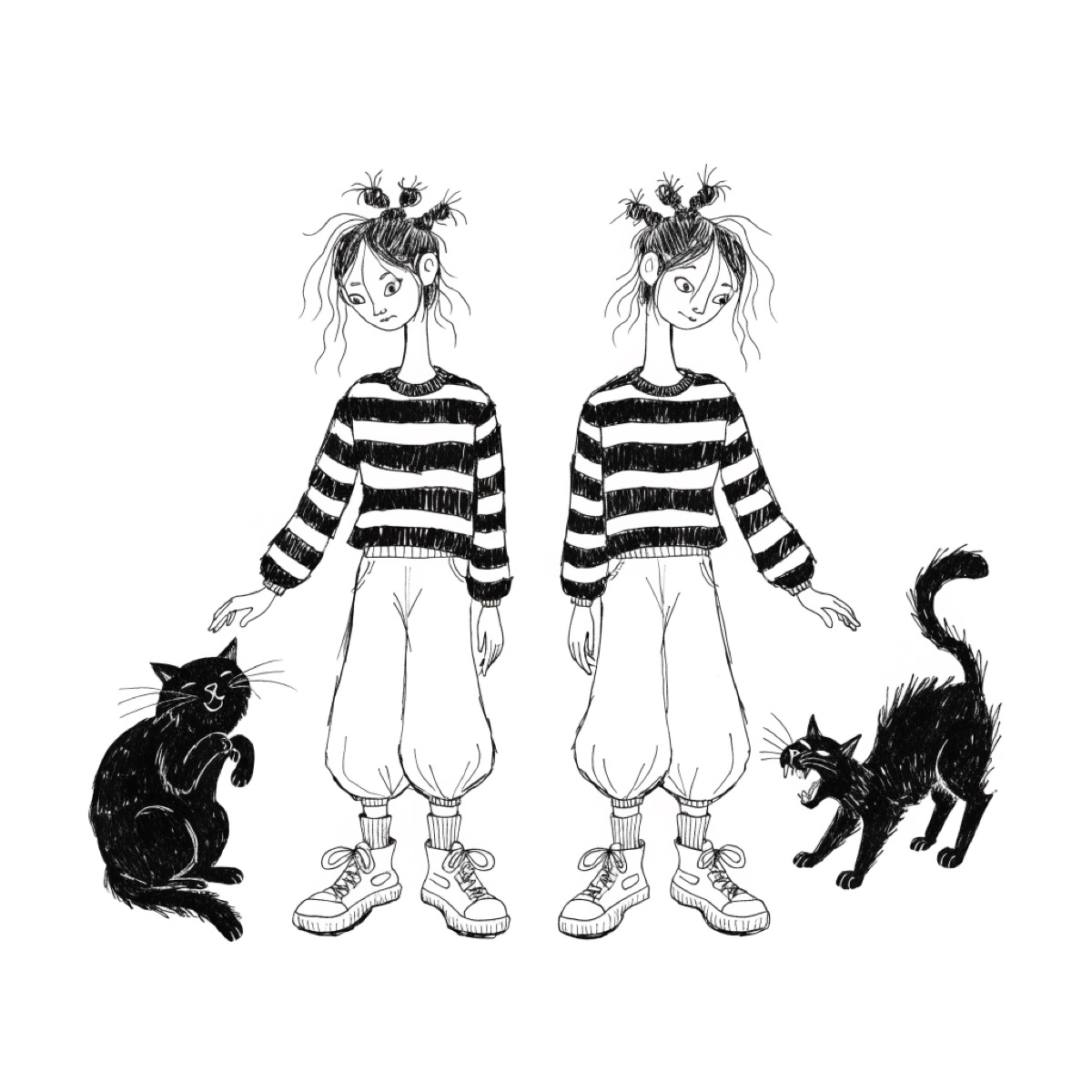
Imagine two drivers who take the same unjustified risk. Both speed through the same kind of residential street, with the same attention and skill. A child happens to enter the road in front of one car but not the other. One driver causes a death; the other arrives home without incident. If factors beyond a person's control should not affect moral assessment, the drivers seem equally blameworthy. In ordinary practice, however, people commonly judge the fatal case more harshly.
This tension is called the problem of moral luck. Bernard Williams and Thomas Nagel made it a central topic in a paired discussion, “Moral Luck”, published in the 1976 supplement to the Proceedings of the Aristotelian Society. The phrase is deliberately unstable: luck seems external to agency, while moral praise and blame seem to track what an agent controls. The Stanford Encyclopedia of Philosophy's 2025 review frames the conflict through a “Control Principle”: people are morally assessable only to the extent that what they are assessed for depends on factors under their control.
The example does not ask whether consequences matter in every practical sense. The driver who hits the child has duties to stop, summon help, cooperate with investigators, and address harm that the other driver does not. The philosophical question is narrower: can the unlucky outcome itself make the driver's prior moral fault greater, when the risky choice was otherwise the same?
Luck reaches further than results
Nagel distinguished four kinds of moral luck. Resultant luck concerns how actions turn out. The paired drivers illustrate it. Circumstantial luck concerns which tests a person faces: someone living under a brutal regime may have opportunities for courage or collaboration that a similarly disposed person in peaceful conditions never encounters. Constitutive luck concerns traits, capacities, and dispositions that help make someone the person they are. Causal luck concerns how prior events produce actions, extending the problem toward the debate about free will.
The categories reveal why a simple appeal to control is difficult to sustain. Outcomes depend on other people and physical events. Circumstances depend heavily on birth and history. Temperament reflects inheritance, upbringing, and experience. The causal history behind a decision precedes the moment of choice. As these influences accumulate, Nagel argued, the apparently controllable remainder seems to shrink.
Williams approached the subject partly through “agent-regret,” the distinctive response of someone whose agency is involved in an outcome even without negligence. His well-known example is a lorry driver who, through no fault, runs over a child. A spectator may feel sorrow, but the driver can reasonably feel something different because he was the agent. Williams did not simply claim that bad outcomes mechanically increase blame. He examined how a life can be ethically shaped by events that are not under rational control.
His discussion of a hypothetical painter modeled loosely on Paul Gauguin makes the point from another direction. A person leaves obligations to pursue an artistic project. Later success may make the decision intelligible in a way failure would not. Yet success itself depends partly on luck. The example is contested because framing artistic success as a possible justification risks minimizing abandoned people's claims. Its value in the debate is diagnostic: retrospective assessment often depends on what actually became of a choice.
Blame, punishment, and repair need not move together
The driver case can conceal several judgments under one word. Moral blame may concern the quality of the choice. Legal punishment may respond to harm, deterrence, evidentiary rules, and public protection. Duties of repair arise from an agent's causal involvement. Emotional reactions respond to grief and proximity. These judgments can diverge without contradiction.
Criminal law often distinguishes attempts from completed offenses even when the person's intent is similar. One explanation is consequentialist: completed harms create greater social costs and may justify different sanctions. Another is evidential: an outcome can provide stronger proof of dangerous intent or conduct. A third treats outcomes as part of what an agent has done, not an external add-on. Critics answer that extra punishment based solely on luck conflicts with equal culpability.
Experimental philosophy has tested whether ordinary judgments exhibit resultant luck. Results vary with wording and with whether researchers ask about wrongness, blameworthiness, punishment, or causal responsibility. A 2009 paper by Fiery Cushman, “Crime and Punishment: Distinguishing the Roles of Causal and Intentional Analyses in Moral Judgment”, found evidence that judgments of wrongness and punishment can draw on partly different processes. Such studies describe patterns in selected participants; they do not decide which judgment is morally justified.
The separation helps explain why someone might hold that both speeding drivers showed equal fault while also requiring more from the driver who caused harm. Compensation can be grounded in repairing a loss rather than in an increment of desert. Agent-regret can be fitting without self-condemnation. The unlucky driver can have reason to respond differently while not being a worse person.
Four families of response
One response rejects moral luck. On this view, careful reflection should correct ordinary outcome-sensitive judgments. If the drivers' choices and reasonable expectations were the same, their blameworthiness was the same. Unequal emotions or legal treatment may have other rationales, but moral desert should track controlled features. This preserves the Control Principle at the cost of revising common reactions.
A second response accepts some moral luck. Outcomes are not merely things that happen after an action; they partly constitute what action occurred. Firing at a victim and missing is an attempted killing, while firing and killing is a killing. If moral assessment concerns actual agency in the world, not only an internal decision, then luck can affect its object. The challenge is explaining why this does not make blame arbitrary.
A third response divides moral assessment. “Attributability” asks whether conduct expresses an agent's values or practical identity. “Accountability” asks whether demands, resentment, or sanctions are warranted. “Answerability” asks whether the agent can provide reasons for acting. Philosophers use these terms differently, but the general strategy allows control to matter differently across kinds of judgment. It can preserve equal fault while recognizing unequal relationships to harm.
A fourth response questions the Control Principle itself. We routinely praise people for courage, patience, or generosity even though their traits and opportunities were not self-created. Requiring ultimate control may threaten praise and blame broadly, not just in unusual accident cases. Compatibilist theories of responsibility therefore look for relevant capacities—understanding reasons, responding to them, acting without coercion—rather than control over the entire causal history of the self.
None of these approaches commands agreement. Accepting resultant luck but rejecting constitutive luck needs a principled boundary. Rejecting outcome-sensitive blame may make moral judgment seem detached from actual victims. Dividing judgments can clarify vocabulary while leaving disputes about desert intact. Relaxing ultimate control must explain why some causal influences excuse while others do not.
What remains open
The moral-luck problem establishes no empirical discovery that forces one ethical conclusion. It exposes pressure among commitments many people already hold: consequences matter; fair judgment should not depend on chance; character matters; no one authors all the conditions of their character. A theory can ease one pressure by revising another commitment, but the cost must be stated.
The most defensible practical lesson is modest. When outcomes differ, ask which judgment is changing. Greater harm can create greater duties of rescue, repair, and public response without automatically proving greater culpability. Conversely, equal bad intent can justify equal criticism even when chance prevents one attempt from succeeding. Keeping those dimensions separate prevents a vivid consequence from doing argumentative work it cannot bear.
The open question is not whether luck affects lives; it plainly does. It is whether moral desert itself may properly vary with luck, and, if not, how moral practice should account for actual harm. Philosophy has mapped the choices more clearly than it has settled them. The two drivers remain difficult because each intuition—equal fault and unequal outcome—tracks something ethically real.