Literature · 6 min read
The History of the Paragraph Break
For thousands of years, humans read without paragraph breaks — and it changed what reading actually *was*. The humble white space between paragraphs isn't punctuation; it's one of the most consequential cognitive technologies ever invented.
Imagine reading this article as a single, unbroken block of text. No paragraph breaks. No white space. No visual breathing room — just an unrelenting wall of words pressing against your eyes from the first sentence to the last, with no signal of where one thought ends and another begins. You probably felt a flicker of dread just picturing it. That instinctive recoil is the point.
Here's the disorienting truth: for most of recorded history, that wall of words was simply what text looked like. Ancient manuscripts — from Homer's Iliad to the Dead Sea Scrolls — were written in scriptura continua, a format with no spaces between words, no paragraph breaks, no punctuation of any kind. Just an unbroken river of letters. Readers didn't scan these texts silently. They performed them aloud, using breath and rhythm to decode where one word stopped and another started.
The paragraph break, then, is not a neutral formatting choice. It is a cognitive technology, invented by human beings, refined over more than a thousand years, and silently restructuring the way every reader thinks — including you, right now.
Before the Break: The Continuous-Text World
To read a Greek or Roman manuscript in the classical era was less like reading a book and more like cracking a cipher. A trained reader — and literacy was rare enough that "trained" is the right word — would vocalize the text, using the sounds of spoken language to parse meaning from the undifferentiated stream of letters. Comprehension and breath were the same act.
This means that reading, for most of human literate history, was fundamentally a social and physical performance. You moved your lips. You used your voice. The idea of sitting alone in a room and silently processing abstract symbols into meaning — the kind of reading you are doing right now — would have seemed not just unusual but possibly impossible to a Roman scholar.
The radical implication is this: the paragraph break didn't just change how text looked. It changed what reading was. It severed the ancient bond between comprehension and vocalization, and in doing so, it invented the modern reader as a private, interior, silent creature.
The Invention of White Space: A Brief, Surprising History
The first revolution didn't come from a philosopher or a poet. It came from Irish monks in the 7th century who were struggling with a practical problem: Latin was not their native language, and scriptura continua was simply too hard to parse in a foreign tongue. Their solution — inserting spaces between words — was a workaround, not a manifesto. But its cognitive consequences were enormous.
Word spacing made it possible, for the first time, to read without moving your lips. The eye could now scan and predict, and the brain could process language without recruiting the vocal apparatus. The historian Paul Saenger, in his landmark study Space Between Words (1997), argues that this shift directly enabled the rise of silent reading in medieval Europe — a revolution in human interiority that we have never adequately credited.
The scaffolding continued to develop. Alcuin of York standardized spacing and letter forms in Carolingian manuscripts around 800 CE. Early medieval scribes introduced the paragraphos — a horizontal line or wedge symbol in the margin signaling a shift in topic, the direct ancestor of our indented paragraph. Then came Gutenberg. The printing press industrialized all of it, transforming scribal conventions into universal standards, hard-wiring the paragraph break into the cognitive expectations of hundreds of millions of readers who would come to experience it as simply natural — as obvious as gravity.
What the Paragraph Break Actually Does to Your Brain
The paragraph break is, in cognitive terms, a chunking signal. When your eye hits white space, your working memory receives an instruction: compress what just happened into a unit, label it, and prepare storage for the next one. This is not metaphorical. Chunking is a well-documented mechanism — psychologist George Miller's foundational 1956 paper established that working memory can hold roughly seven discrete units of information, and that the way we manage complexity is by grouping smaller items into larger, labeled chunks.
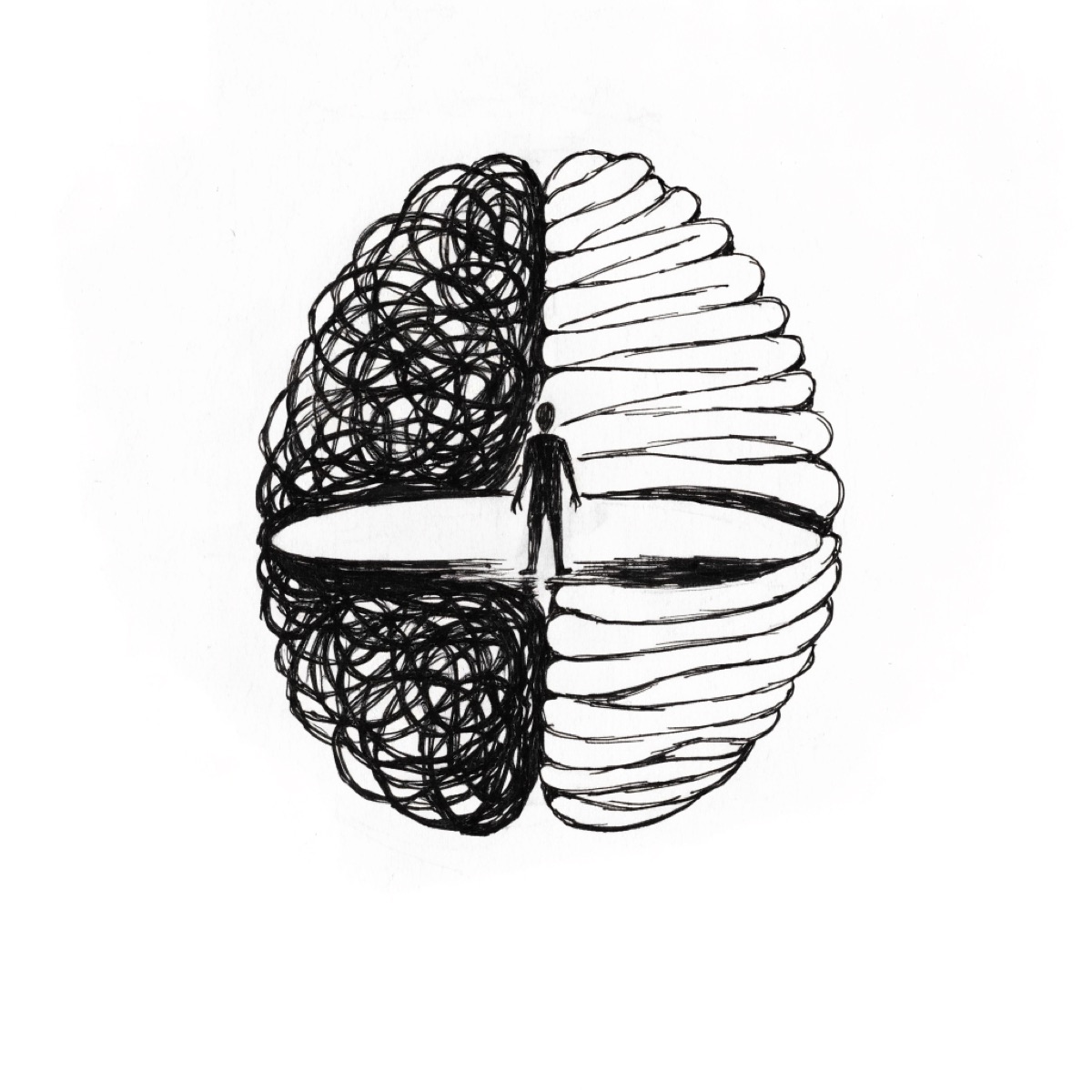
The white space also functions as an attention reset. Neuroscientists studying the brain's default mode network — the system that activates during rest and mind-wandering — have found that it plays a critical role in memory consolidation. The brief pause at a paragraph break may be doing real cognitive work: giving the brain a fractional moment to integrate what it just processed before moving forward. Reading without breaks isn't just aesthetically uncomfortable. It may be neurologically inefficient.
But there's a darker side to this conditioning. Centuries of paragraph-trained reading may have made sustained engagement with unbroken complexity genuinely harder. We have been taught to expect relief, and texts that deny it — dense philosophical argument, experimental prose, legal documents — now feel not just difficult but almost hostile. We didn't just learn to read with paragraphs. We learned to need them.
How Writers Have Weaponized (and Sabotaged) the Break
Cormac McCarthy understood this conditioning perfectly — and used it as a weapon. Blood Meridian deploys passages of relentless, unparagraphed prose that enact the very mercilessness of the world it describes. The Road goes further: its near-total erasure of conventional breaks creates a gray, grinding forward motion that mirrors the exhausted endurance of its characters. The form is the argument. McCarthy is not failing to use paragraph breaks. He is weaponizing their absence.
Joan Didion worked the opposite edge. Her paragraphs in The White Album are famously short — stabbing, fragmentary, arriving and departing before they settle. This isn't stylistic nervousness. It's a structural argument about consciousness under pressure: the breaks enact the dissociation she is describing, turning form into content with a precision that longer paragraphs could never achieve.
And then there is the single-sentence paragraph. When a writer drops to one line — really commits to it — they are commandeering your pause mechanism, forcing emphasis through white space the way a conductor commands silence in a symphony. It works because you have been trained, over centuries of reading, to treat white space as significant. The writer didn't earn that pause. History did.
Digital Platforms Have Hacked the Paragraph Break
Social media, content farms, and SEO-optimized web writing have discovered something troubling: artificially fragmented text increases scroll engagement. Break every two sentences. Never let the eye rest too long on a single block. Create false momentum. The paragraph break — once a tool for managing cognitive complexity — has been reverse-engineered into a manipulation device designed to simulate depth while delivering as little of it as possible.
The consequences are measurable in culture. A generation of readers trained on Medium posts and LinkedIn "thought leadership" now expects a line break every sentence or two — and that expectation is bleeding back into long-form reading. Dense, sustained prose increasingly feels not merely difficult but broken, as if the writer made an error. The tolerance for argumentative continuity — for an idea that builds across five or six sentences without pause — is quietly eroding.
This matters beyond aesthetics. The paragraph break rewired human attention once before, shifting an entire civilization from oral decoding to silent, interior reading. If the digital fragmentation of the paragraph is doing it again — training attention toward shallower chunking, faster topic-switching, and reduced tolerance for sustained complexity — then what is being lost is not just a preference for long sentences.
What is being lost is the cognitive architecture for following a difficult thought all the way to its end.
The Irish monks who added spaces between Latin words were not trying to change how human beings think. They were just trying to read a foreign language without losing their place. The most consequential technologies rarely announce themselves. They arrive as workarounds — and then, quietly, they rewire everything.