Philosophy · 7 min read
What Derek Parfit Showed About Personal Identity
What if the "you" who wakes up tomorrow is not actually you — and a celebrated Oxford philosopher spent two decades proving it? Derek Parfit's radical argument about personal identity didn't just unsettle philosophers; it quietly dismantled the foundations of how we think about punishment, money, and what we owe our future selves.
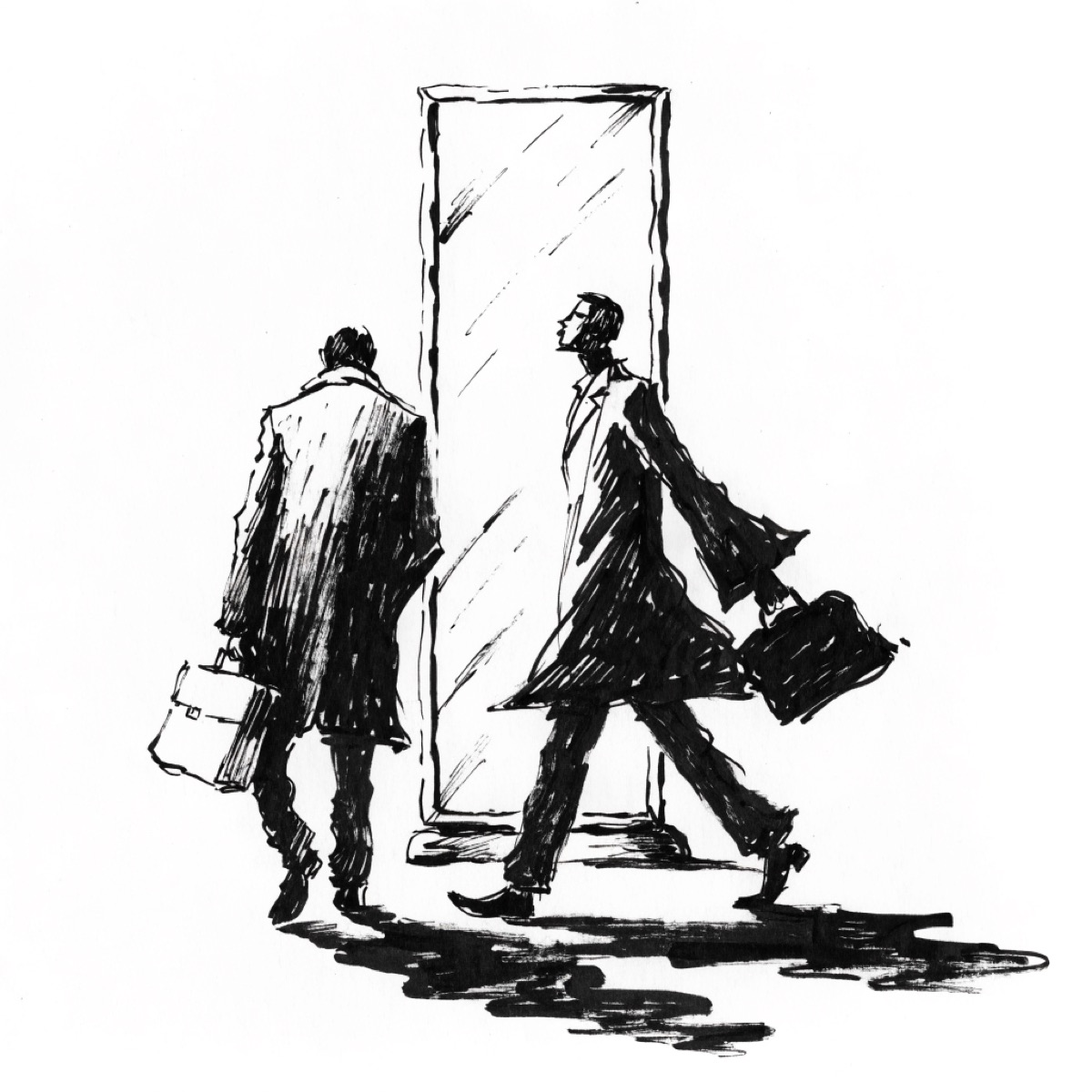
Imagine you wake up tomorrow with every memory intact — your childhood, your relationships, your embarrassments, your ambitions. Your face is the same. The people who love you recognize you instantly. Almost everyone, asked whether this continuity makes you you, answers yes without hesitation. Derek Parfit spent the better part of his career demonstrating that this reflexive confidence is not just philosophically naive — it is demonstrably wrong.
Parfit was a philosopher at All Souls College, Oxford, and by the time he died in 2017, a significant majority of analytic philosophers had accepted some version of his central claim: the self that persists through time is not a discoverable fact about the universe. It is a story we tell, layered over a discontinuous series of mental states. The implications of that conclusion — for criminal justice, for finance, for how we treat strangers — go far beyond late-night dorm-room speculation.
The Oxford Recluse Who Rewired Philosophy
Derek Parfit (1942–2017) was, by most accounts, a singular figure. He was famously reclusive, photographed obsessively, and reportedly so absorbed in philosophical problems that colleagues described him as existing on the edges of ordinary life. His landmark book, Reasons and Persons, published in 1984, he described as having been written in a state of something close to philosophical terror — a recognition that the questions he was asking had answers, and the answers were destabilizing.
Personal identity had been debated for centuries before Parfit arrived. Locke had argued that identity consists in memory; Hume had found no unified self at all when he went looking. But their arguments, however brilliant, were vulnerable to counterexamples and soft edges. Parfit brought something new: thought experiments engineered with such precision that dismissing them required showing a logical flaw, not just expressing discomfort.
His fundamental question was not "what does self mean?" — he wasn't interested in language games. He wanted to know what actually matters in survival. His answer demolished nearly everything we assume.
The Teleporter Problem (And Why It Destroys Your Certainty)
Parfit's most disorienting thought experiment involves brain fission. Suppose neuroscientists remove your brain, divide it into two hemispheres, and transplant each into a separate body. Both resulting persons wake up with your memories, your personality, your sense of humor, your fears. Both, by every psychological measure, are continuous with the person who went under the knife. Which one is you?
The logical trap closes immediately. If both are equally you, then identity is not the one-to-one relation we require it to be — one person cannot be identical to two distinct people simultaneously. But if neither is you, then psychological continuity — the very thread we use to stitch our sense of self across time — is not sufficient for personal identity. Either answer is catastrophic for common sense.
Parfit's conclusion was not that the puzzle has a hidden solution. It is that identity is not what matters. What matters is psychological continuity and connectedness — the overlapping chains of memories, intentions, beliefs, and character that link one moment of experience to another. He called this cluster of relations "Relation R," and crucially, it admits of degrees. You are more psychologically connected to yourself five minutes ago than to yourself thirty years ago. The self does not persist as a solid, indivisible thing. It fades, branches, and frays.
Hume Had the Clue. Parfit Had the Proof.
David Hume noticed the problem in the eighteenth century. When he turned his attention inward, looking for the unified self he was supposed to find, he encountered only a "bundle of perceptions" — impressions and ideas cascading through consciousness, with no stable experiencer holding them together. It was one of the great moments of honest introspection in the history of philosophy. But Hume had the intuition without the rigorous framework to make it stick.
Parfit constructed that framework. Through branching cases, fission scenarios, and gradual replacement thought experiments — the Ship of Theseus applied neuron by neuron — he demonstrated formally that no persistent, non-reductive self can be located. Every attempt to identify some further fact about identity, beyond psychological continuity, either collapses under examination or requires positing a soul-like entity that no serious metaphysics can support.
What stunned Parfit personally was a discovery he made midway through his work. Buddhist philosophy had been arguing something nearly identical for 2,500 years — the doctrine of anattā, or non-self, holds that what we take to be a continuous person is in fact a stream of causally connected but distinct mental events. Western philosophy had largely ignored this tradition. Parfit called the convergence "remarkable," and it clearly moved him — not as a coincidence, but as evidence that the conclusion was pointing at something real.
The Verdict the World Missed
By the 1990s, psychological continuity theory or outright reductionism about personal identity had become the dominant view among analytic philosophers. This is not a contested fringe position or a speculative minority opinion. When PhilPapers surveys professional philosophers, questions about the self tend to resolve toward reductionist and anti-substantivist answers. The philosophical community, broadly, has absorbed Parfit's argument.
The public knowledge gap is astonishing. Outside academic philosophy, almost no one knows this conclusion was reached — let alone what it implies. We still build legal systems on the assumption of a robust, persisting self who is fully accountable across decades. We structure financial products around the premise that the person making a contribution today is, in some deep and morally loaded sense, identical to the person who will collect the benefit. We construct moral frameworks that treat the self as a fixed anchor.
Why didn't the verdict break through? Partly because thought experiments feel like puzzles rather than revelations — entertaining but not binding. Partly because the conclusion is deeply counterintuitive; we feel, moment to moment, like continuous selves, and phenomenology is hard to argue with. And partly, perhaps, because the implications are genuinely terrifying enough that we have collectively preferred not to look directly at them.
What Falls Apart When the Self Does
Criminal punishment is the most immediately practical casualty. If the person standing in the dock today shares only a fraction of the psychological continuity with the person who committed a crime twenty years ago — if they hold different beliefs, have formed new relationships, perhaps remember the original act only dimly — then the retributive rationale for punishment becomes philosophically unstable. You are not making the guilty party suffer. You are making someone who resembles them suffer. Parfit argued that this should push us decisively toward rehabilitative rather than retributive frameworks, a conclusion that sits uncomfortably alongside most existing criminal justice systems.
Financial obligation and long-term planning become stranger still. Your future self is, in a meaningful and non-trivial sense, a different person — connected to you by Relation R but not identical to you in any deep metaphysical way. Saving for retirement, honoring a long-term contract, keeping a promise made years ago: all of these require you to act on behalf of someone you will become but have not yet met. Parfit found this clarifying rather than nihilistic. If your future self is like a neighbor, then caring for that self is an act of other-directed concern, not mere self-interest — and the boundary between selfishness and altruism begins to dissolve.
The architecture of grief and fear shifts too. Much of our terror about death is terror about the annihilation of me, this particular continuous self. But if the self is already a series of overlapping, partially connected states — if the gap between sleep and waking is structurally similar to the gap between life and death, differing only in degree — then the fear becomes harder to locate precisely. Parfit himself reported that accepting his own conclusions made death feel less threatening. He described it as liberating, like moving out of a small, cramped room.
The thought that will not leave you, after long enough with Parfit, is this: the self you are defending, planning for, and mourning in advance is not a thing you have ever directly encountered. It is an inference — a narrative imposed on a stream of experience that has no author. We have built civilization on the assumption of a persisting self, and a careful Oxford philosopher sat down, followed the logic wherever it led, and found that the assumption cannot be sustained. What we do with that finding — legally, morally, personally — is a question we have barely begun to ask.