Philosophy · 6 min read
What Gettier Cases Established About Justified True Belief
The narrow negative finding behind Gettier cases, the role of epistemic luck, and why no replacement analysis has closed the debate.
What Gettier Cases Established About Justified True Belief
A three-page paper and a durable counterexample
In 1963, philosopher Edmund Gettier published a short paper asking whether justified true belief is knowledge. He described two cases in which a person reaches a true belief by reasoning from evidence that seems adequate, yet the truth arrives through an accidental feature of the situation. Readers commonly judge that the person does not know. If that judgment is right, being justified, believing the proposition, and having a true proposition are not jointly sufficient for knowledge.
The argument is a counterexample, not a complete theory. It does not show that truth, belief, or justification is irrelevant. It shows that one influential way of combining them leaves room for epistemic luck: the believer is right, but not in the right way. The subsequent literature is large because removing that luck without excluding ordinary knowledge is difficult.
The established result is therefore narrower than the familiar story that Gettier "overturned a definition used for two thousand years." Ancient and early modern philosophers discussed knowledge, truth, belief, reasons, and perception in many forms. The exact tripartite analysis targeted in 1963 was prominent in twentieth-century analytic epistemology, but historians of philosophy dispute whether it was a continuous orthodoxy traceable directly to Plato.
Justified true belief was a target, not a settled ancient formula
Gettier begins by noting that attempts had been made to state conditions under which a person knows a proposition. In a simplified version, a subject knows p if p is true, the subject believes p, and the subject is justified in believing p. He assumes two principles for the counterexamples: a person can be justified in believing something false, and justification can extend through competent deduction.
In the first case, Smith has strong evidence that Jones will get a job and that Jones has ten coins in his pocket. Smith infers that the person who will get the job has ten coins. Unknown to Smith, Smith gets the job and also has ten coins. The inferred proposition is true, believed, and justified, but the evidence connects to the wrong person.
In the second case, Smith has strong evidence for "Jones owns a Ford." He validly infers disjunctions such as "Jones owns a Ford or Brown is in Barcelona," choosing locations without information about Brown. Jones does not own a Ford, but Brown happens to be in Barcelona. Again the final proposition is true through an accidental route.
The examples depend on intuitions about cases. Gettier did not run an experiment or derive a contradiction from formal axioms accepted by everyone. Philosophers assess whether the subjects know, whether they are truly justified, and whether the cases represent the concept of knowledge. Cross-cultural and experimental-philosophy studies later found variation in some epistemic judgments, but the basic Gettier intuition has proved robust enough to organize decades of debate.
Gettier cases isolate epistemic luck
The two cases share a structure sometimes called double luck. A justified premise is false, threatening the subject's conclusion; a separate coincidence makes the conclusion true. That explains why an early repair was to add a "no false lemmas" condition: knowledge cannot rest on a false proposition used as a step in the inference.
The repair handles Gettier's original examples but not all later variants. In a fake-barn case, a driver sees the only real barn in an area filled with convincing facades and forms the belief "that is a barn." The belief may be true and based directly on normal vision, without an explicit false lemma. Still, many judge that the driver does not know because the method could easily have produced a false belief nearby.
Other cases remove environmental luck but introduce misleading evidence that is never consciously believed. A stopped clock happens to display the correct time when someone looks. The observer's perceptual belief is true and may seem justified under ordinary habits, but its correctness is accidental. These examples shift attention from the logical content of premises to the relation among method, environment, and truth.
"Luck" is explanatory shorthand, not yet an analysis. A lottery winner is lucky, but can know that the ticket won after official verification. A scientist may make a lucky discovery and later know the result through replication. The task is to identify the kind of luck incompatible with knowing: usually, a fragility in which the belief could easily have been false while formed in nearly the same way.
Proposed repairs solve some cases and generate others
One family of proposals strengthens the connection to truth. Alvin Goldman developed causal accounts according to which the fact must appropriately cause the belief. Reliabilist views require the belief to result from a process that tends to produce true beliefs. Robert Nozick proposed sensitivity and adherence conditions using nearby possible situations: if p were false, the subject would not believe p; if p remained true, the subject would believe it.
Each captures something missing in the original cases. Smith's job belief is not caused by the fact that Smith has ten coins. A stopped clock is not a reliable time-telling process. The barn observer's belief is not sensitive to nearby facades. Yet the accounts face counterexamples of their own. Generality problems arise for reliabilism because one event can be classified under many process types: vision, daylight vision, vision in fake-barn county, or vision of this object. Sensitivity conditions can deny knowledge of necessary truths or of ordinary propositions whose falsity would itself change the evidence available.
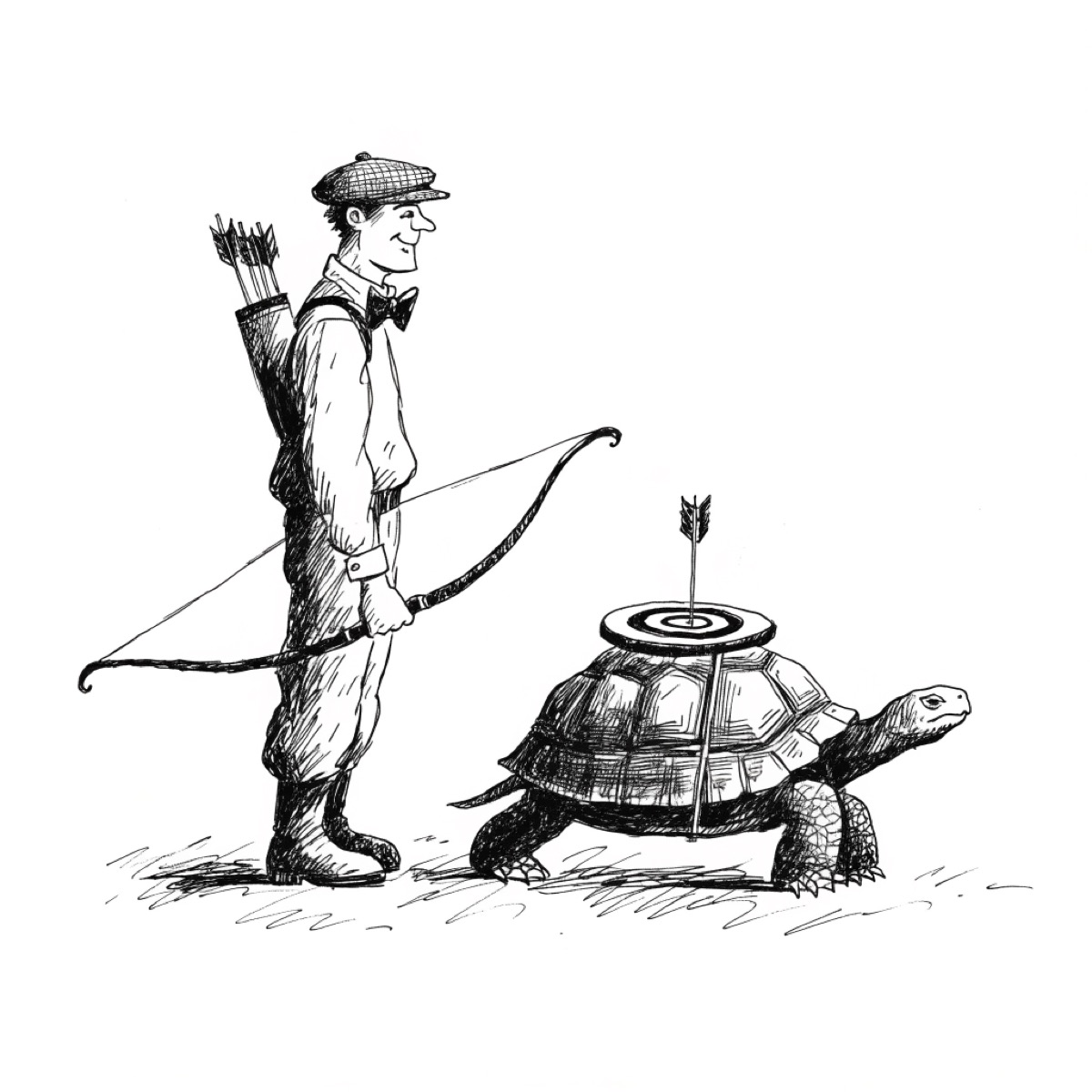
Another family emphasizes epistemic ability. Virtue epistemology asks whether the belief is true because of the agent's intellectual competence, in roughly the way a successful shot can be credited to an archer's skill. Anti-luck theories add safety: in nearby relevant situations where the subject believes in the same way, the belief would not easily be false. Hybrid accounts combine ability and safety because either condition alone can appear too weak or too demanding.
Knowledge-first epistemology, associated especially with Timothy Williamson, reverses the project. Instead of reducing knowledge to belief plus independently defined components, it treats knowledge as a basic mental state and uses it to explain evidence and justified action. This avoids supplying a traditional analysis, but critics ask whether it explains enough about why Gettier subjects fall short.
The finding is negative and the replacement remains contested
Gettier cases changed philosophical method as well as doctrine. They encouraged the construction of tightly controlled thought experiments and the iterative testing of analyses against cases. That method can clarify distinctions, but it also risks overfitting theories to increasingly elaborate intuitions. Experimental philosophy, formal epistemology, and work on social knowledge have widened the evidence beyond the original armchair examples.
Practical contexts also complicate a single threshold. Courts ask whether evidence supports a verdict; scientists ask whether a result is robust; ordinary speakers use "know" differently when stakes change. Contextualists argue that standards for correctly attributing knowledge vary with conversational context. Invariantists retain a stable standard but may explain shifting judgments through pragmatics or errors. Gettier's counterexamples do not choose between them.
What is established, conditional on widely shared case judgments, is that justified true belief permits accidental truth and is therefore not a sufficient analysis of knowledge. What is contested is how to characterize the prohibited luck and whether knowledge can be reductively analyzed at all. What remains unknown is whether one account will handle perception, testimony, memory, inference, and collective inquiry without new counterexamples. The lasting contribution of the cases is a boundary: reasons and truth must be connected in a way the three labels alone do not specify.
Sources and review note
4 sources, none of them with a link, so treat them as reading, not proof.
- Edmund L. Gettier, "Is Justified True Belief Knowledge?" Analysis 23.6 (1963), 121–123.
- Stanford Encyclopedia of Philosophy, "The Analysis of Knowledge," survey of Gettier cases, no-false-lemma, safety, ability, and knowledge-first responses.
- Alvin I. Goldman, "A Causal Theory of Knowing," The Journal of Philosophy 64.12 (1967).
- Timothy Williamson, Knowledge and Its Limits (Oxford University Press, 2000), for knowledge-first epistemology.